Photo

Resistance Doesn't Walk Alone
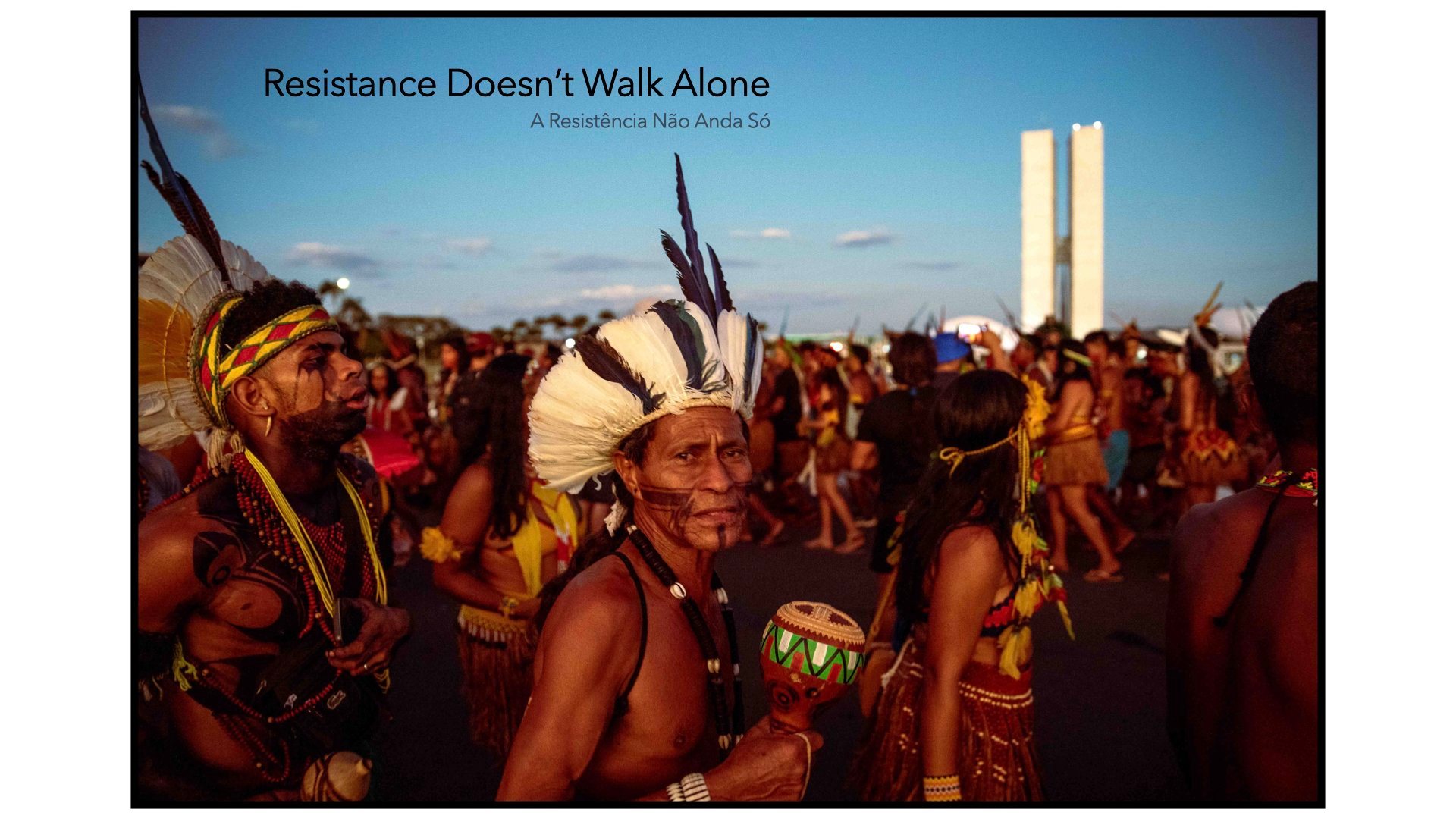
Resistance Doesn't Walk Alone

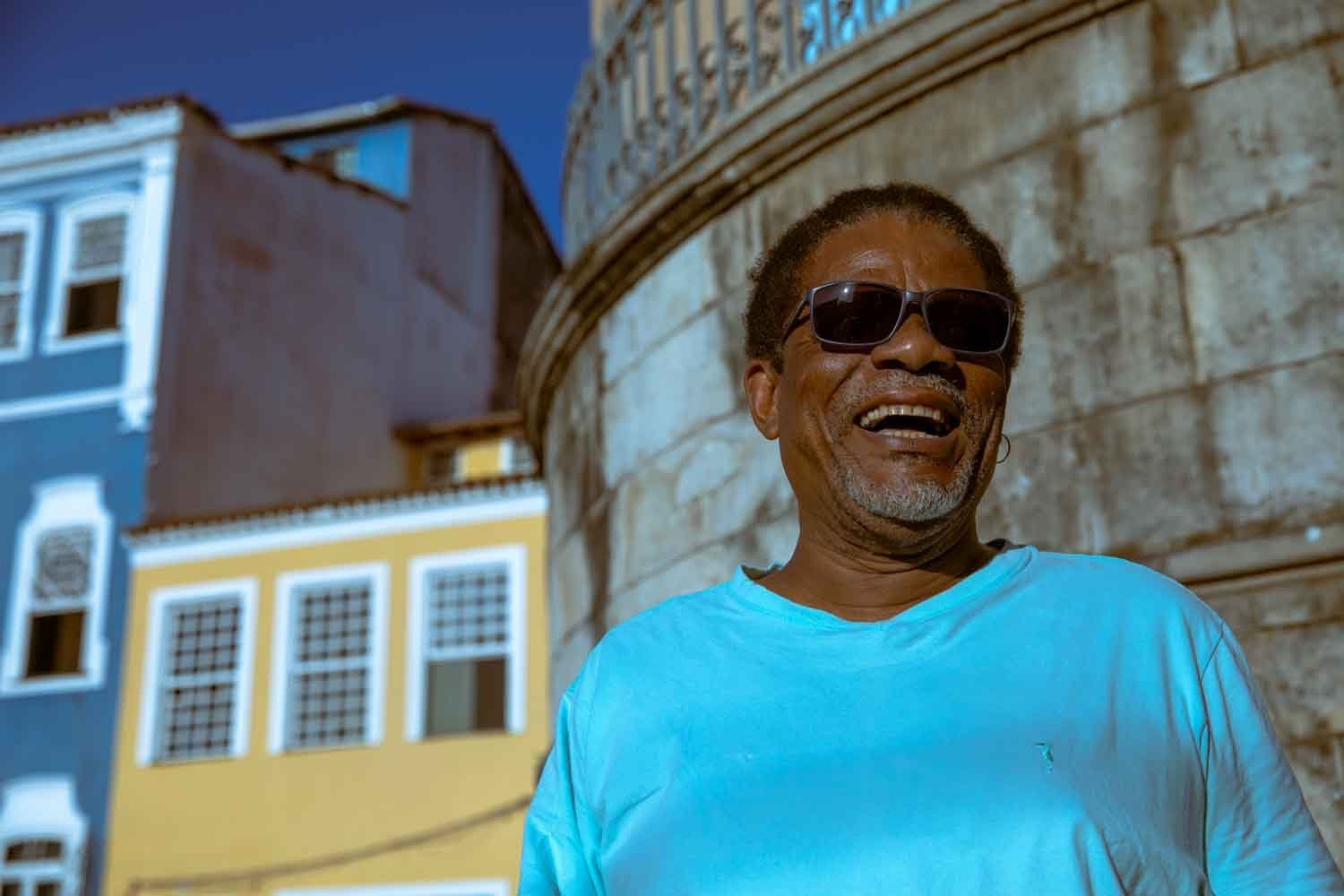
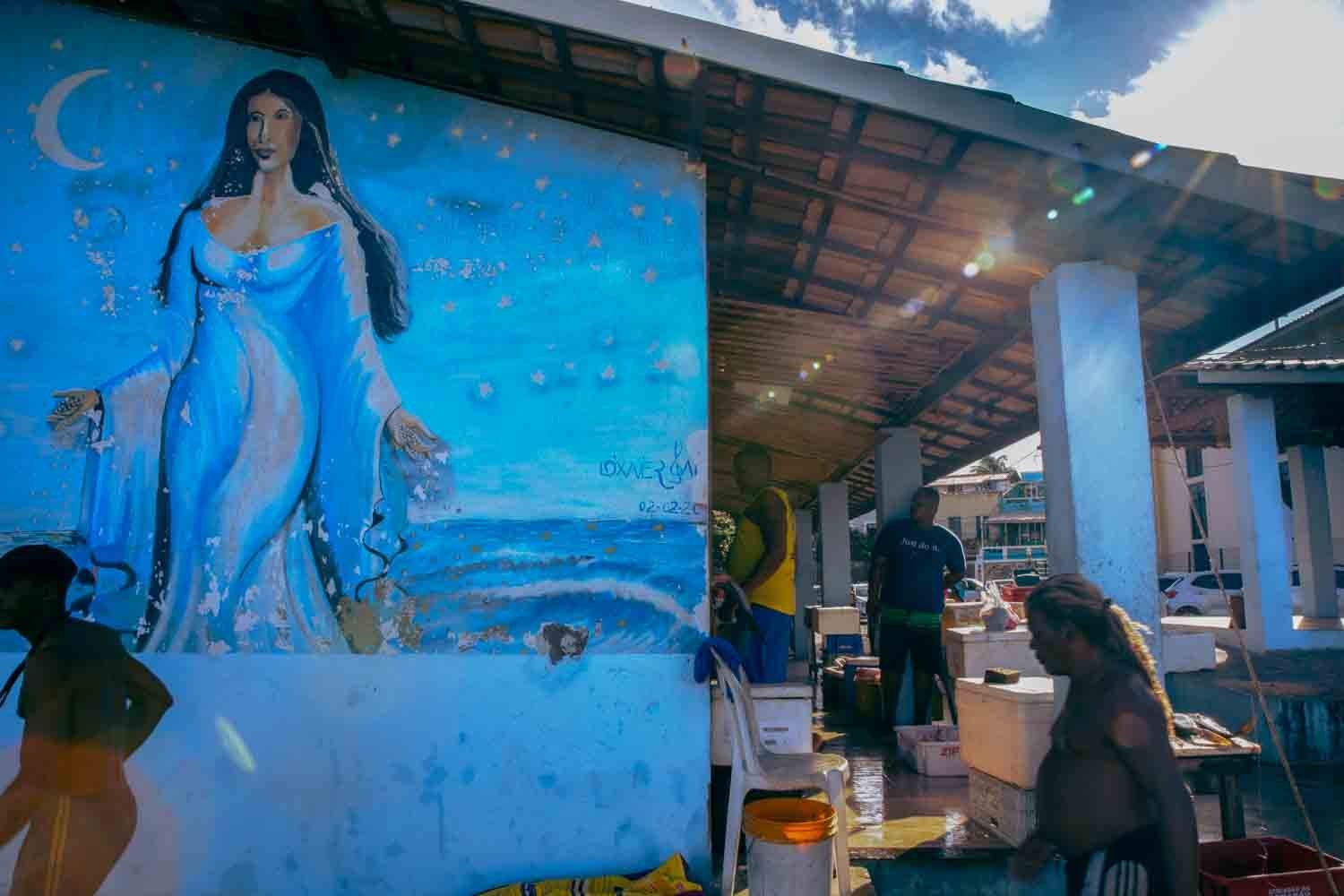
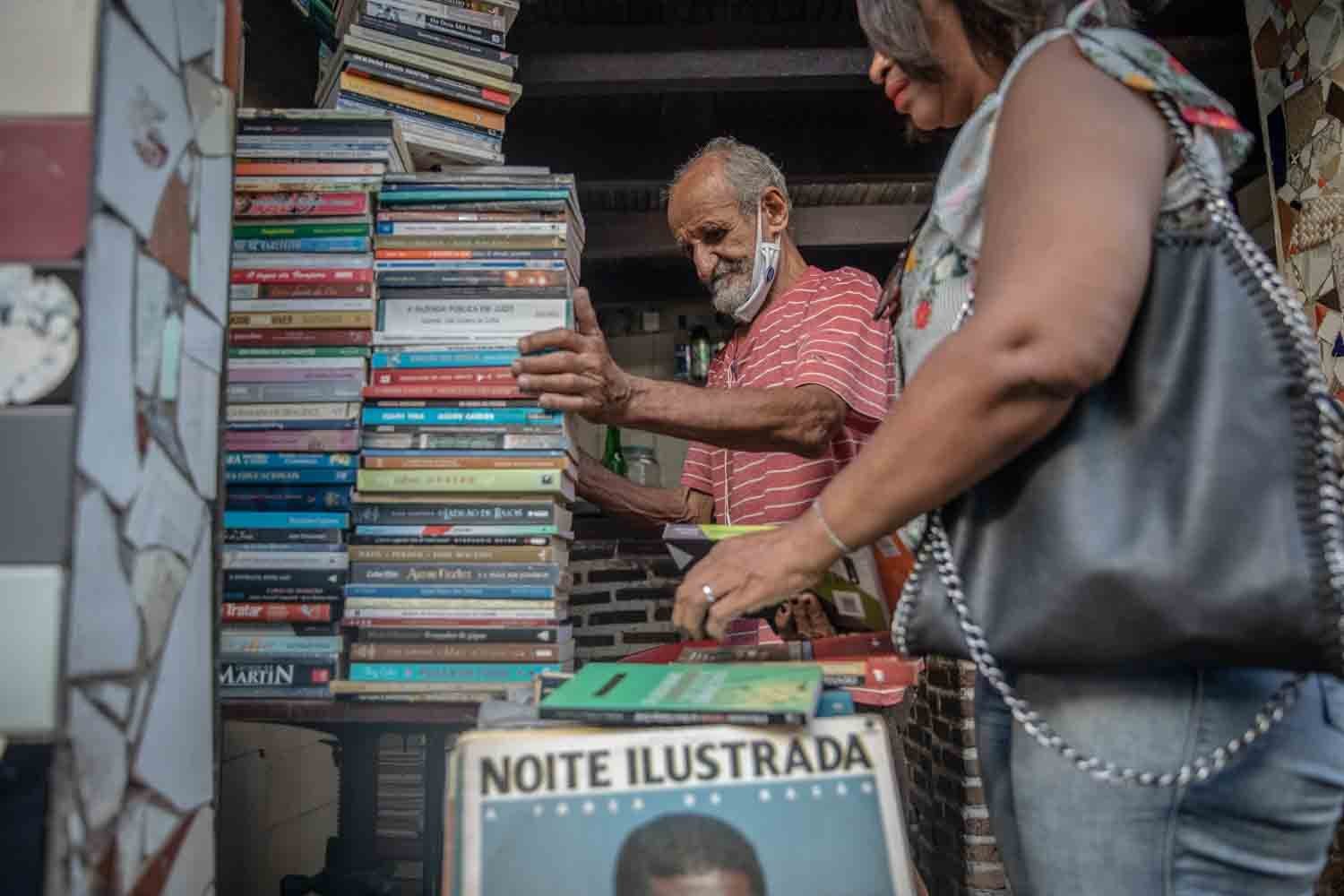
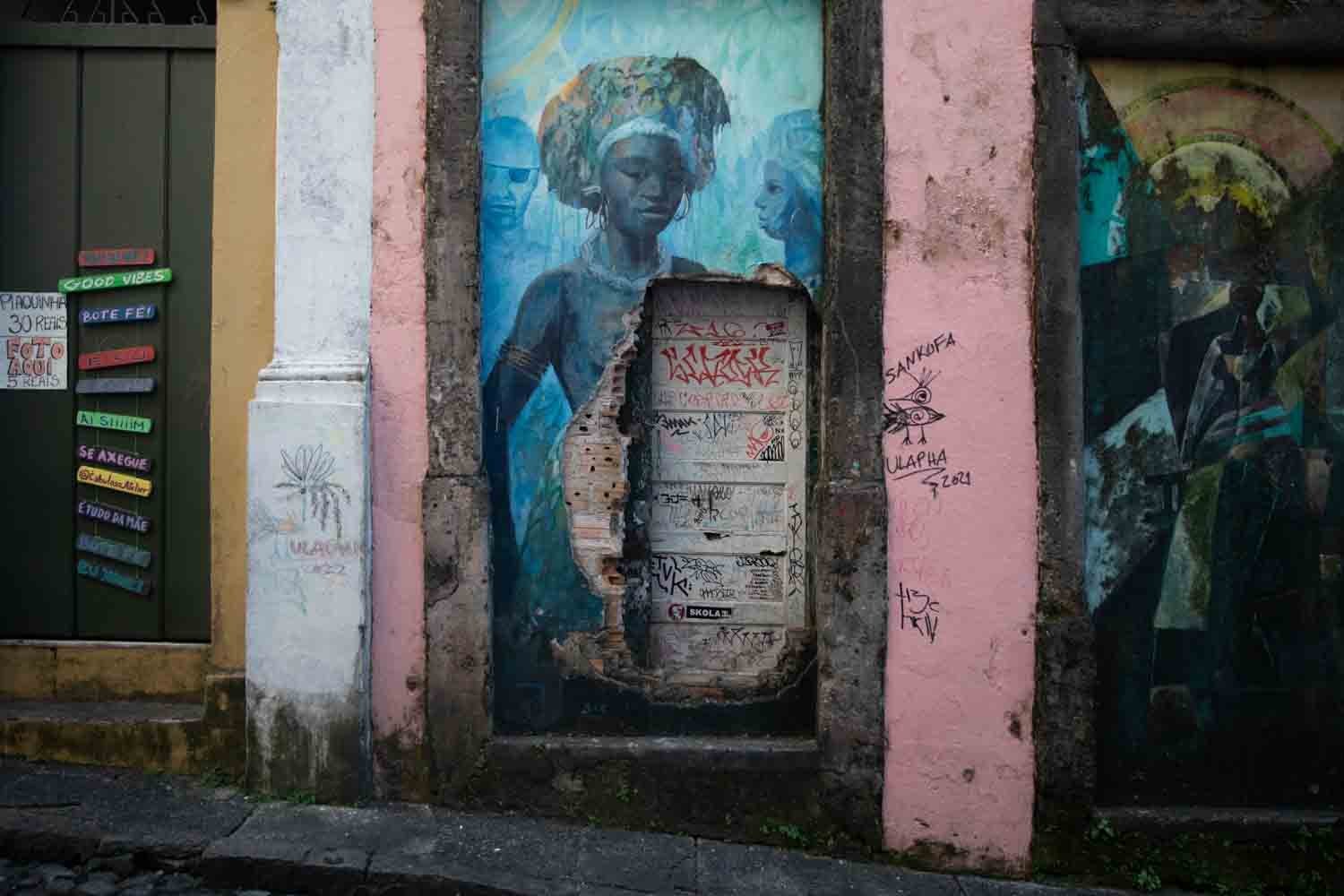
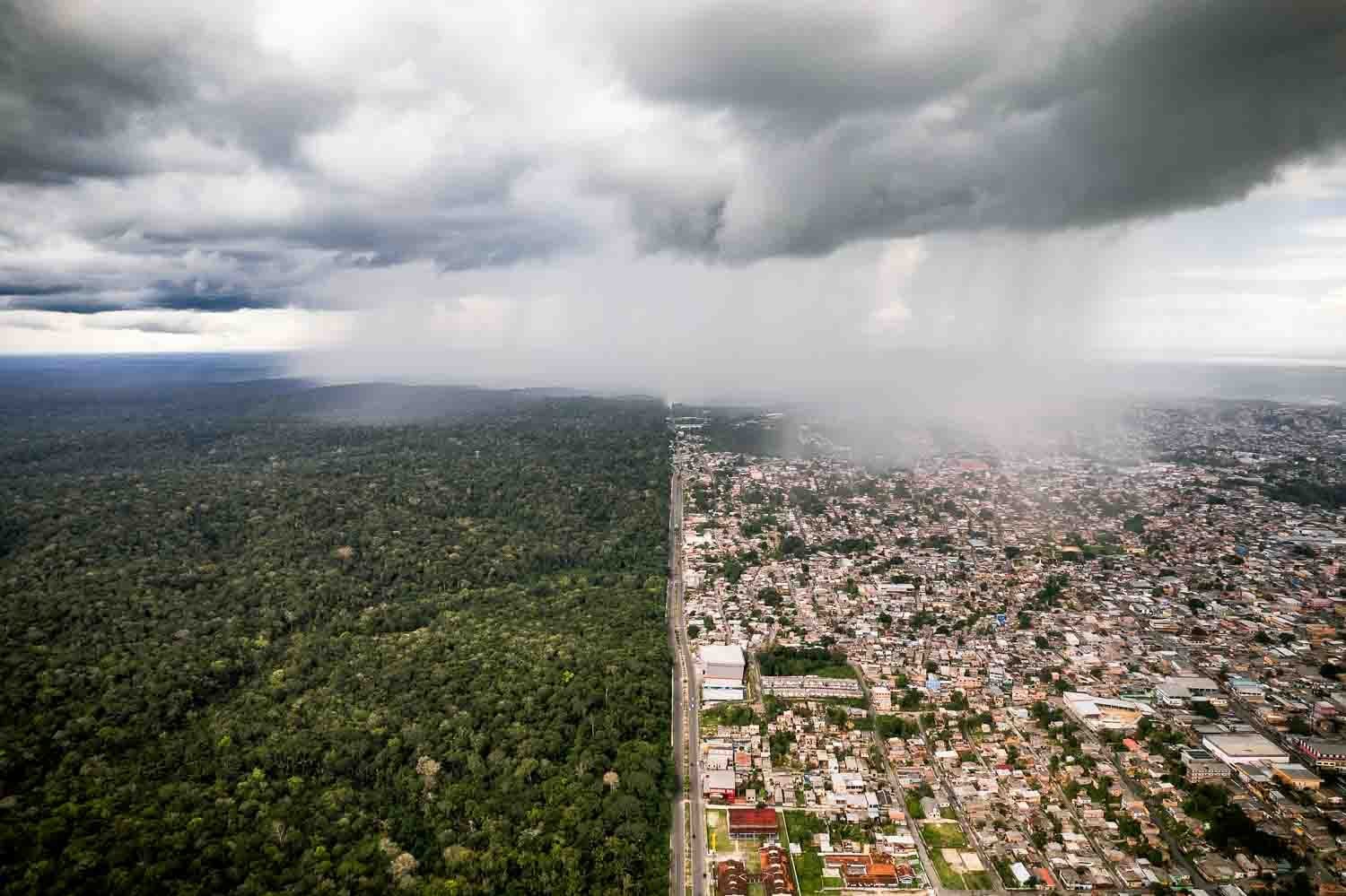
Background: I traveled through Brazil in 2022, interviewing, photographing and trying to understand the dynamics of the organizations and people who are fighting against inequality in that country through various lenses. These photographs were eventually presented at the launch of the new LSE research theme “The Politics of Inequality” in London in July 2022. I experimented with 3D modeling, augmented reality, video and photo to bring this topic to life.

Key Partners: London School of Economics, Atlantic Fellows
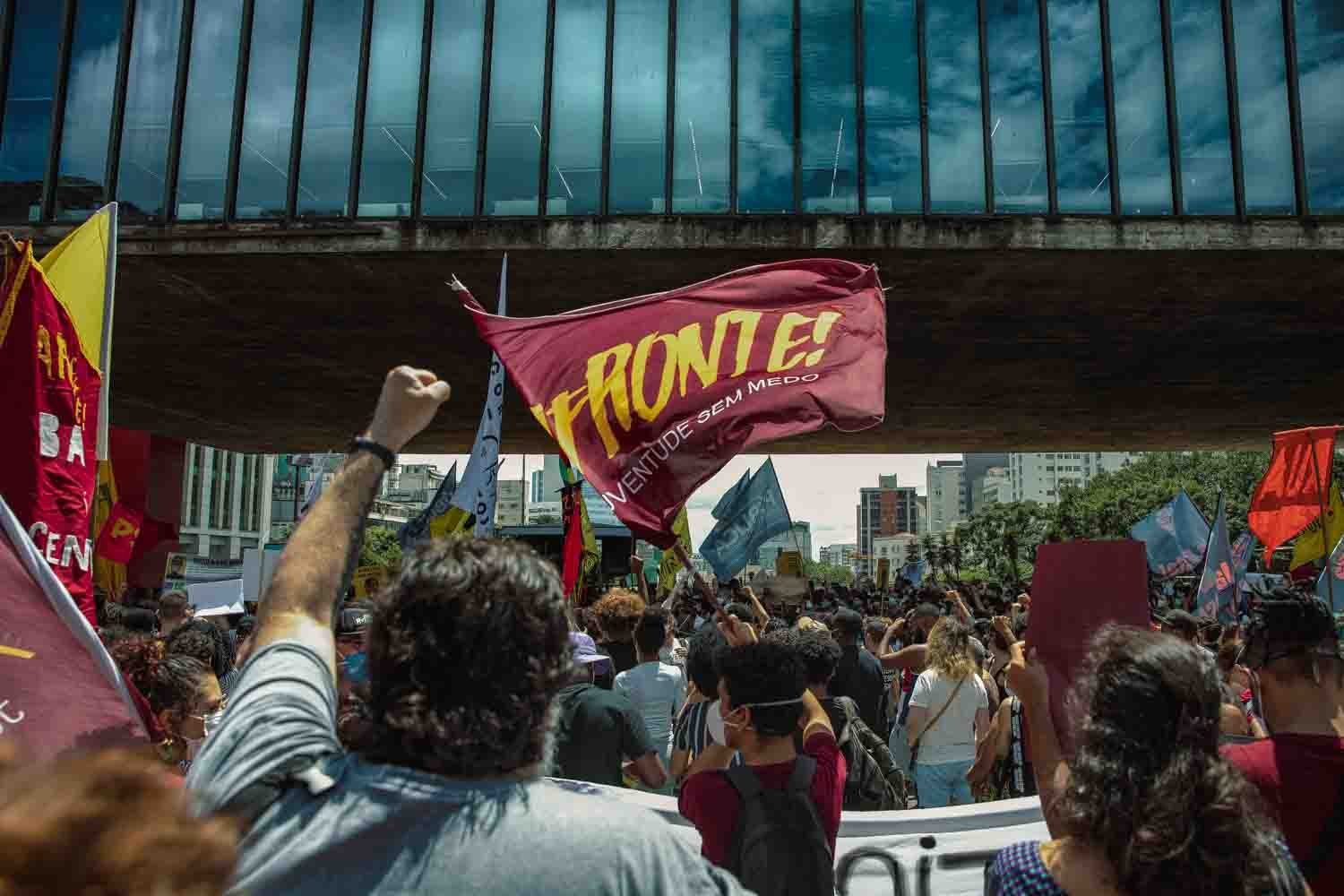
Resistance Doesn't Walk Alone

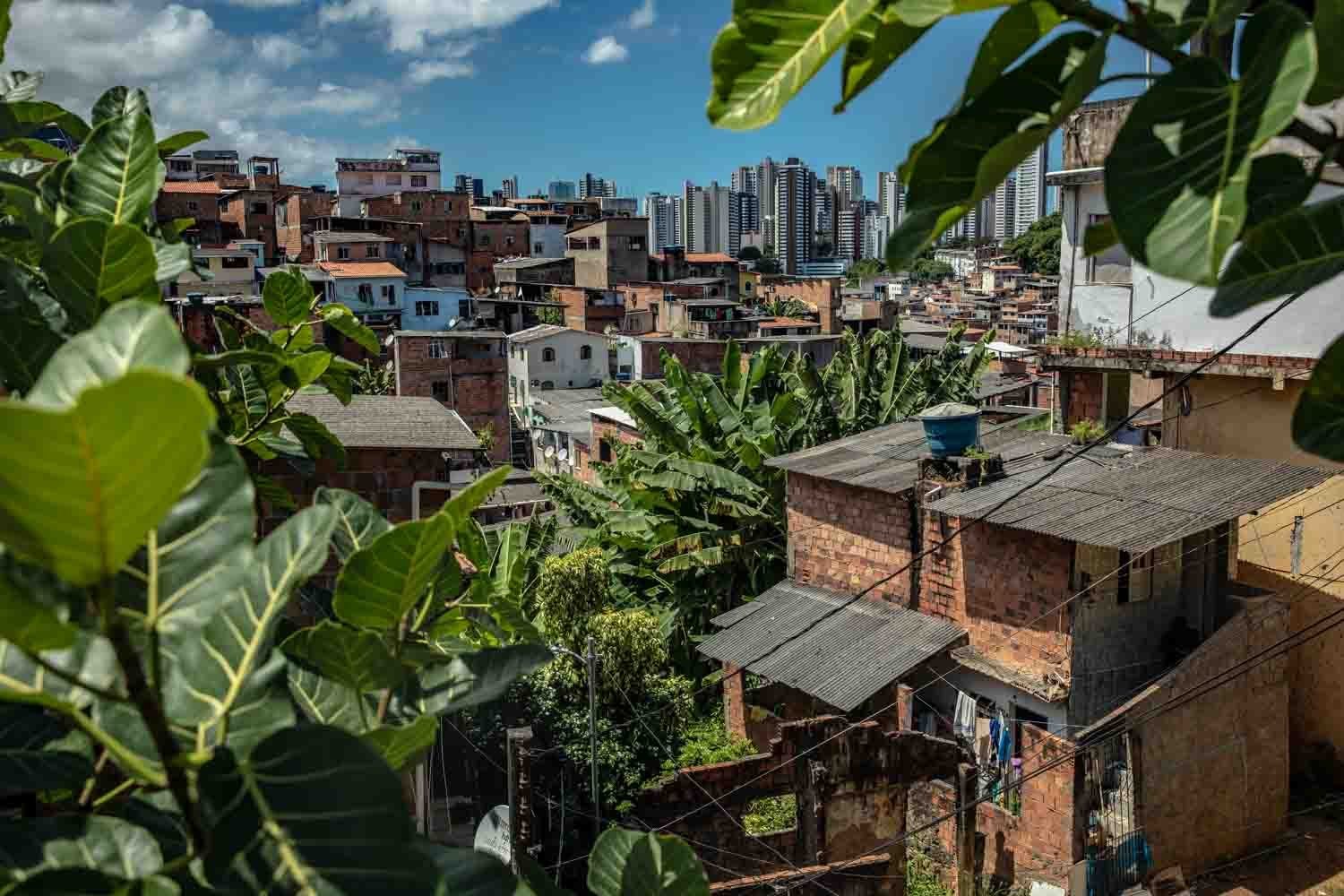
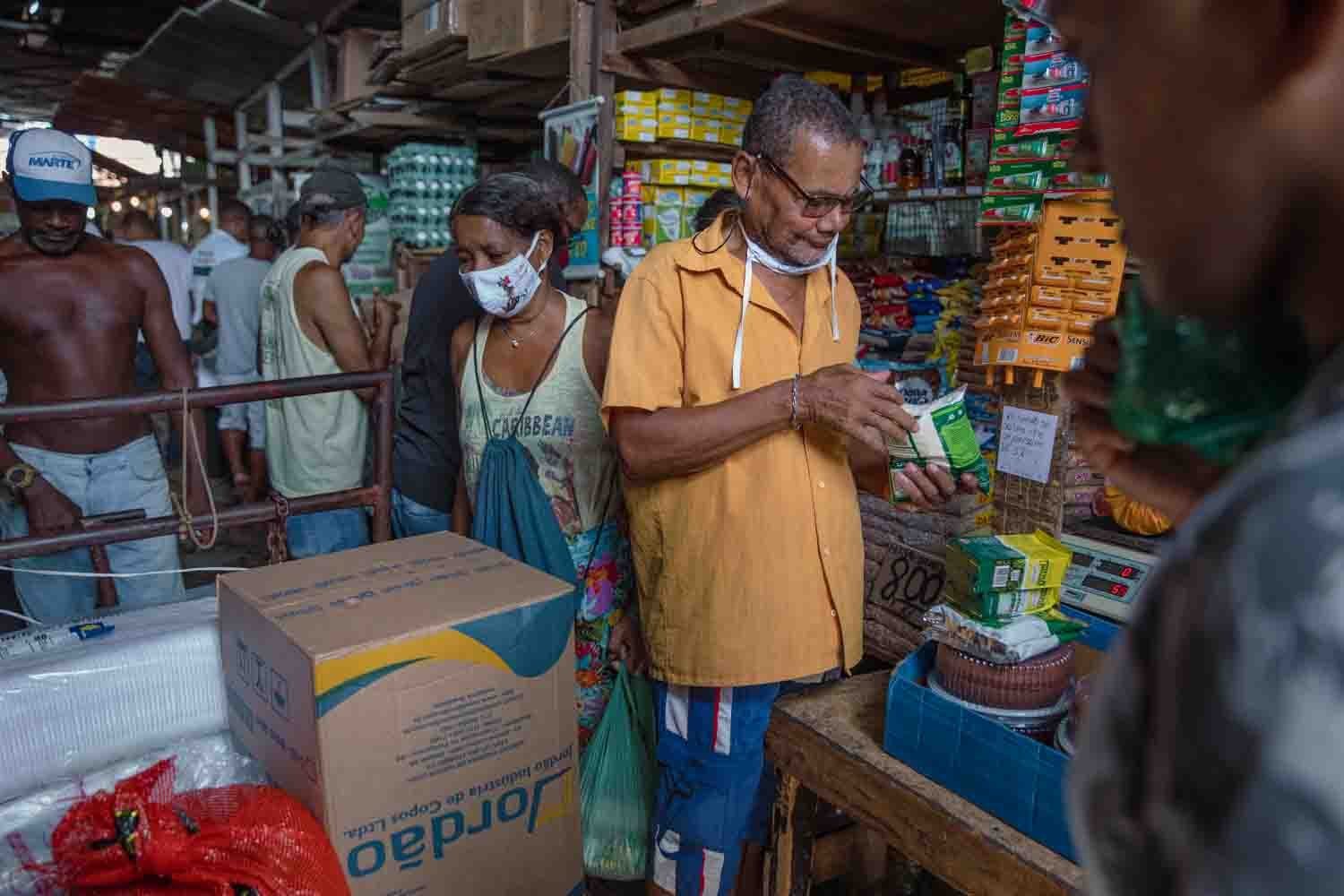
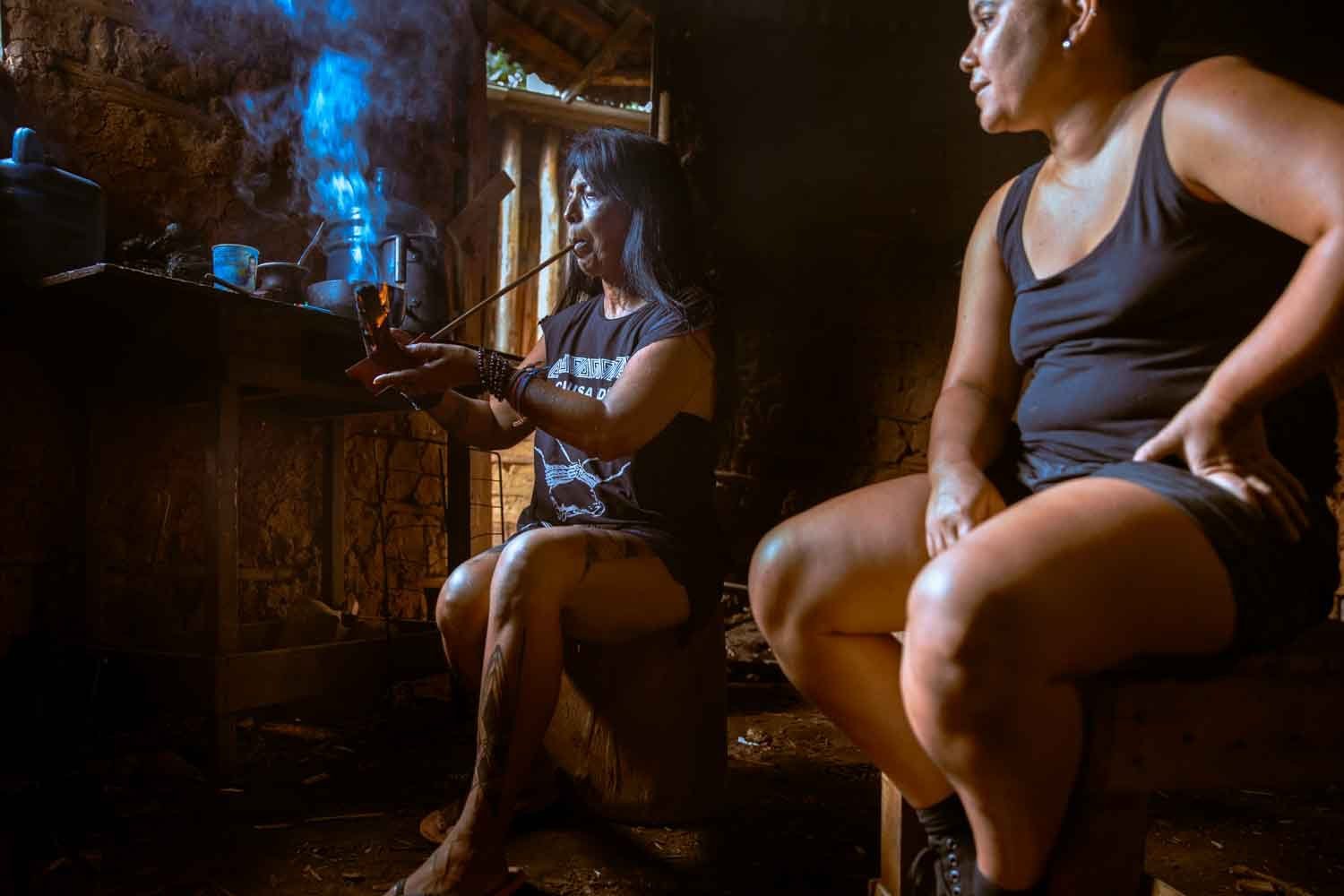
Brazilian society, while fragmented and highly stratified in certain contexts, is also full of solidarity. There is no way to discuss inequality in cities, for example, without taking into context the teeming multitudes of rich and poor on the beaches of Rio, or the confounding cosmopolitanism of the pixação-covered streets of central São Paulo, or the reverent joy in Afro-Brazilian culture in Salvador. Perhaps most inspiring to me is the power in how Brazilians politically organize, not in a distant way (by only voting at national elections, for example) but in the small communities of occupied buildings, within rural indigenous communities, among self-organized subcultures of influencers on Tik Tok and Instagram, and in the vast peripheral areas of major cities. Black, Indigenous, and migrant groups have found power, real power, in organizing around common principles, and in their almost unanimous disdain of the right-wing government of Jair Bolsonaro.
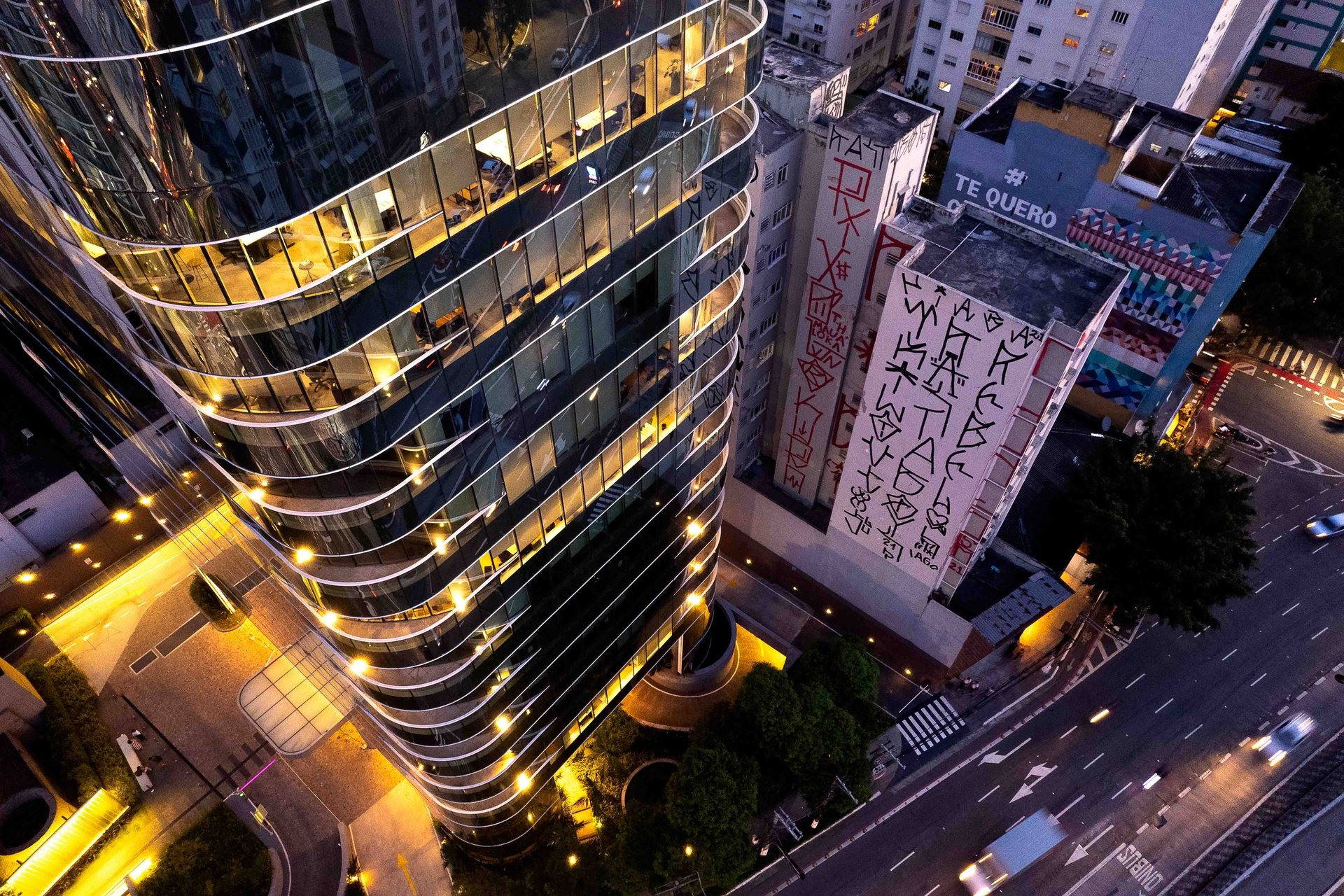
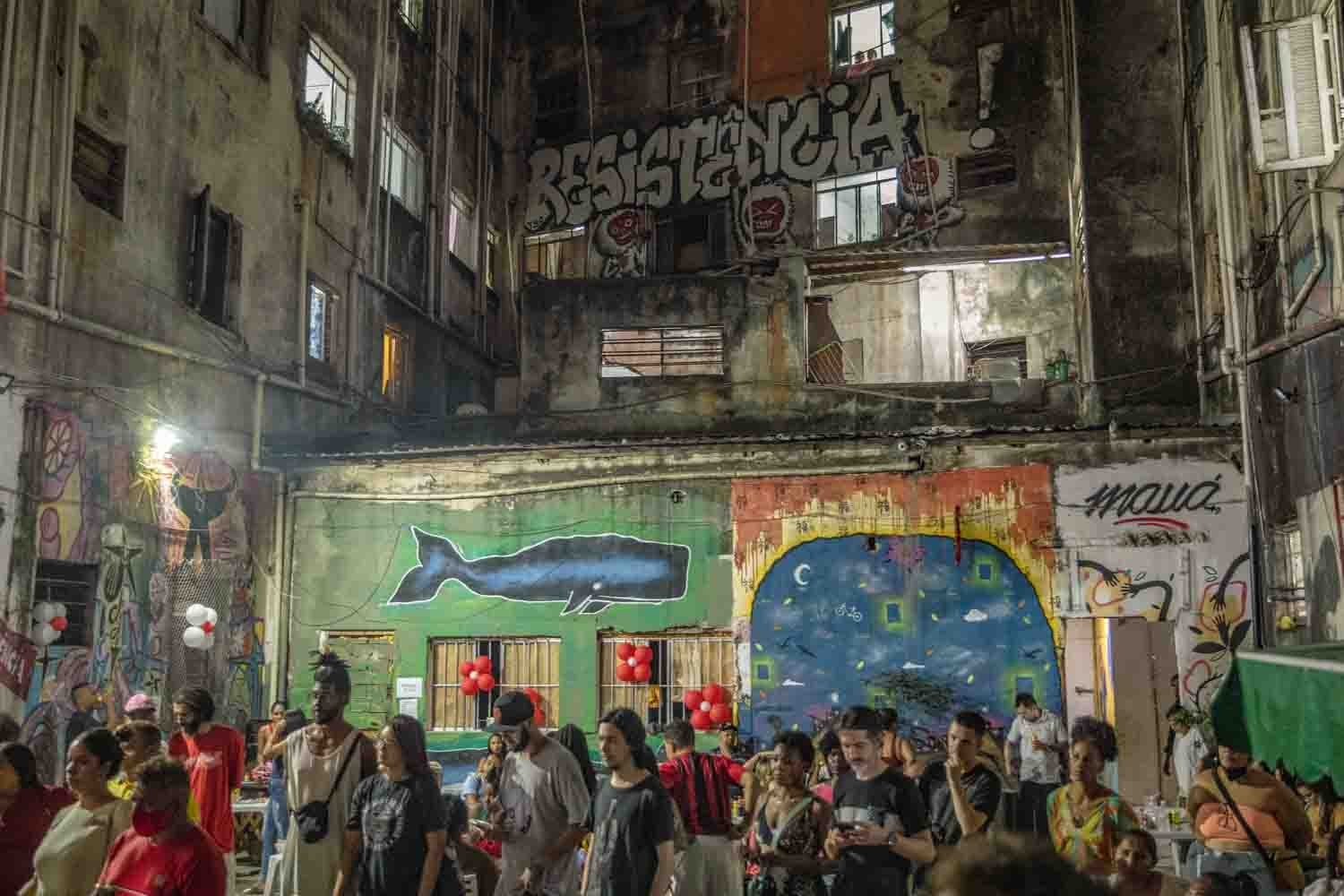
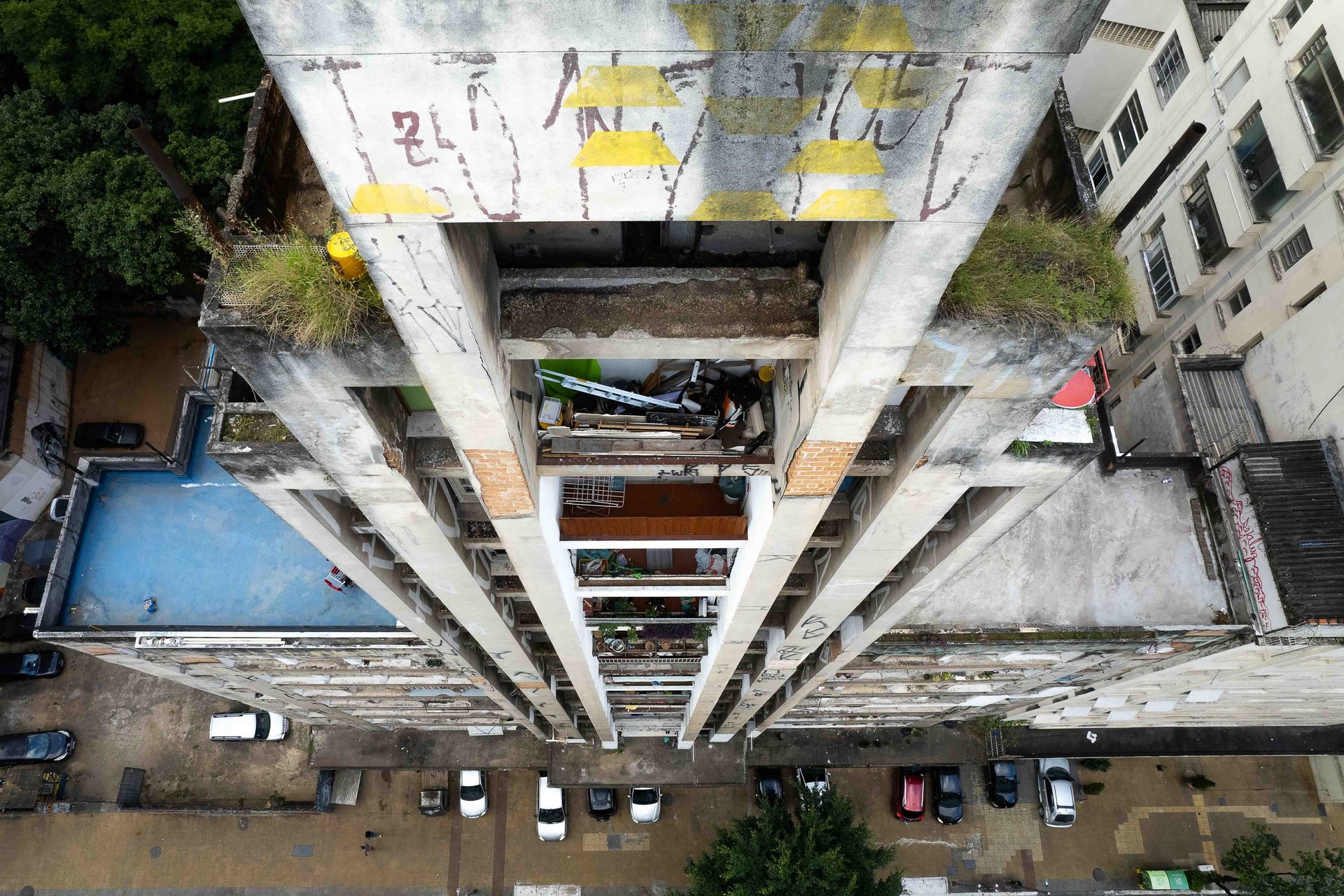
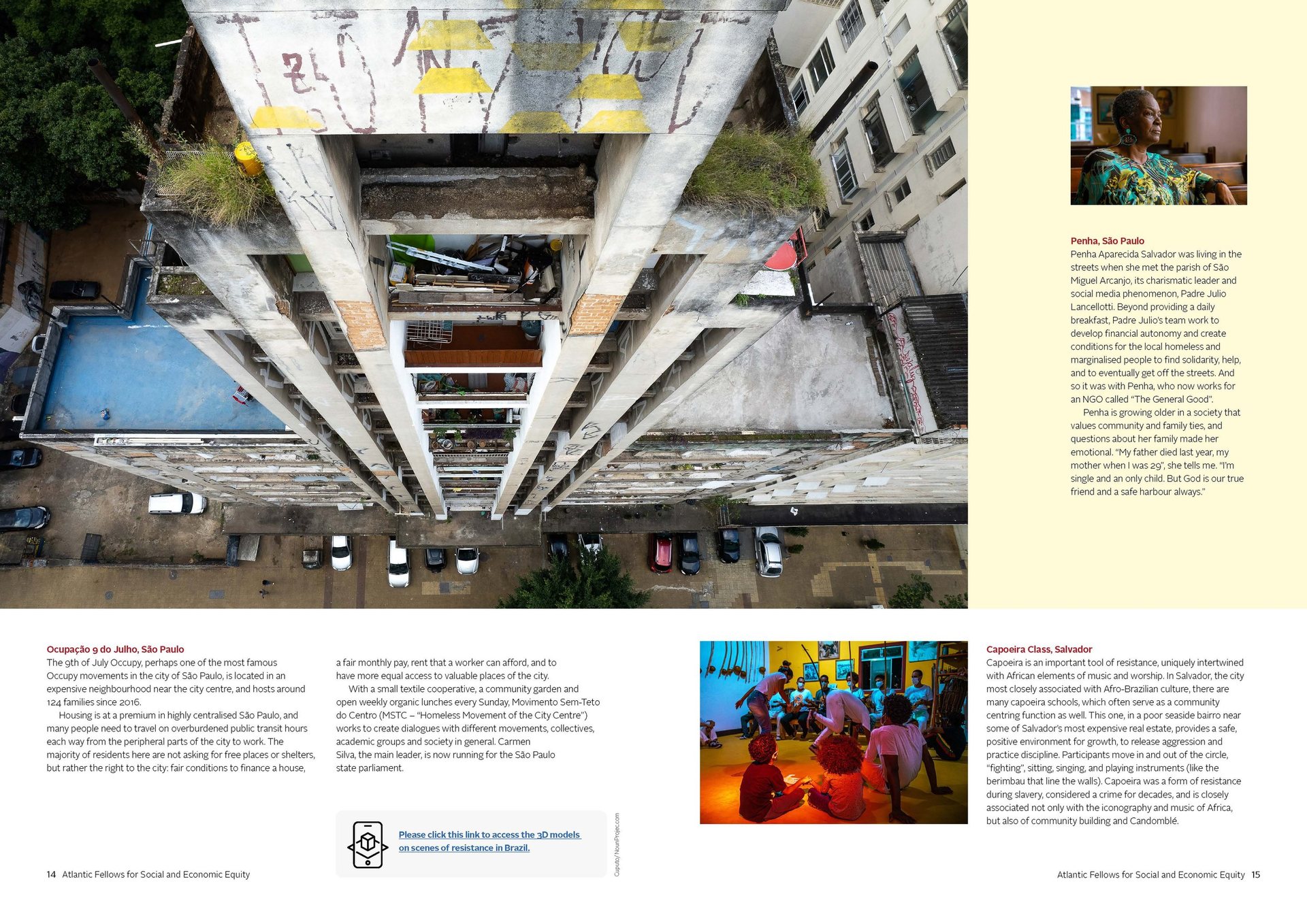
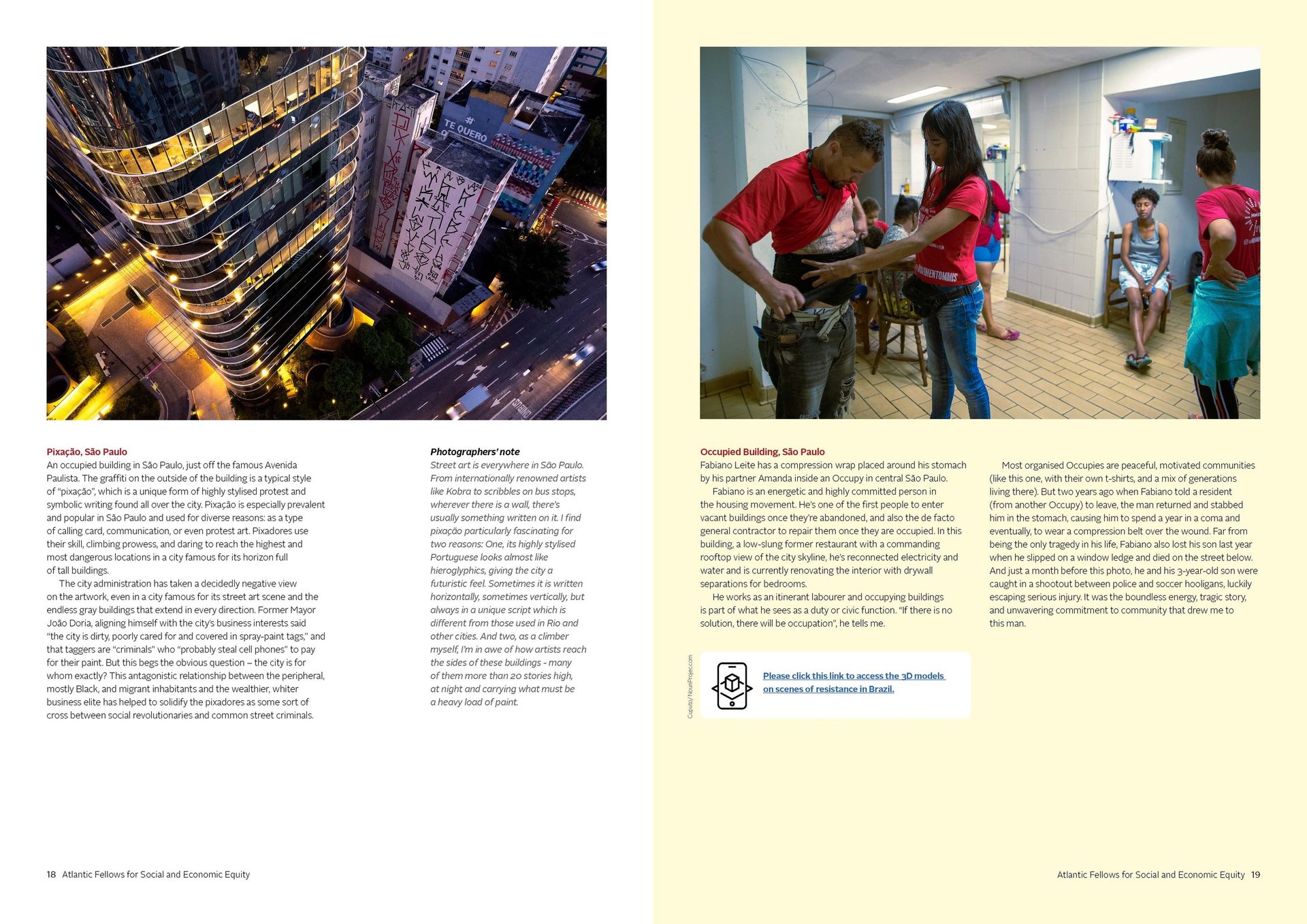
An occupied building in São Paulo, just off the famous Avenida Paulista.
An occupied building in São Paulo, just off the famous Avenida Paulista. The graffiti on the outside of the building is a typical style of “pixação”, which is a unique form of highly stylised protest and symbolic writing found all over the city. Pixação is especially prevalent and popular in São Paulo and used for diverse reasons: as a type of calling card, communication, or even protest art. Pixadores use their skill, climbing prowess, and daring to reach the highest and most dangerous locations in a city famous for its horizon full of tall buildings. The city administration has taken a decidedly negative view on the artwork, even in a city famous for its street art scene and the endless gray buildings that extend in every direction. Former Mayor João Doria, aligning himself with the city’s business interests said “the city is dirty, poorly cared for and covered in spray-paint tags,” and that taggers are “criminals” who “probably steal cell phones” to pay for their paint. But this begs the obvious question – the city is for whom exactly? This antagonistic relationship between the peripheral, mostly Black, and migrant inhabitants and the wealthier, whiter business elite has helped to solidify the pixadores as some sort of cross between social revolutionaries and common street criminals.
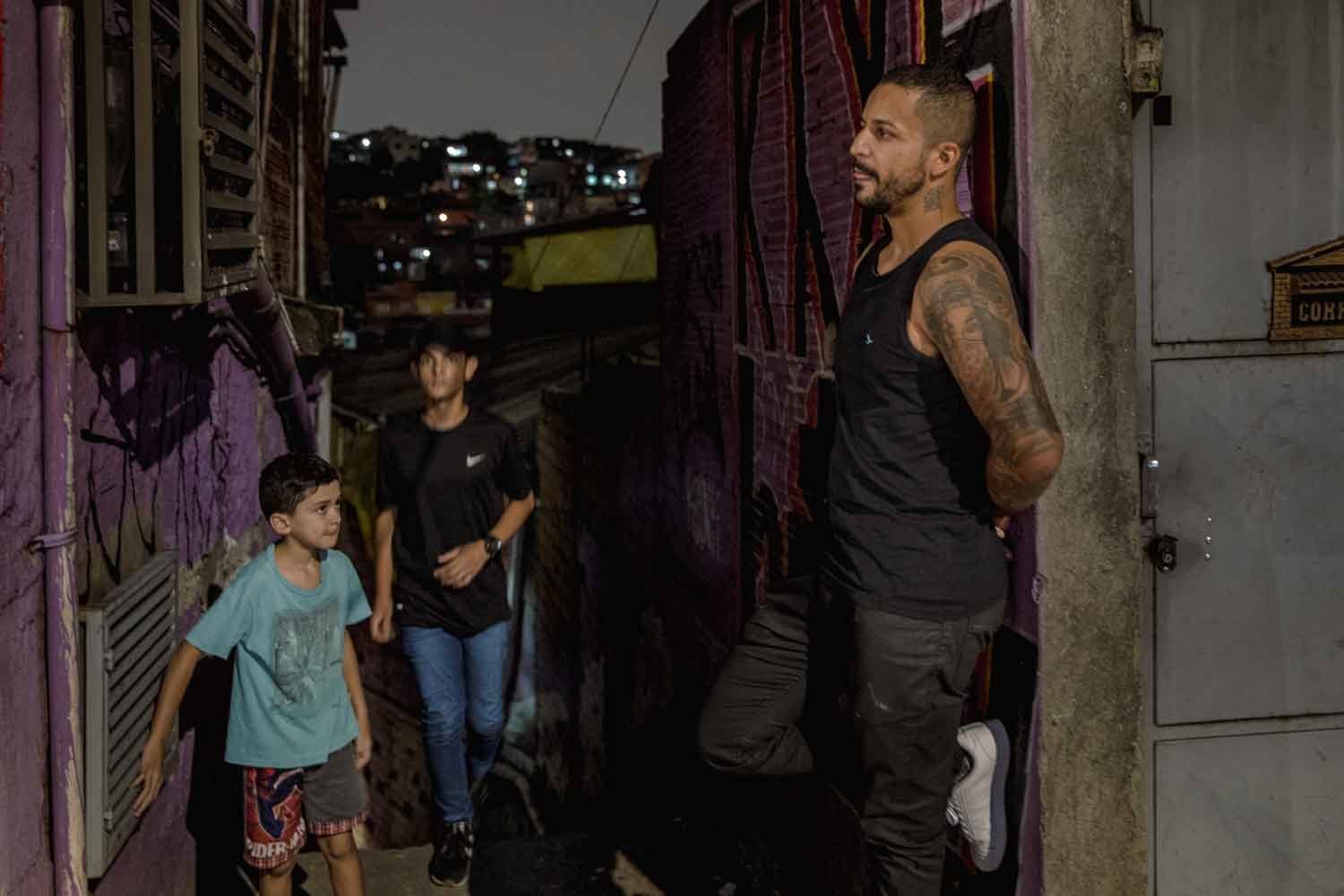
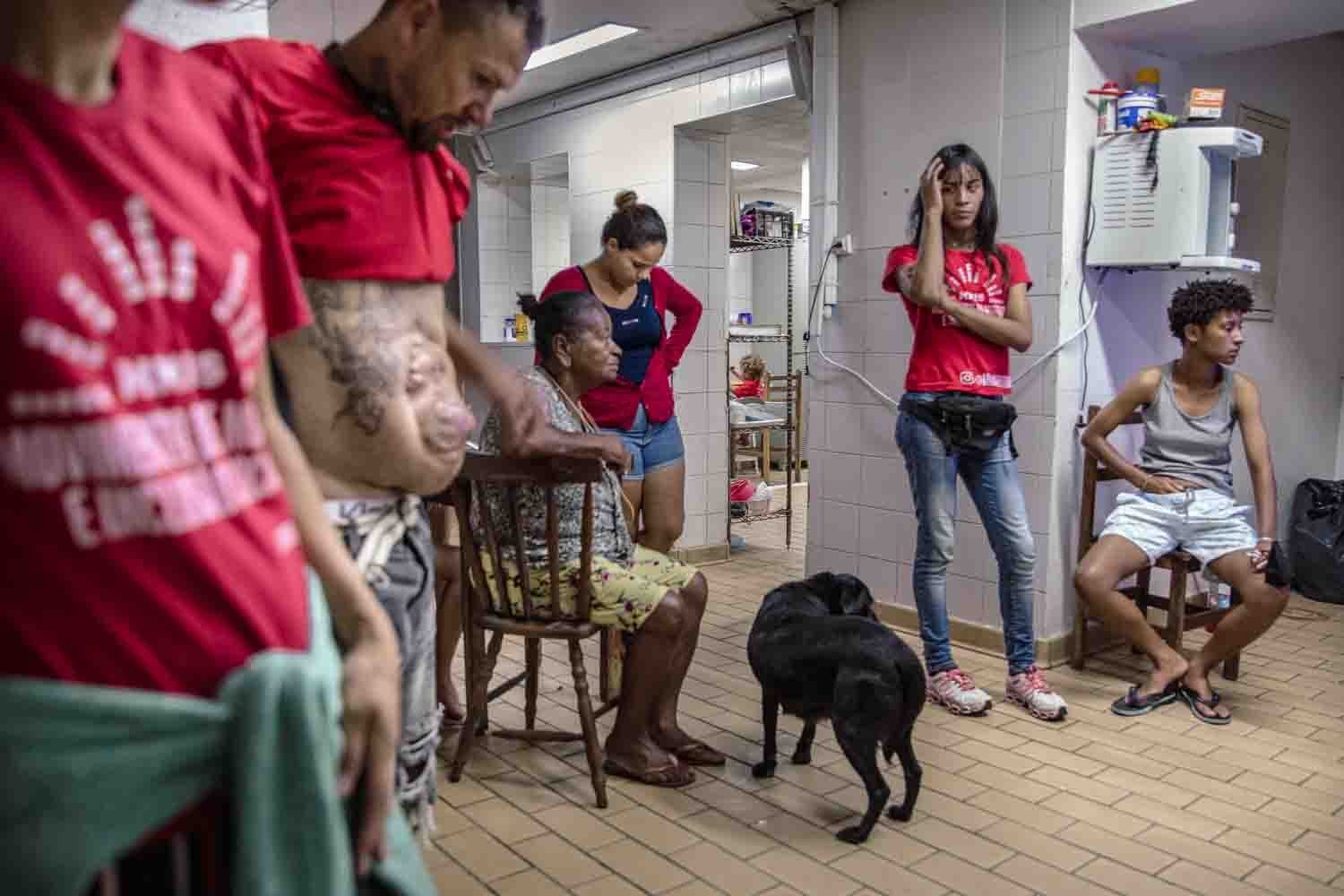
Fabiano Leite has a compression wrap placed around his stomach by his partner Amanda inside an Occupy in central São Paulo.
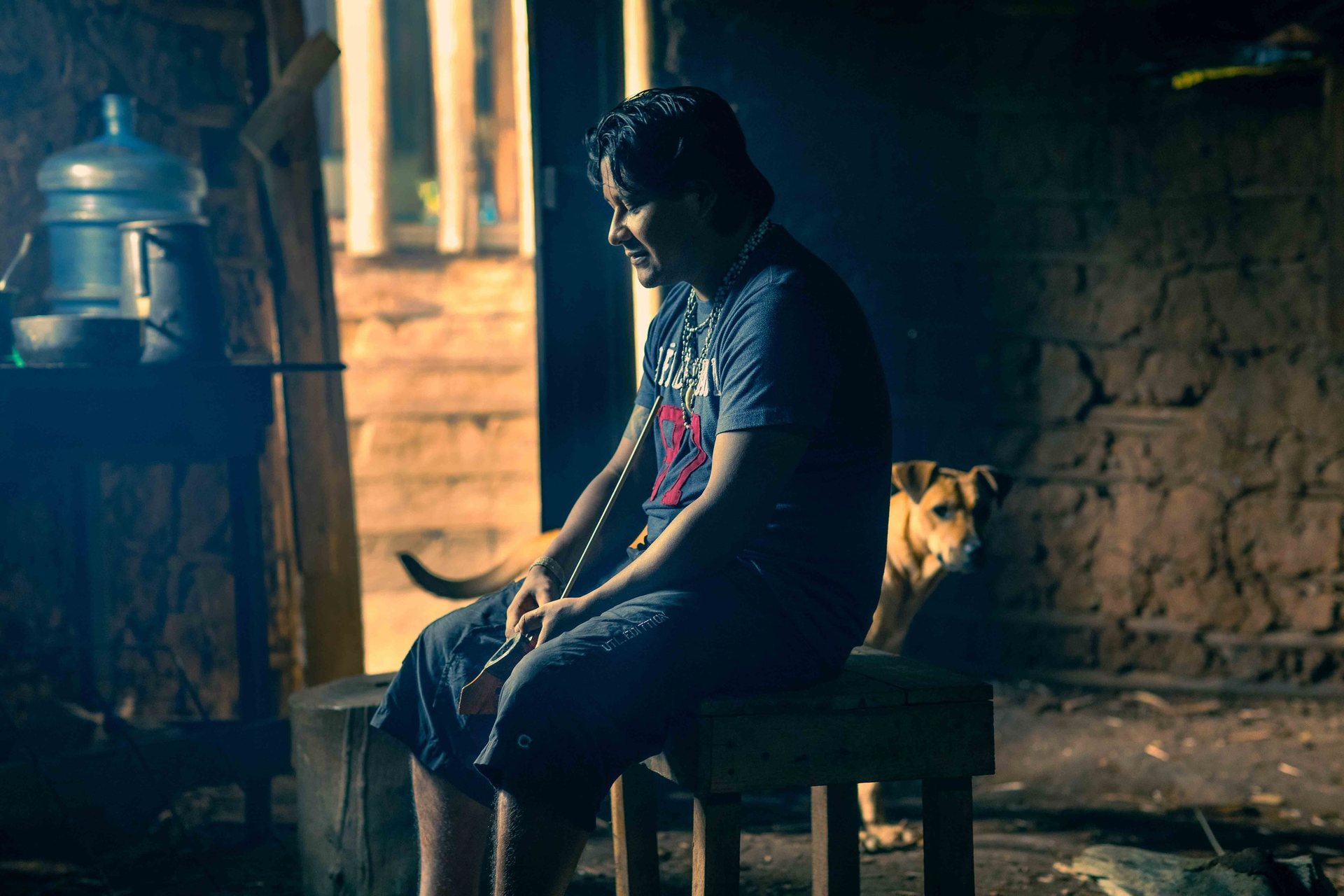
Fabiano Leite has a compression wrap placed around his stomach by his partner Amanda inside an Occupy in central São Paulo. Fabiano is an energetic and highly committed person in the housing movement. He’s one of the first people to enter vacant buildings once they’re abandoned, and also the de facto general contractor to repair them once they are occupied. In this building, a low-slung former restaurant with a commanding rooftop view of the city skyline, he’s reconnected electricity and water and is currently renovating the interior with drywall separations for bedrooms. He works as an itinerant labourer and occupying buildings is part of what he sees as a duty or civic function. “If there is no solution, there will be occupation”, he tells me. Most organised Occupies are peaceful, motivated communities (like this one, with their own t-shirts, and a mix of generations living there). But two years ago when Fabiano told a resident to leave, the man returned and stabbed him in the stomach, causing him to spend a year in a coma and eventually, to wear a compression belt over the wound. Far from being the only tragedy in his life, Fabiano also lost his son last year when he slipped on a window ledge and died on the street below. And just a month before this photo, he and his 3-year-old son were caught in a shootout between police and soccer hooligans, luckily escaping serious injury. It was the boundless energy, tragic story, and unwavering commitment to community that drew me to this man.
Resistance Doesn't Walk Alone
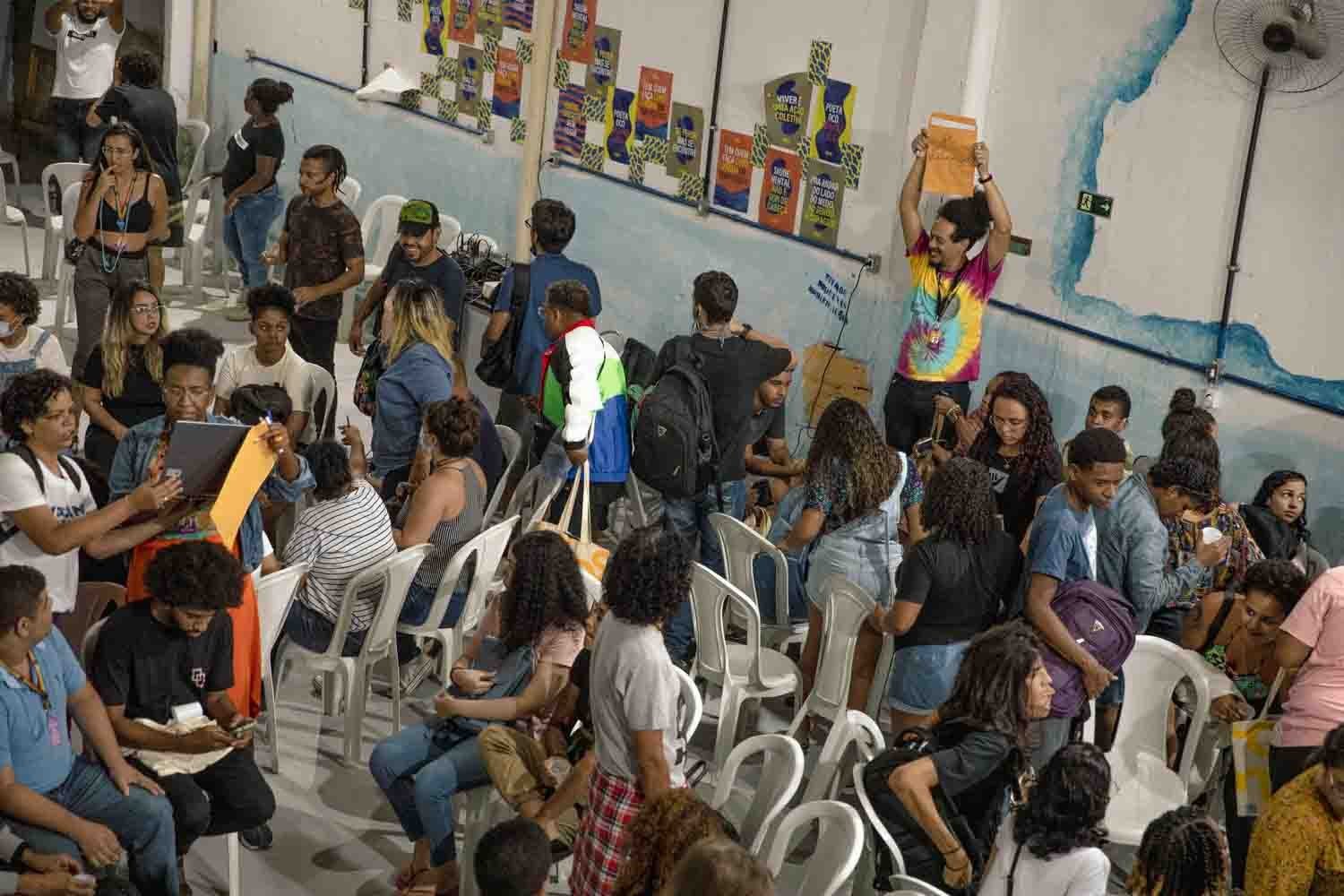
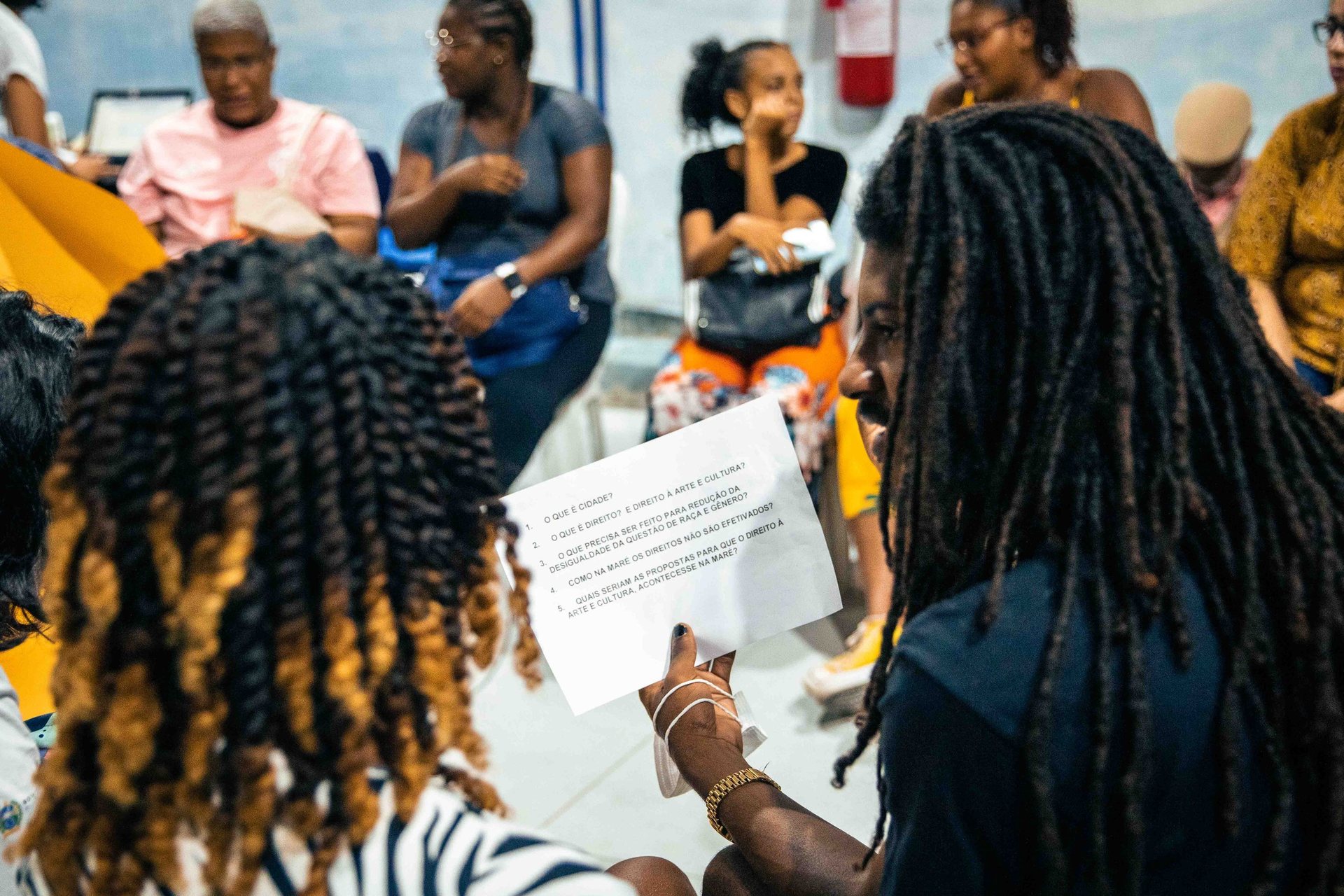
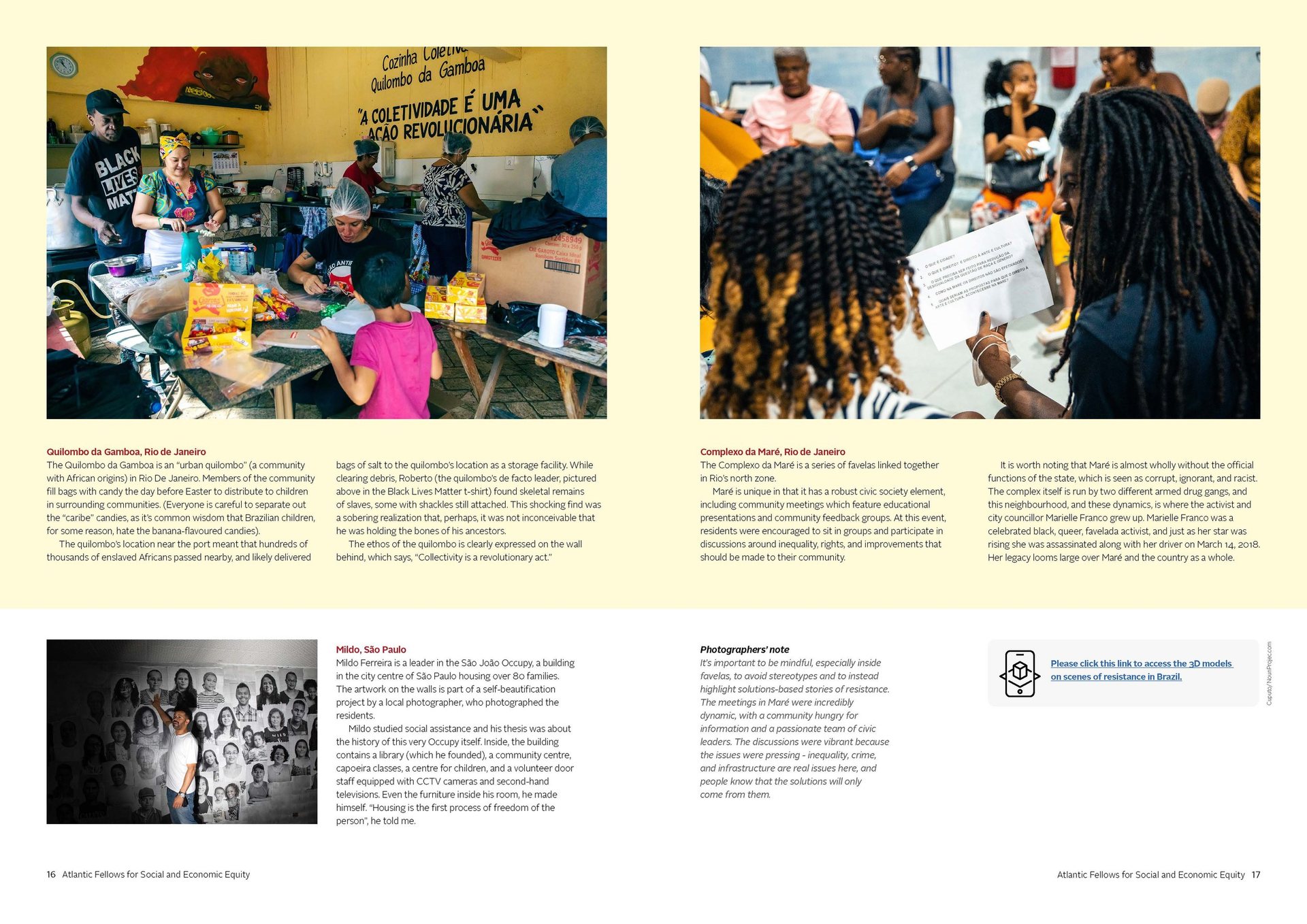
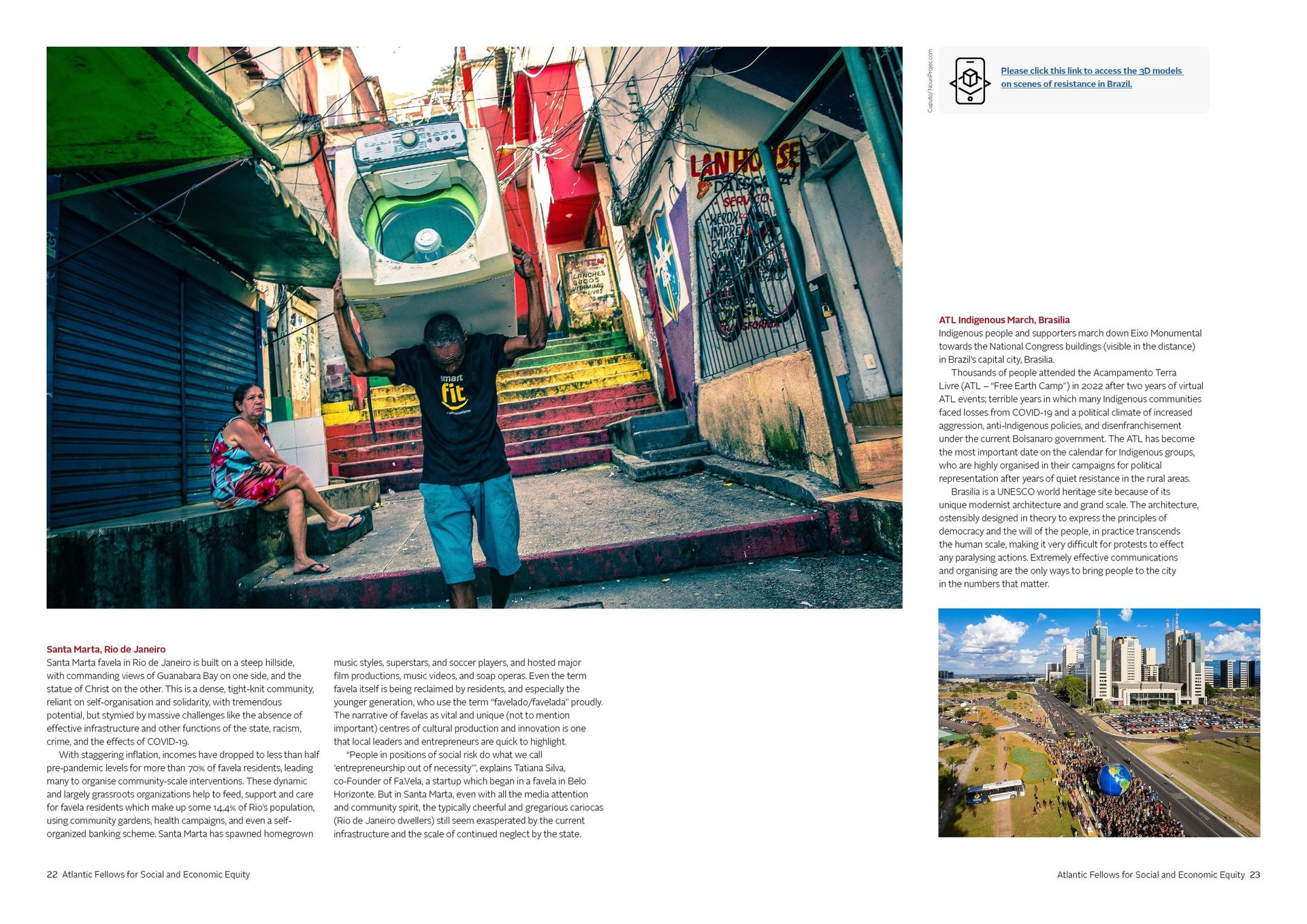
Residents of the Complexo da Maré in Rio de Janeiro participate in discussions around inequality, rights, and improvements to their community.
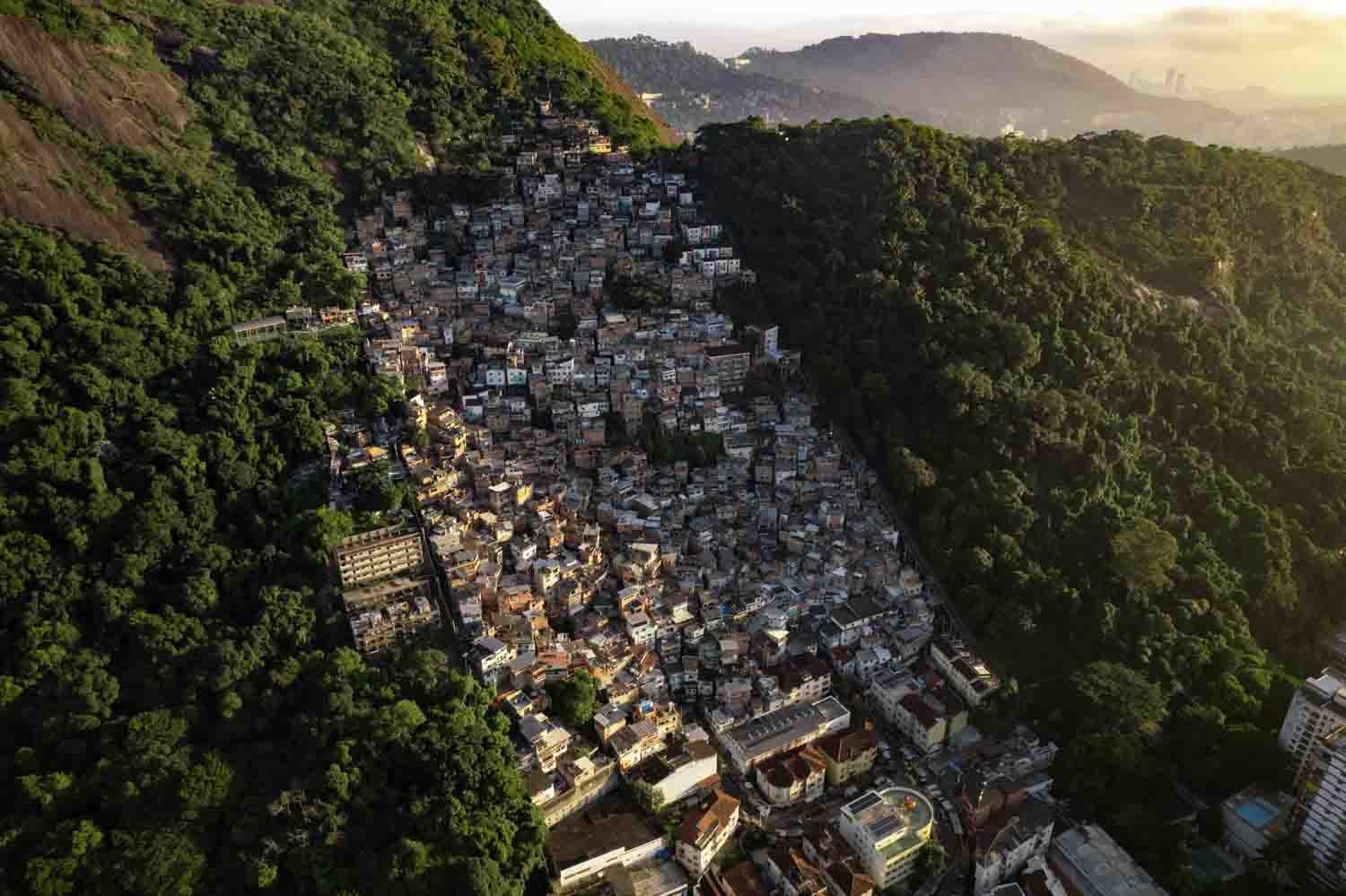
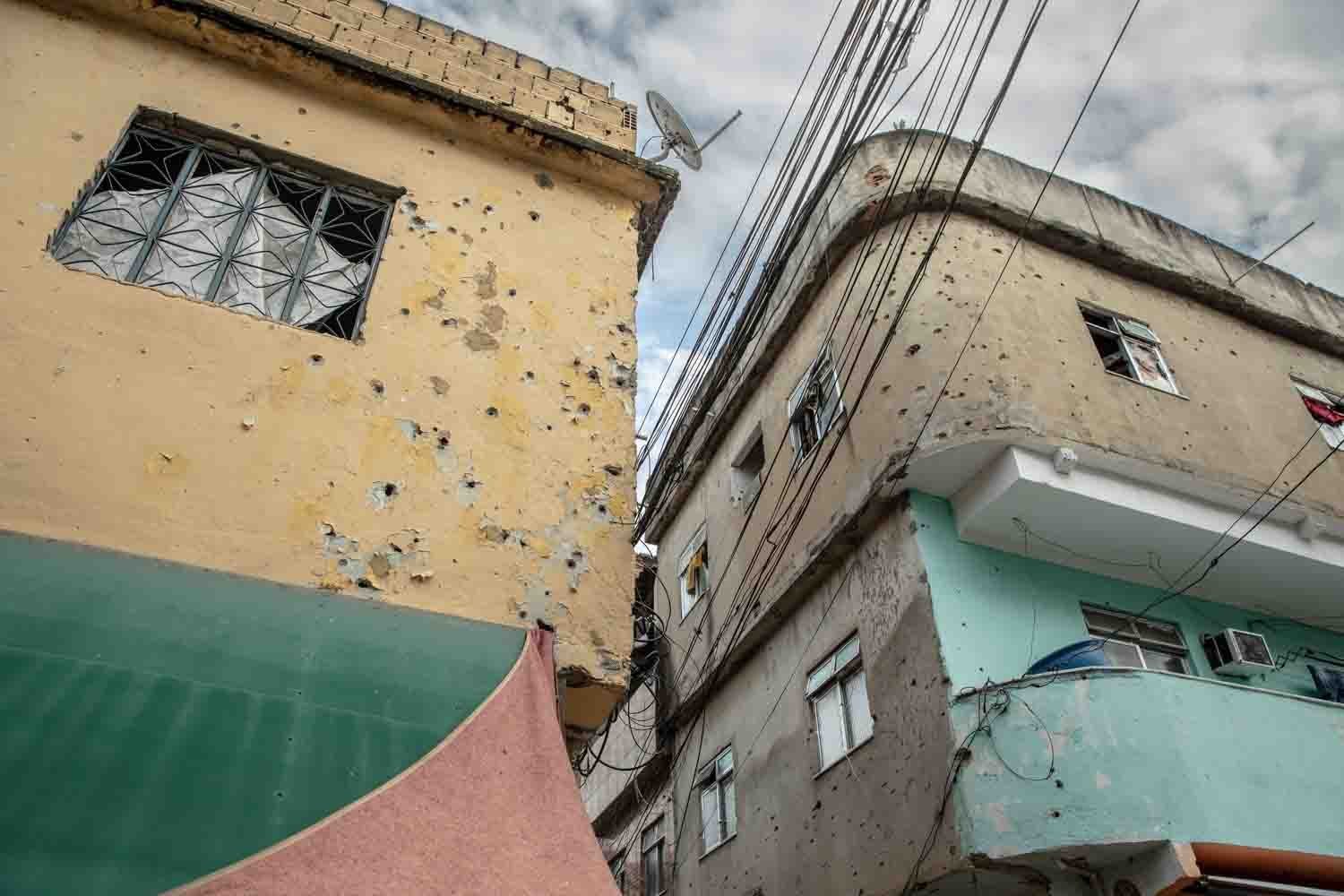
Residents of the Complexo da Maré in Rio de Janeiro participate in discussions around inequality, rights, and improvements to their community. Maré, home to slain activist Marielle Franco, is one of many favelas across the city that struggles with crime, state neglect, and racism.
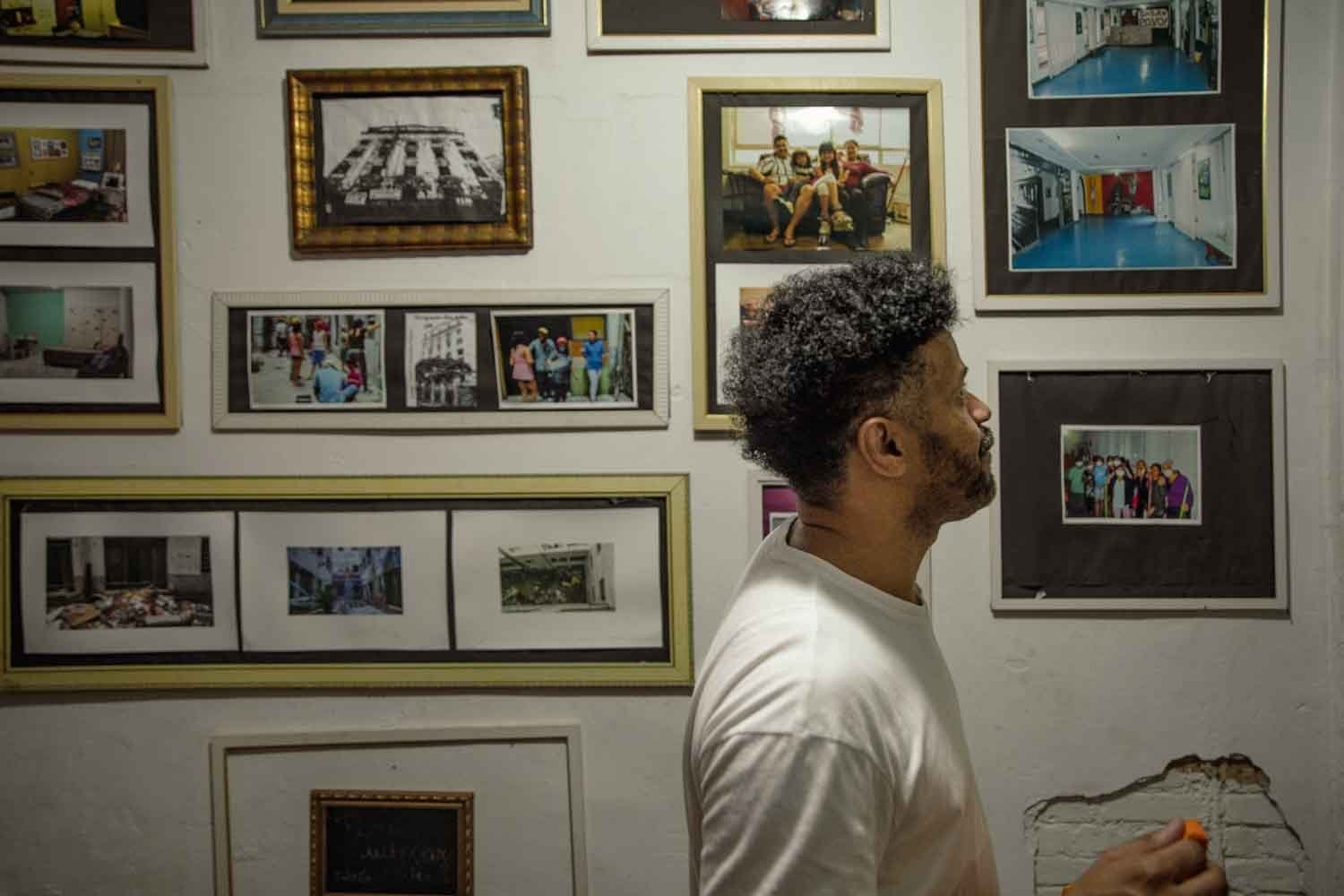
Mildo Ferreira inside an occupied building in São Paulo.

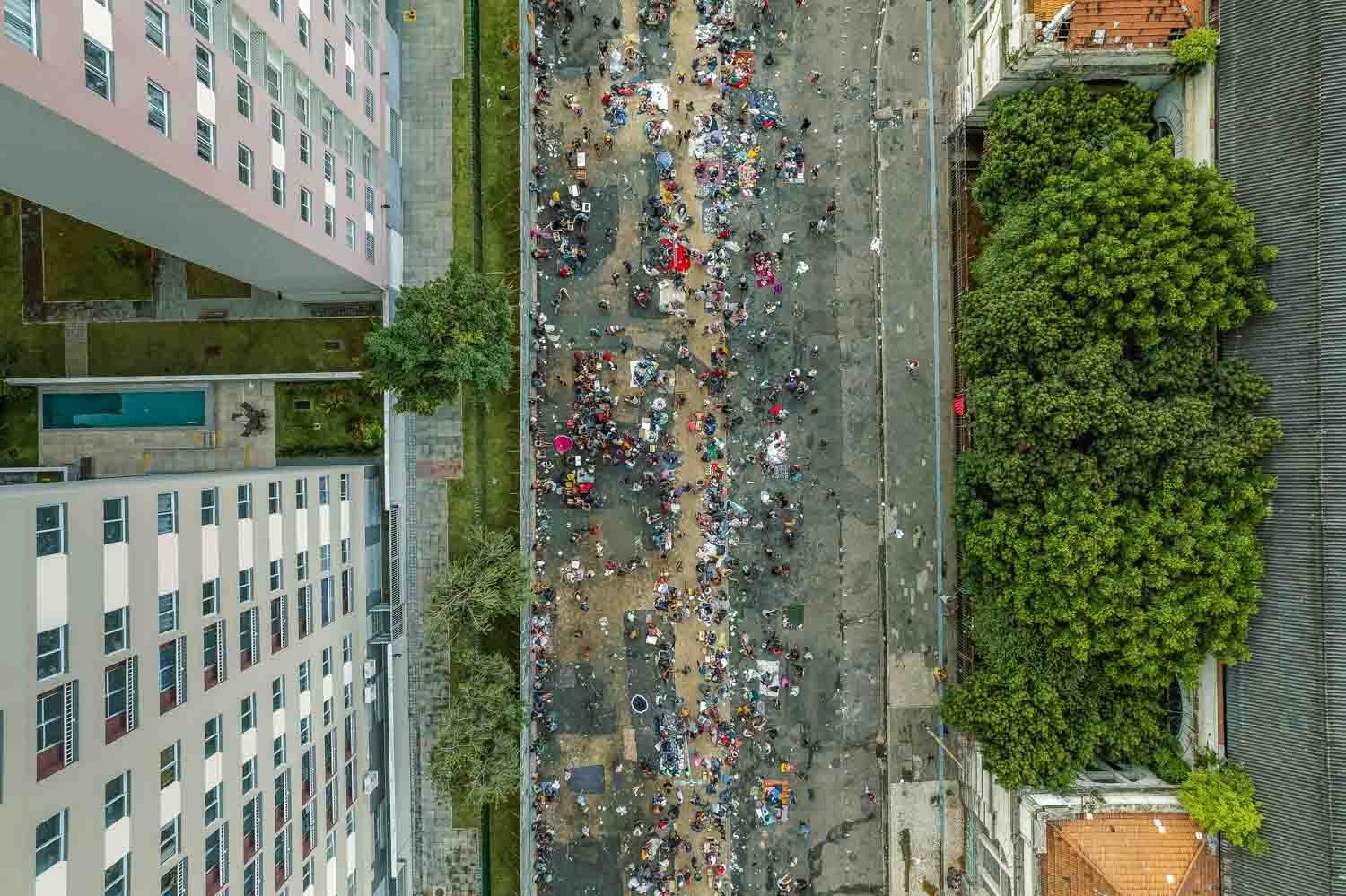
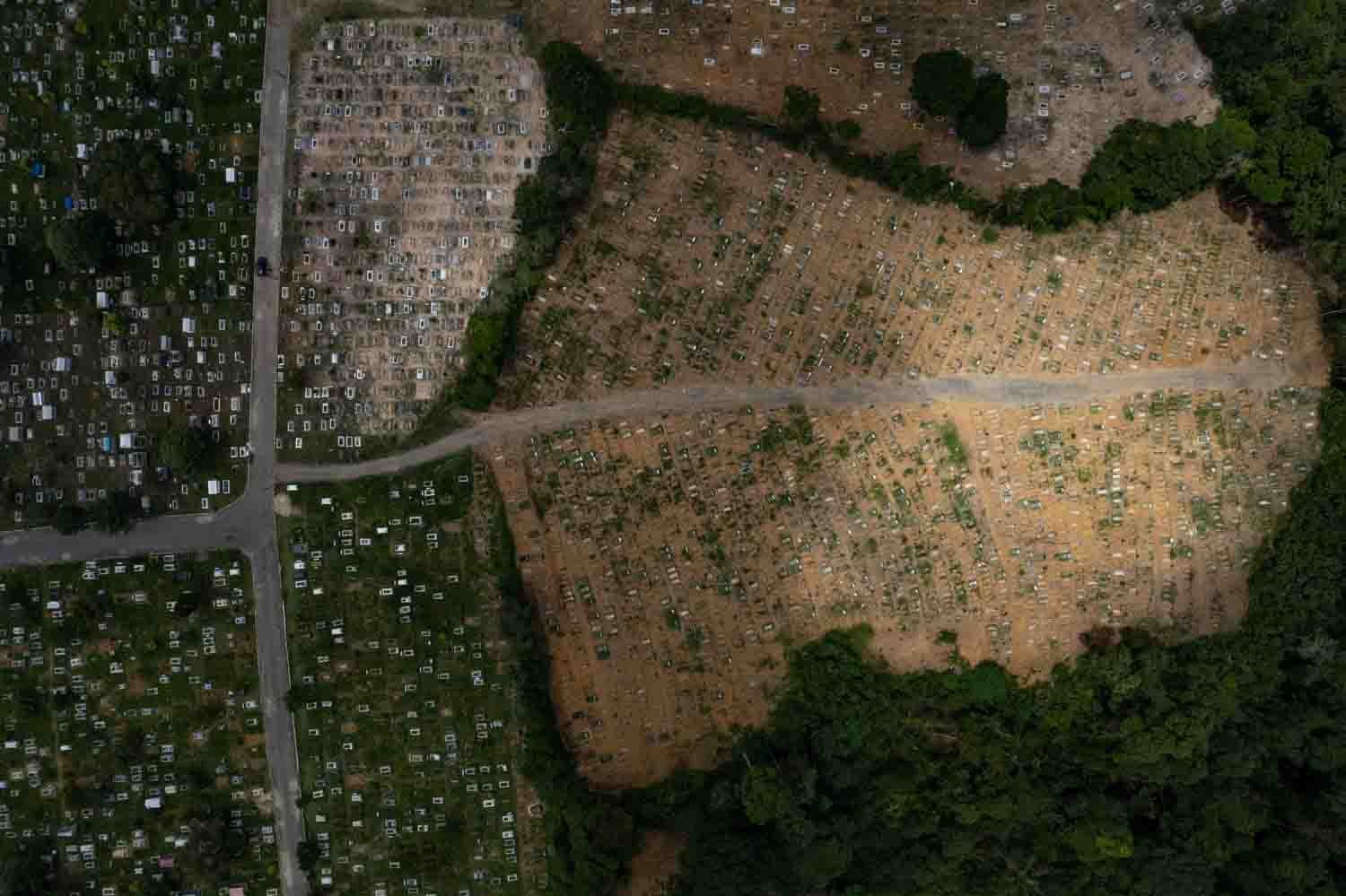
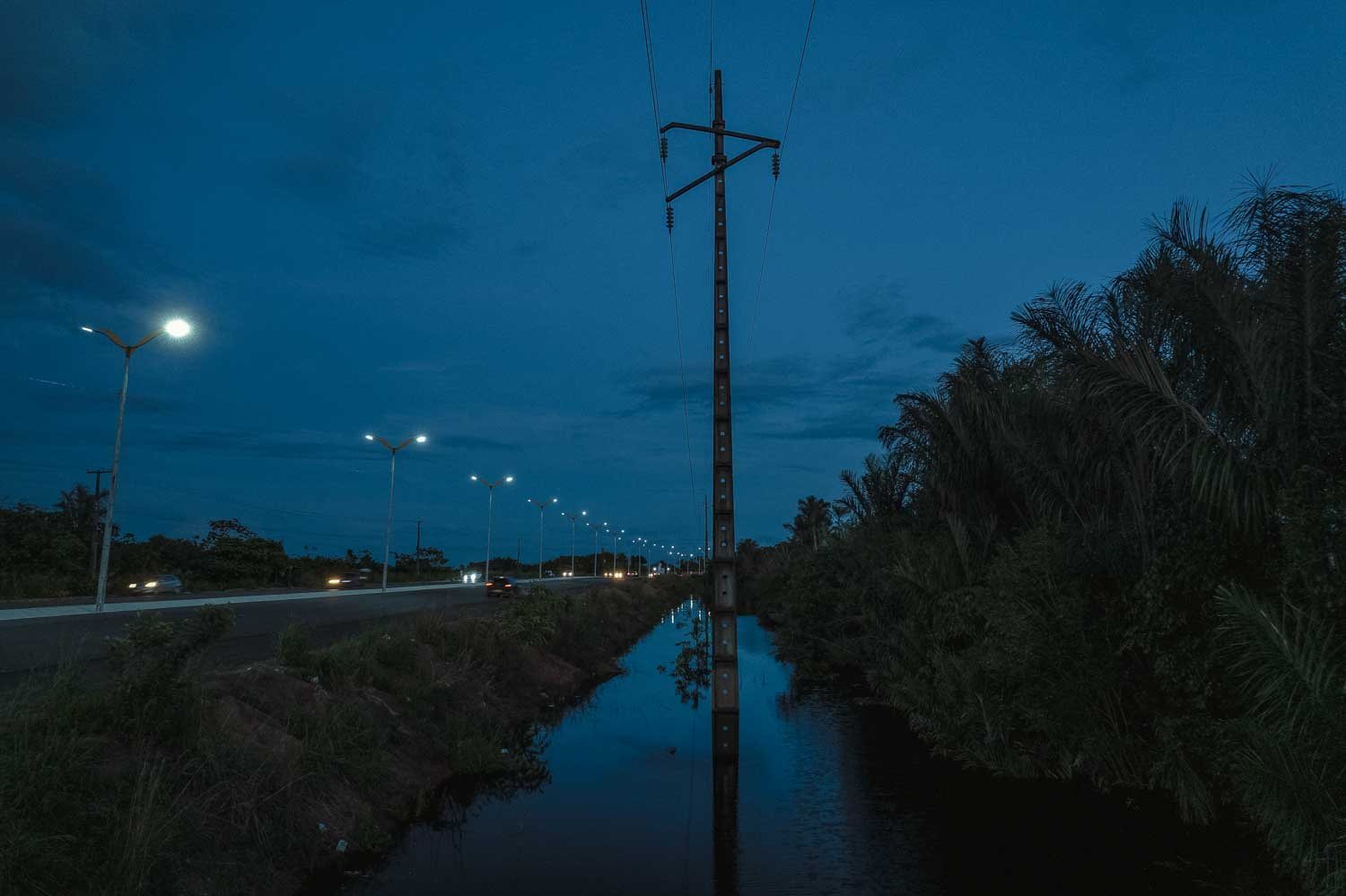
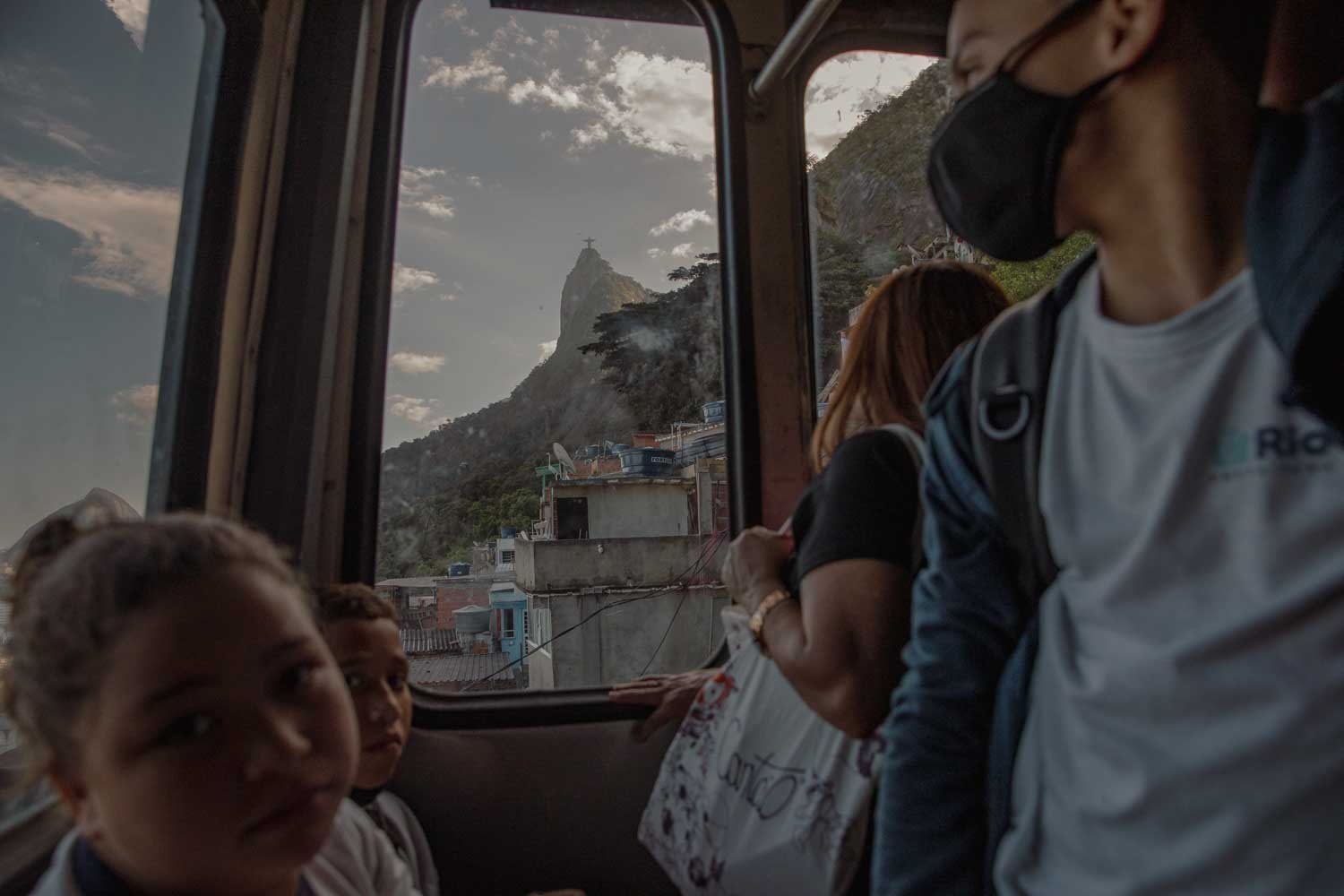
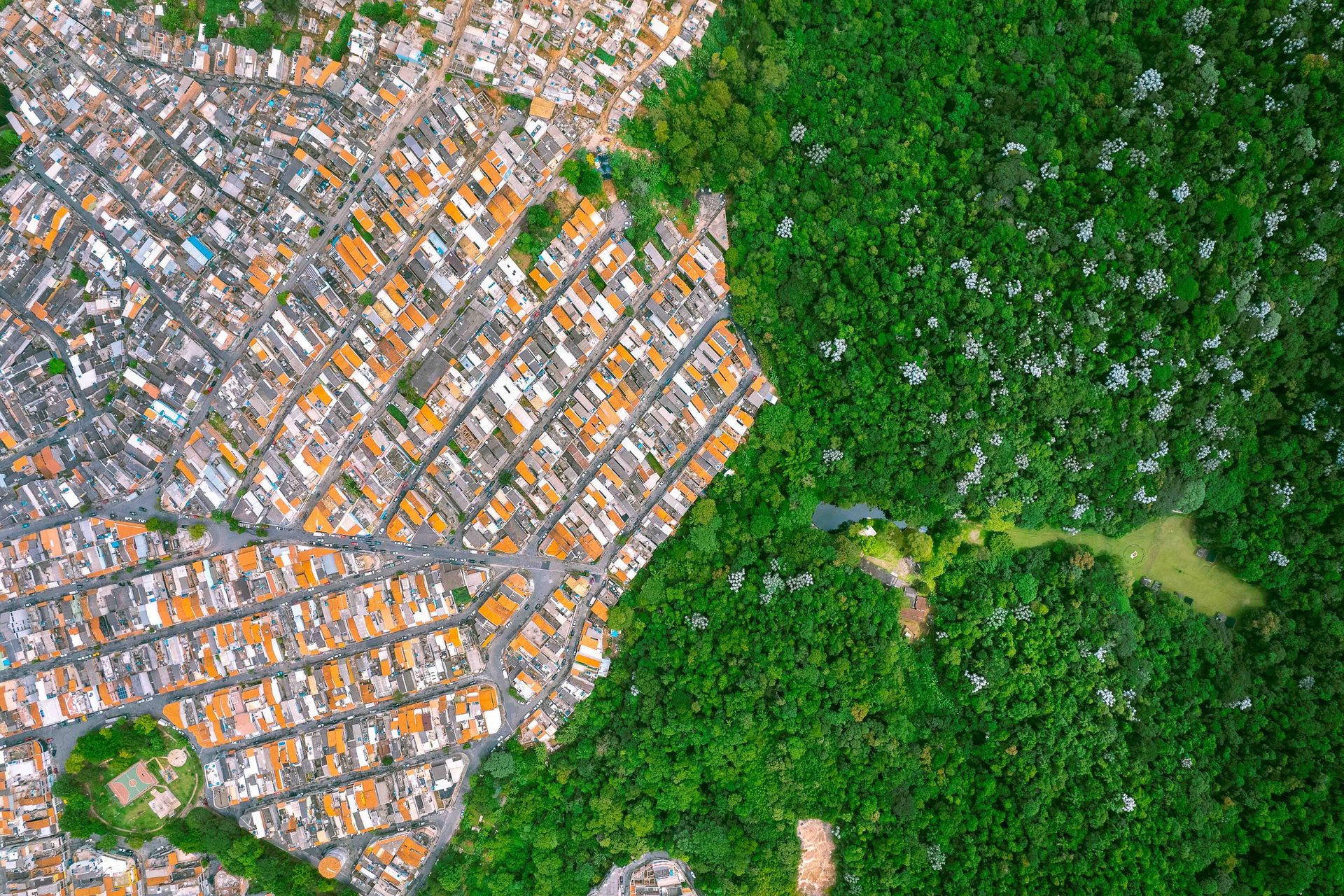
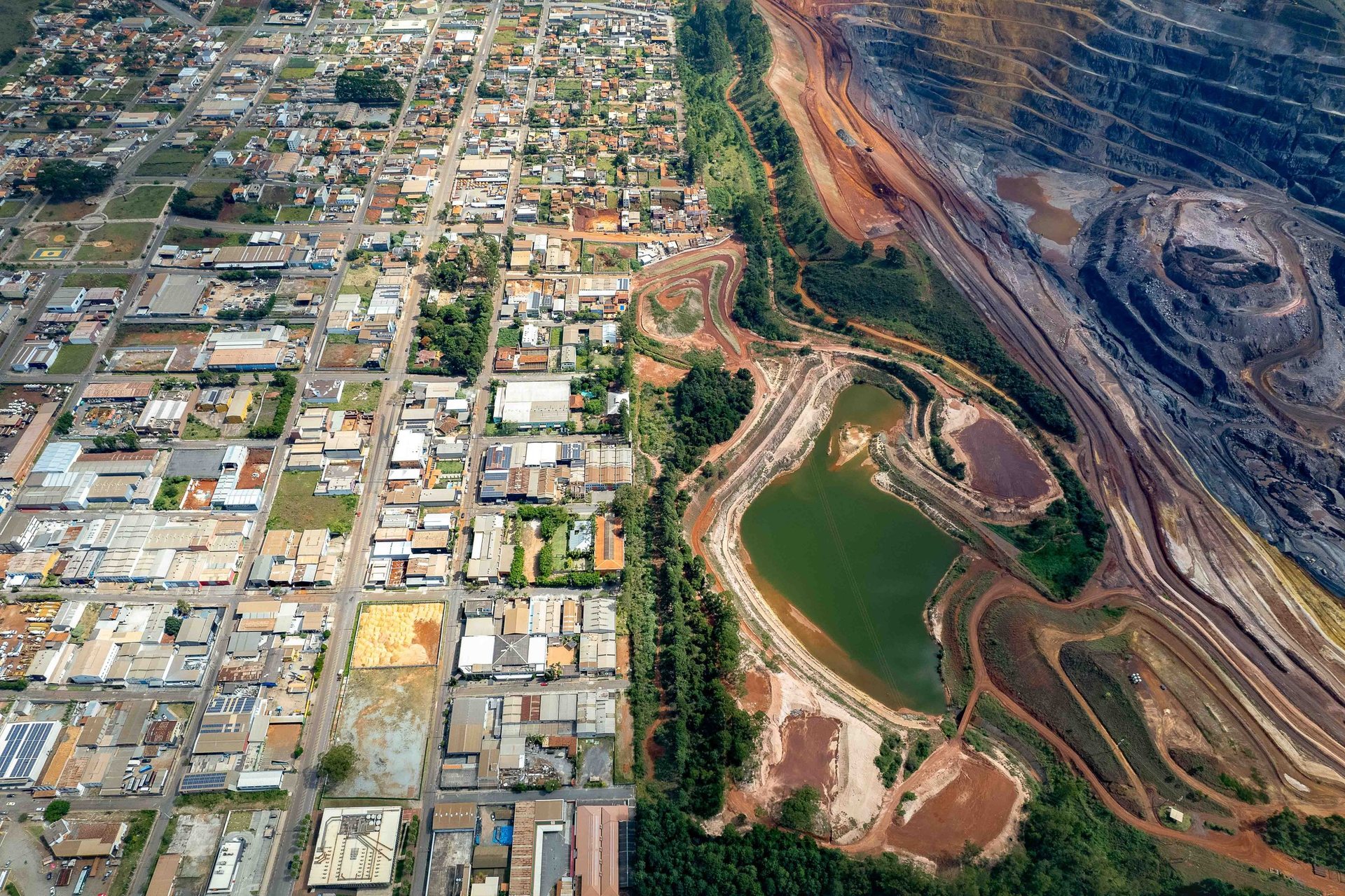
Representations of inequality tend to showcase poverty, suffering, and the plight of survival amongst disadvantaged populations. Resistance Doesn’t Walk Alone inverts this gaze by focusing on collective organising, solidarity, and protest. In doing so, the series shows how people in Brazil act in opposition to larger forces of inequality. Johnny Miller’s aerial images take the macro point of view where spatial and structural inequalities are expressed. These are coupled with portraits of those who experience marginalisation on a daily basis, and yet they resist, they persist. Miller insists on a particular perspective by stylising the images in terms of colour and composition, reminding the viewer that they are looking at something that is manipulated through a lens. These techniques are a subtle reminder that there is only so much lived inequality that outsiders can know. The series is a meaningful glimpse into the diversity of experiences across Brazil, presenting a multiplicity of strategies that people create to combat inequality.

Kara Blackmore, Curator, London School of Economics, 2022
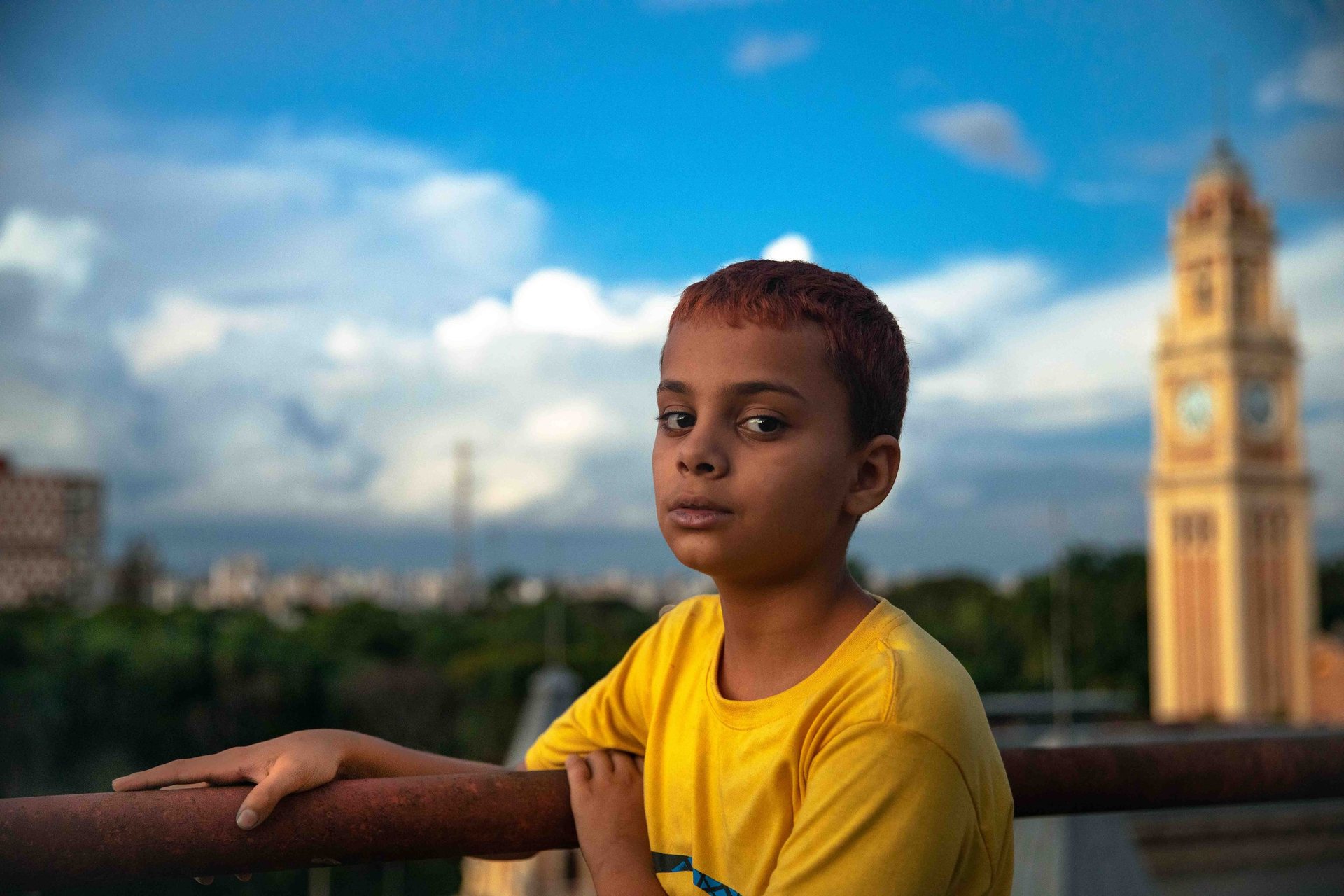
Gilmar, 11, on the roof of the Occupy Mauá, a peaceful multi-story building in São Paulo occupied since 2007 and housing 237 families.
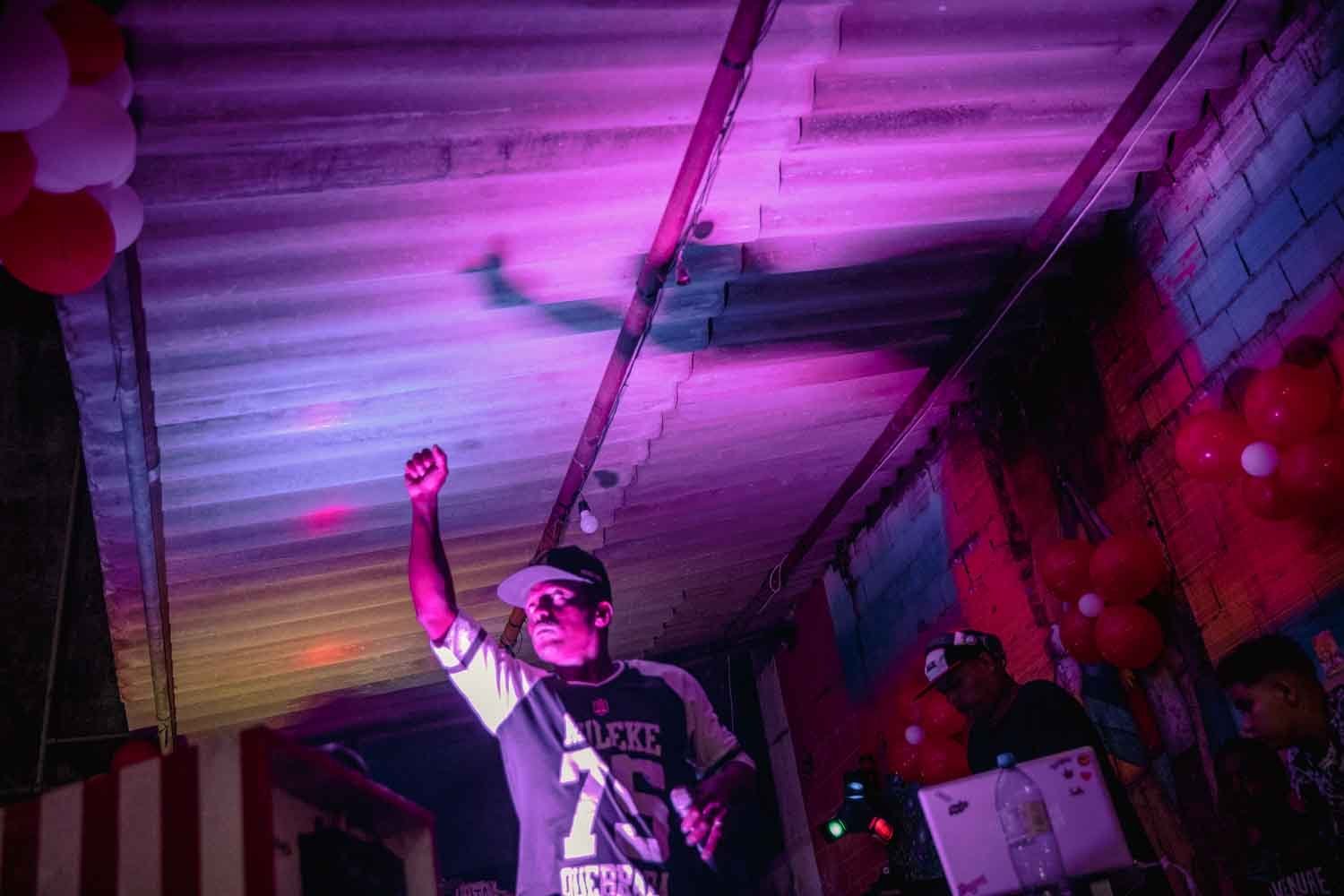
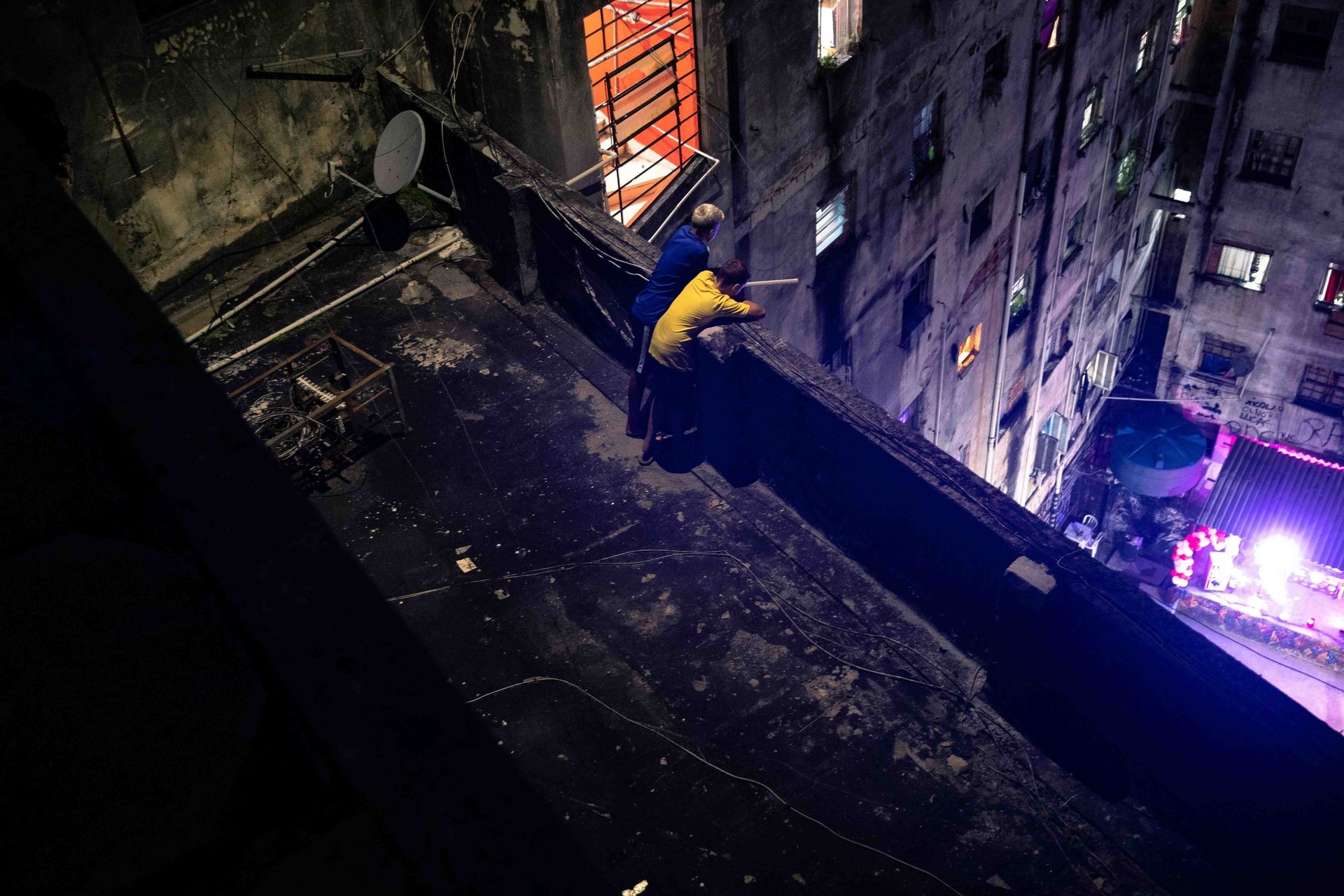
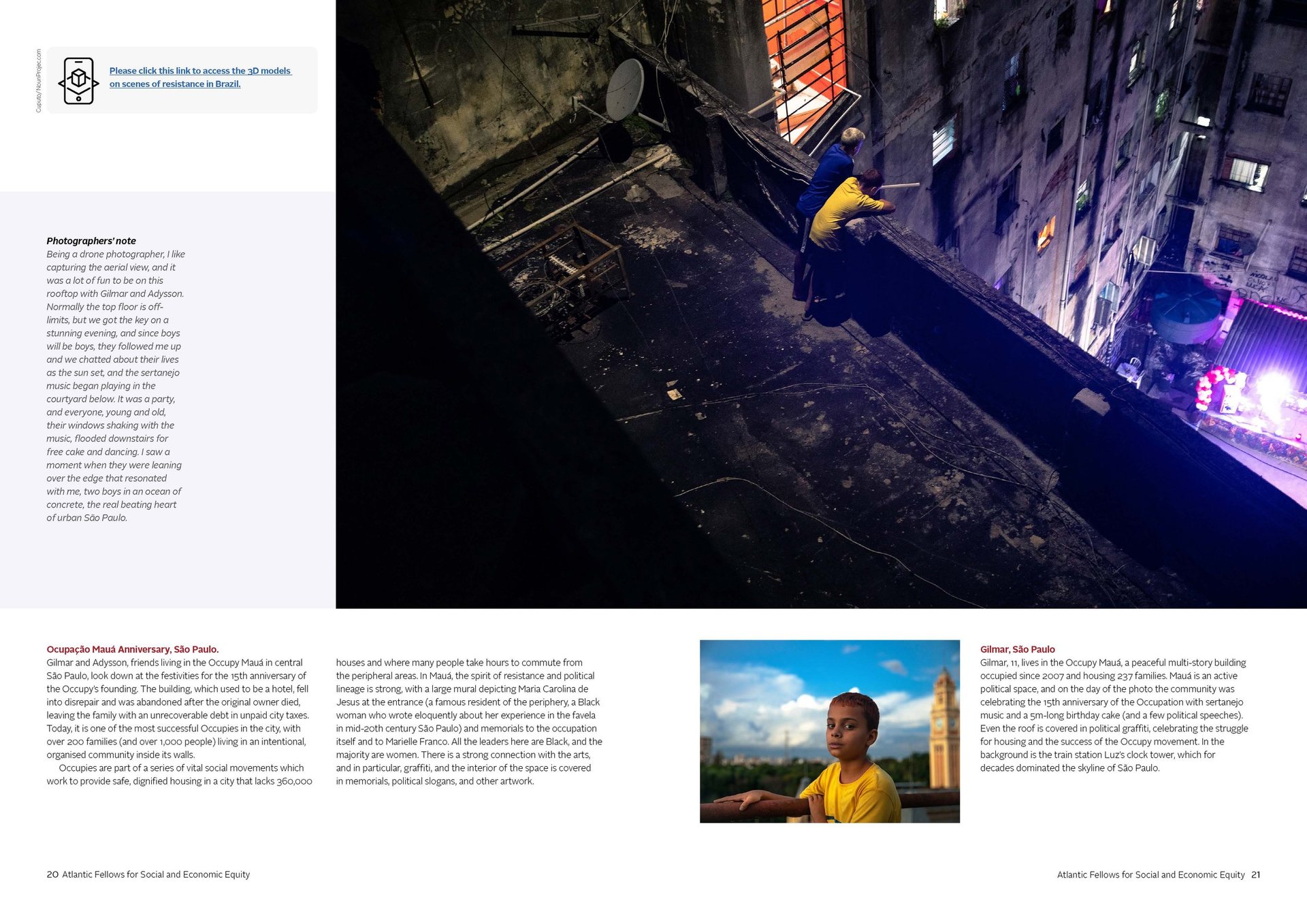
Boys on the roof of the Occupy Mauá during its 15th anniversary party.
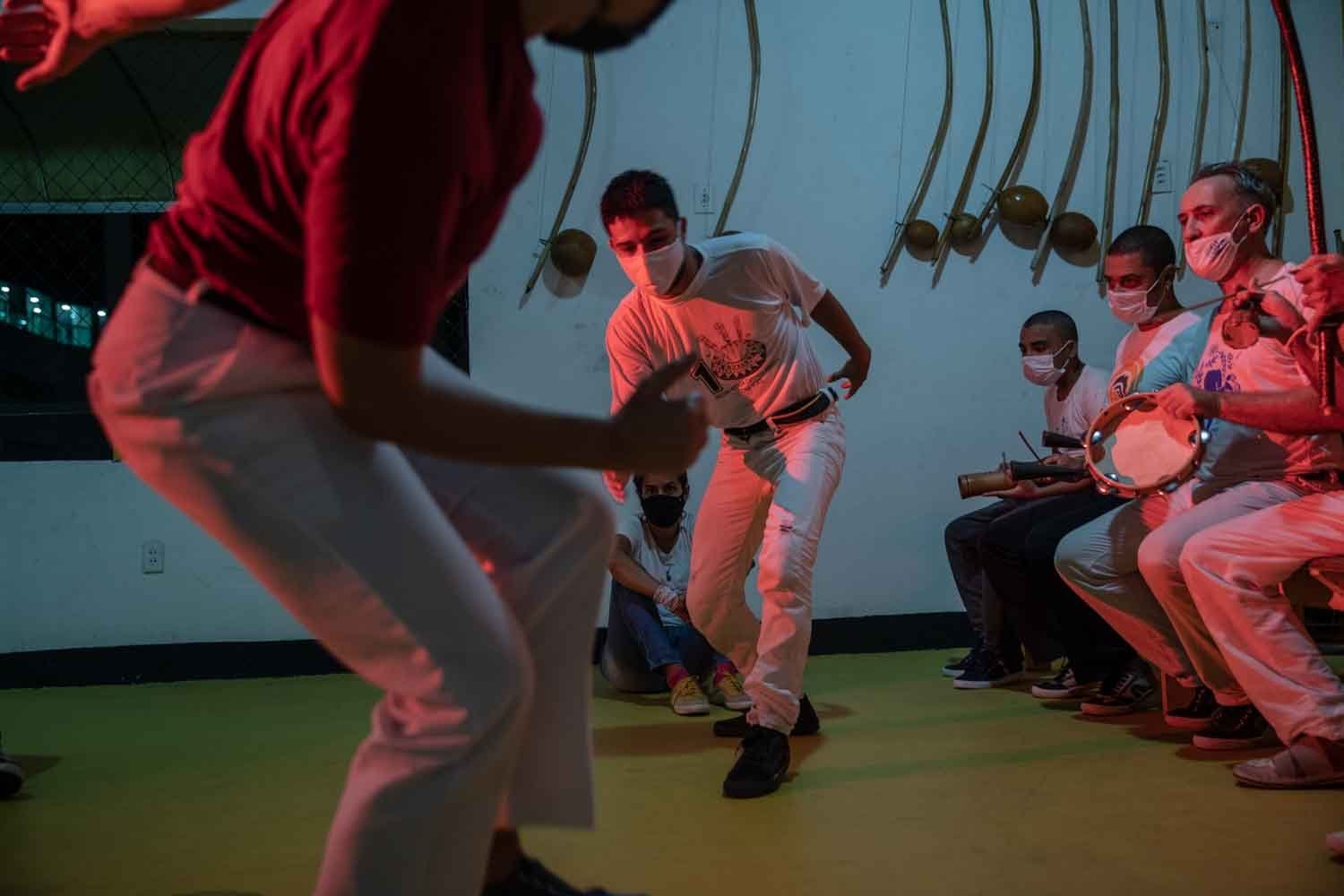
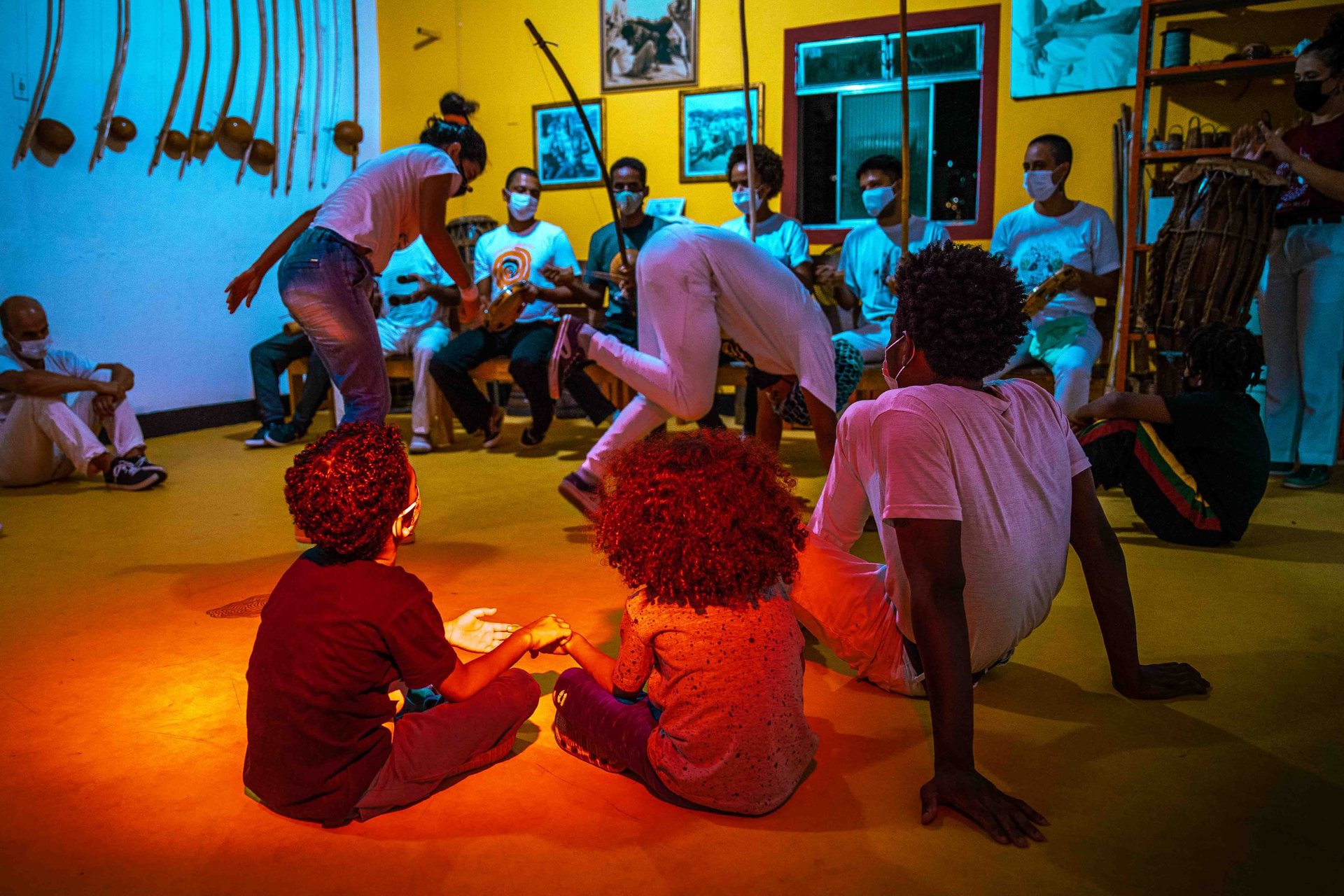
Children hold hands during Capoeira class in Salvador.
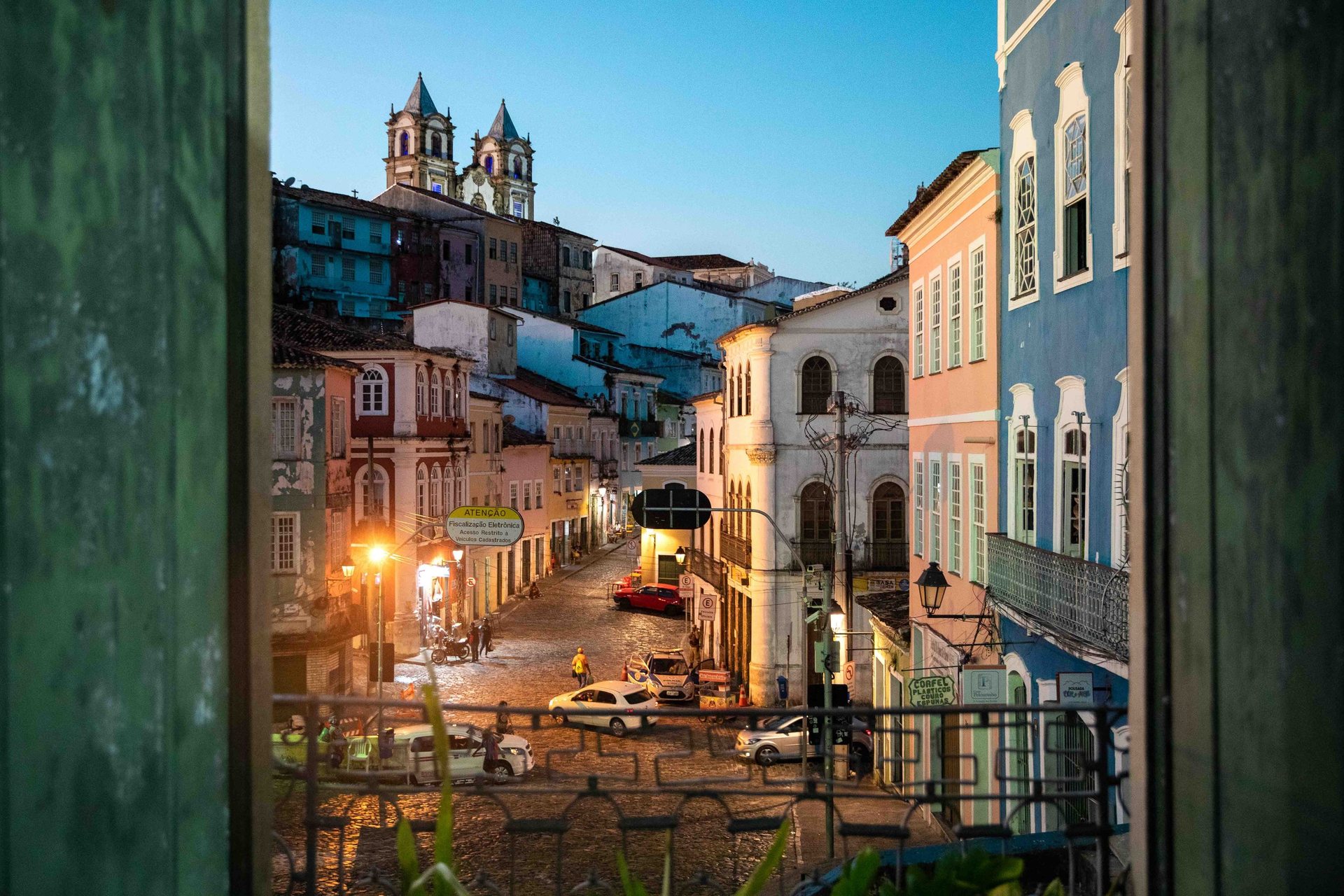
View from the Church of the Brotherhood of Black Men Church, in Salvador.
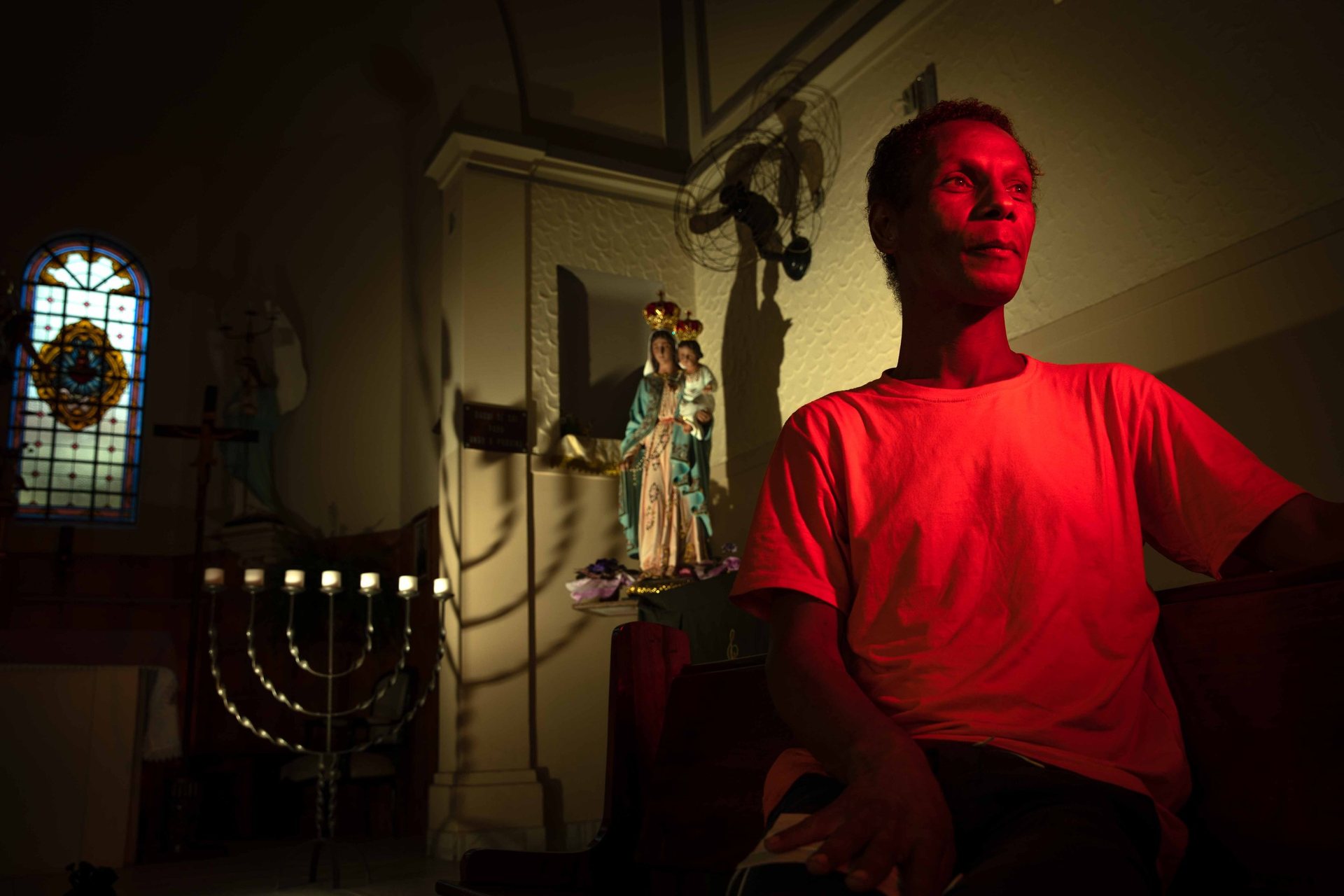
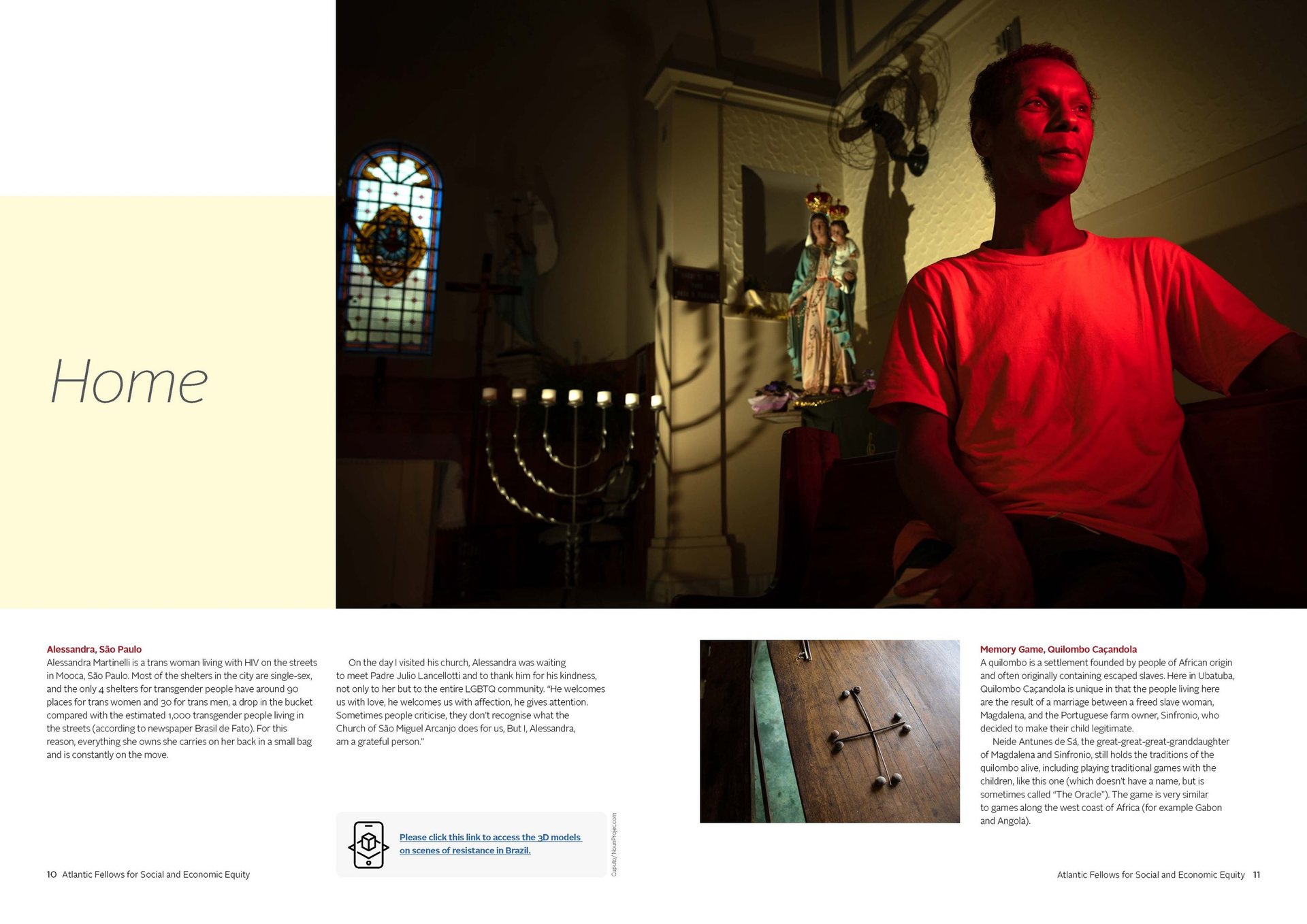
Penha Aparecida Salvador in the church of Father Julio Lancelotti in Sāo Paulo.
Penha Aparecida Salvador in the church of Father Julio Lancelotti in Sāo Paulo .
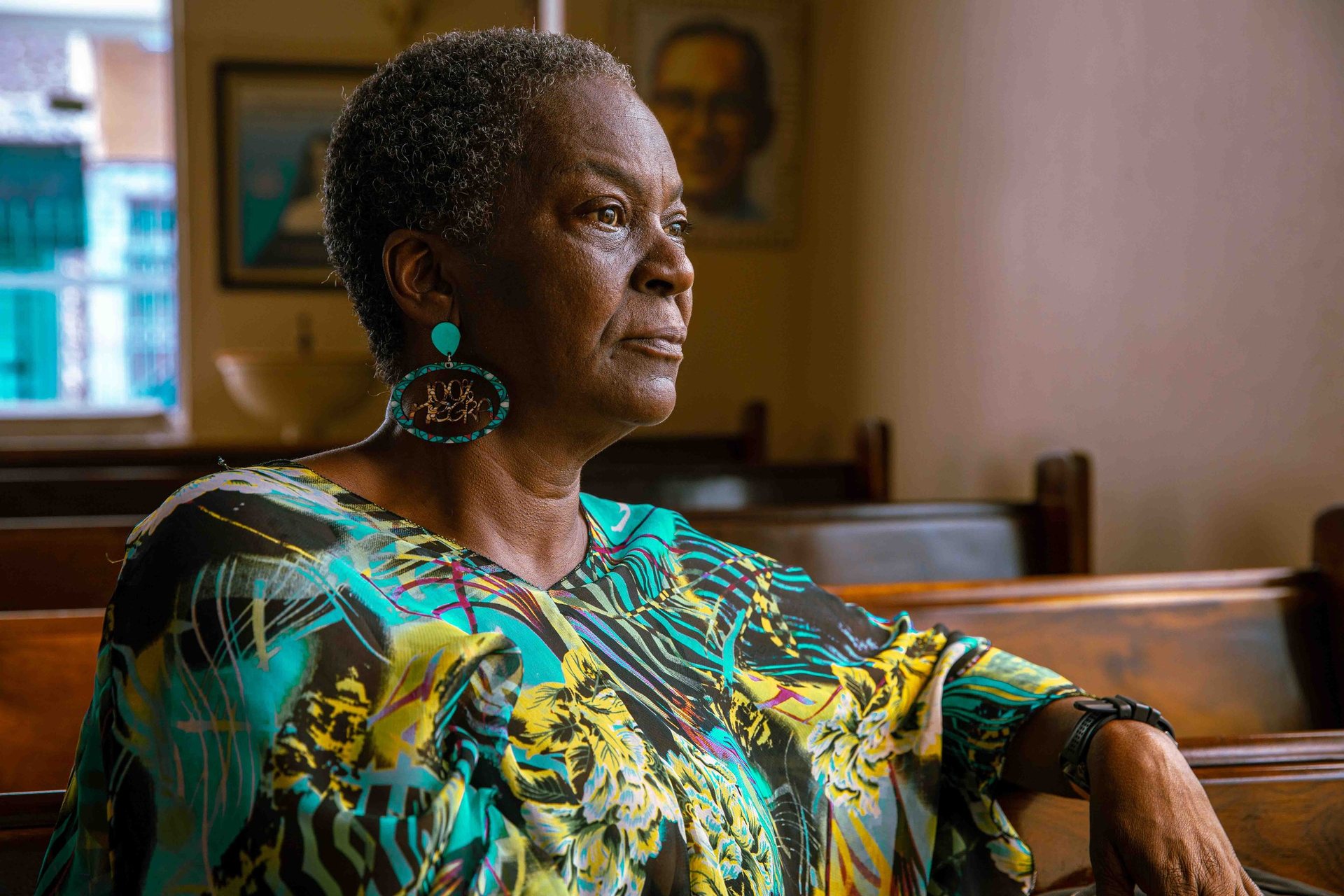
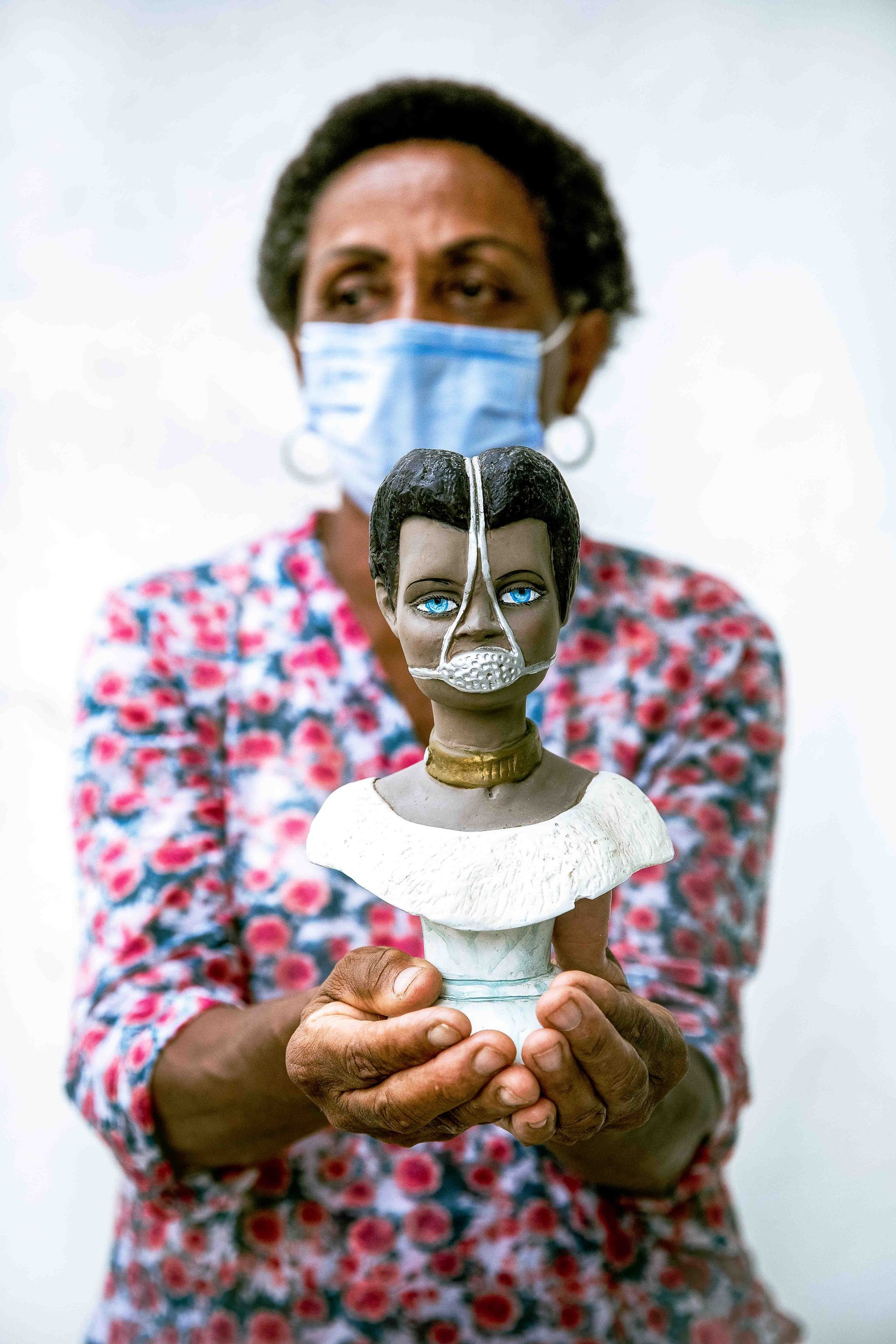
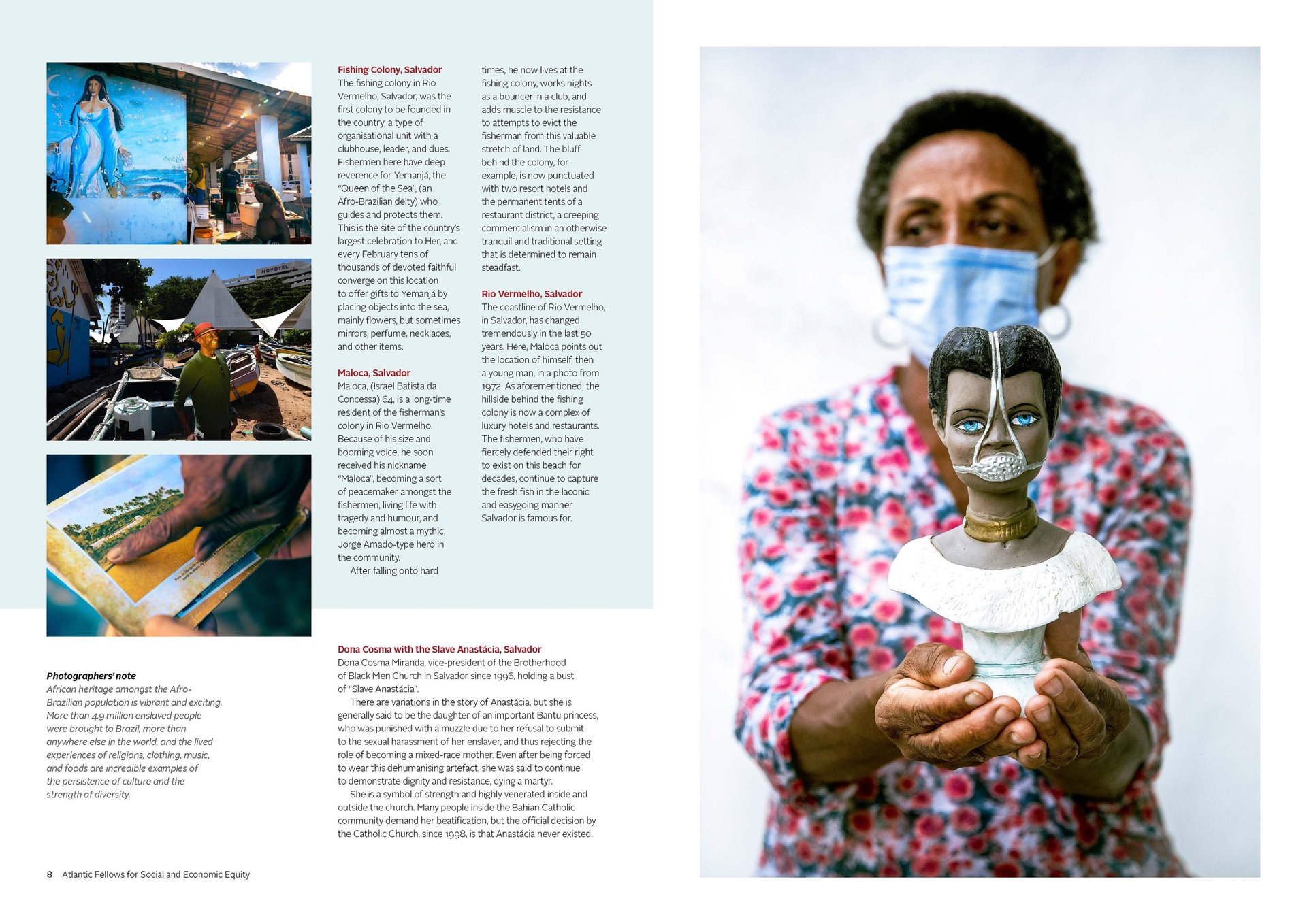
Dona Cosma Miranda, vice-president of the Brotherhood of Black Men Church in Salvador, holding a bust of the “Slave Anastácia”.
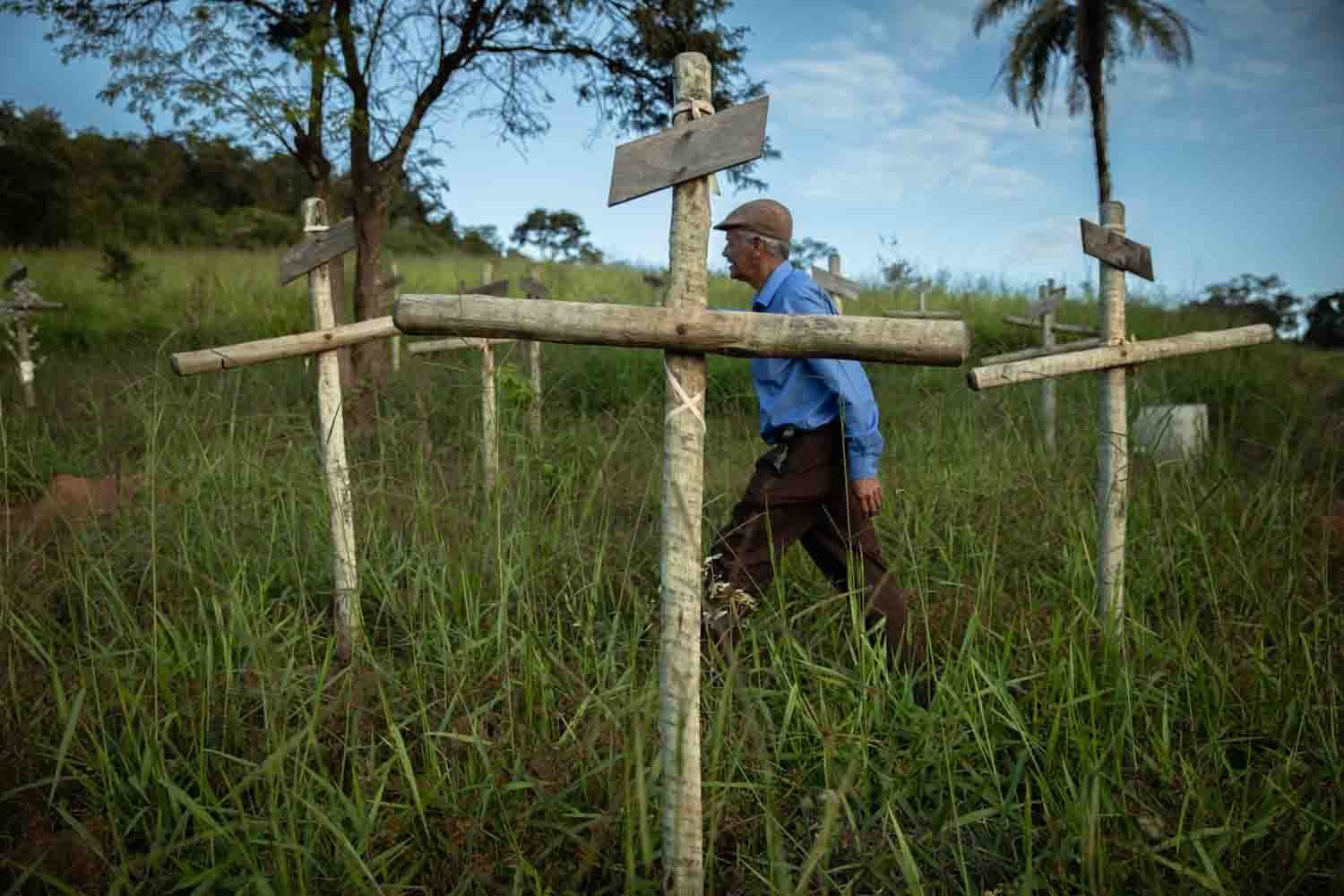
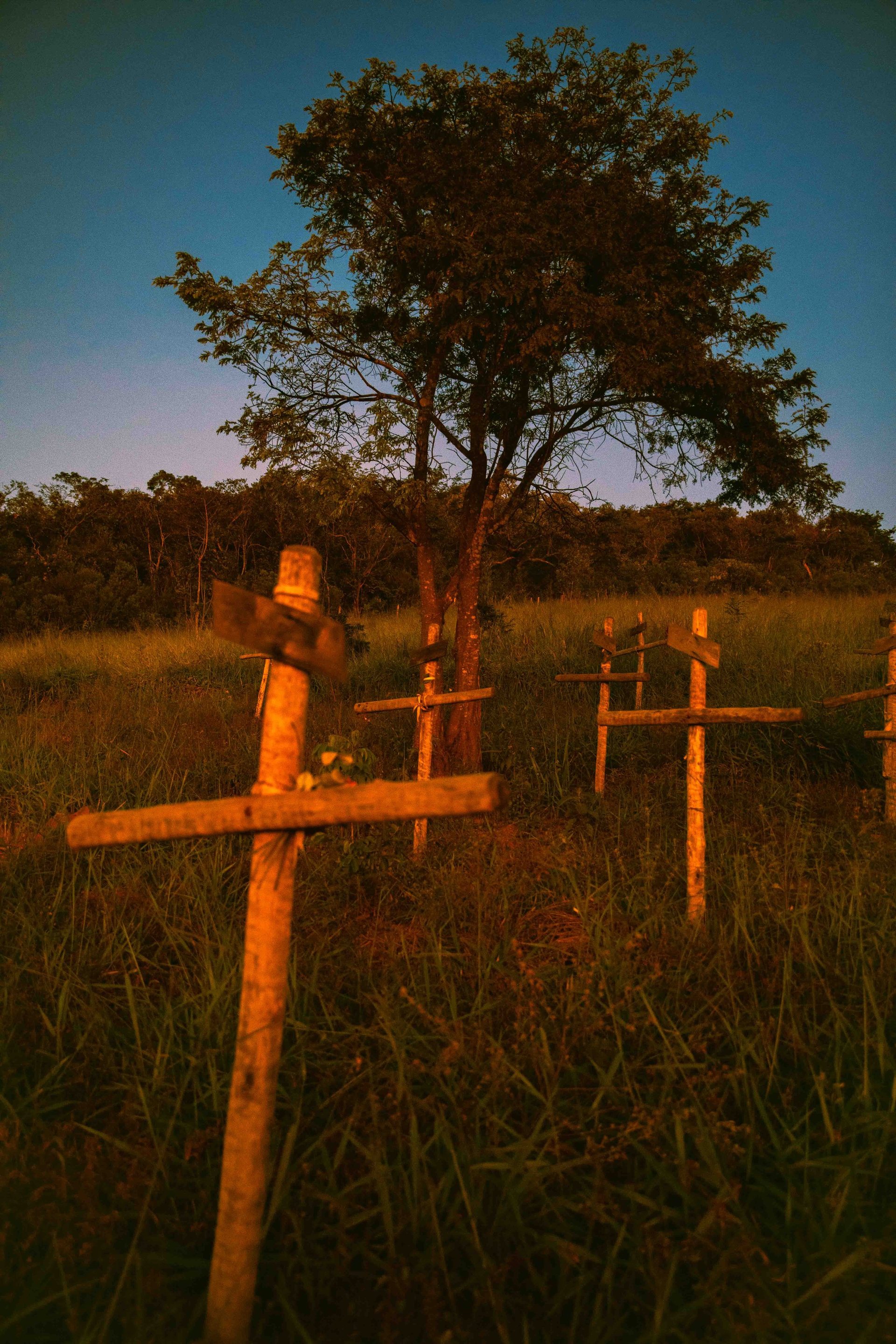
A memorial to some of the 270 people who died in a mudslide in Brumadinho, when a tailings dam burst in 2019.
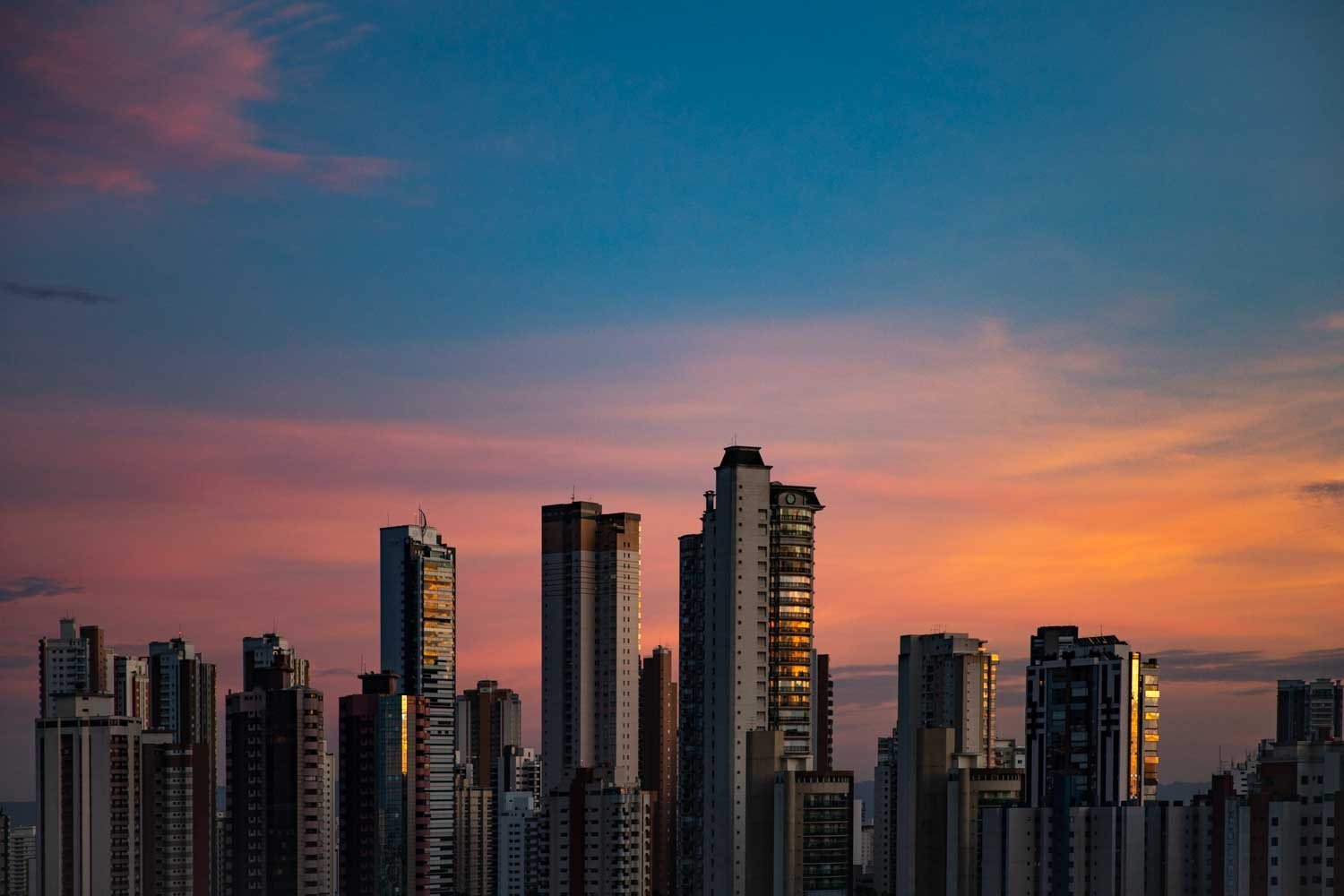
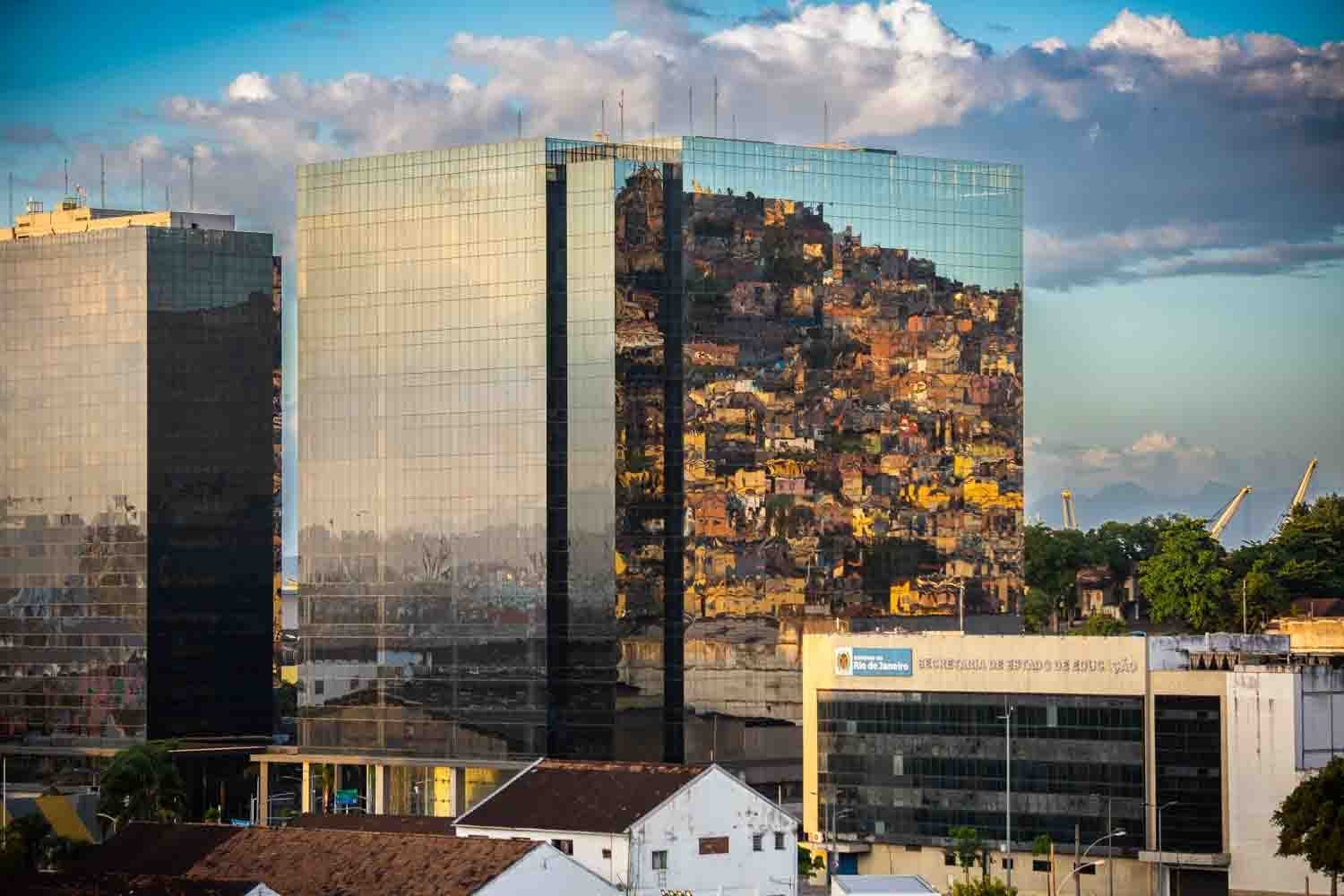
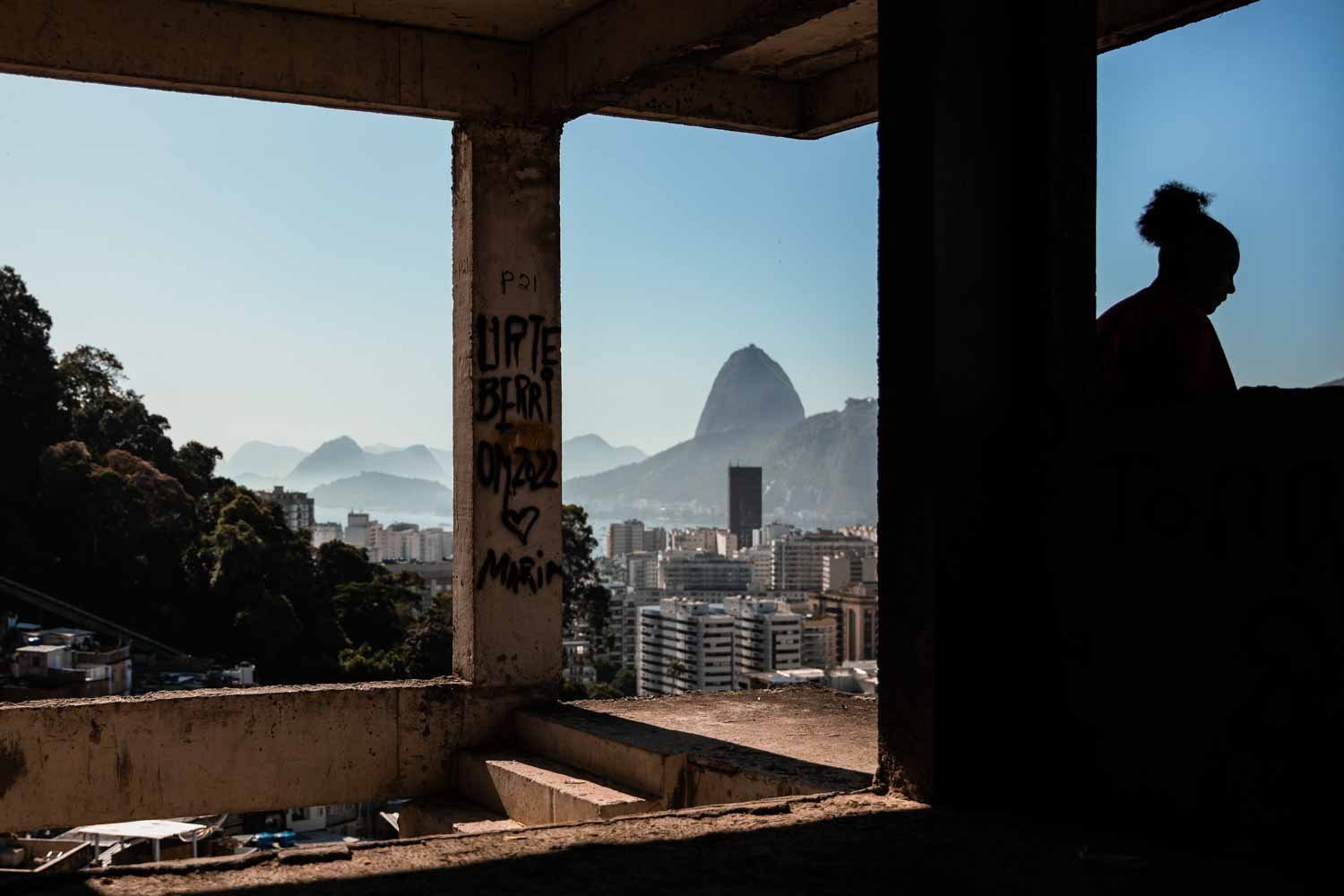
The 9th of July Occupy in São Paulo is situated amongst some of the city’s wealthiest real estate.
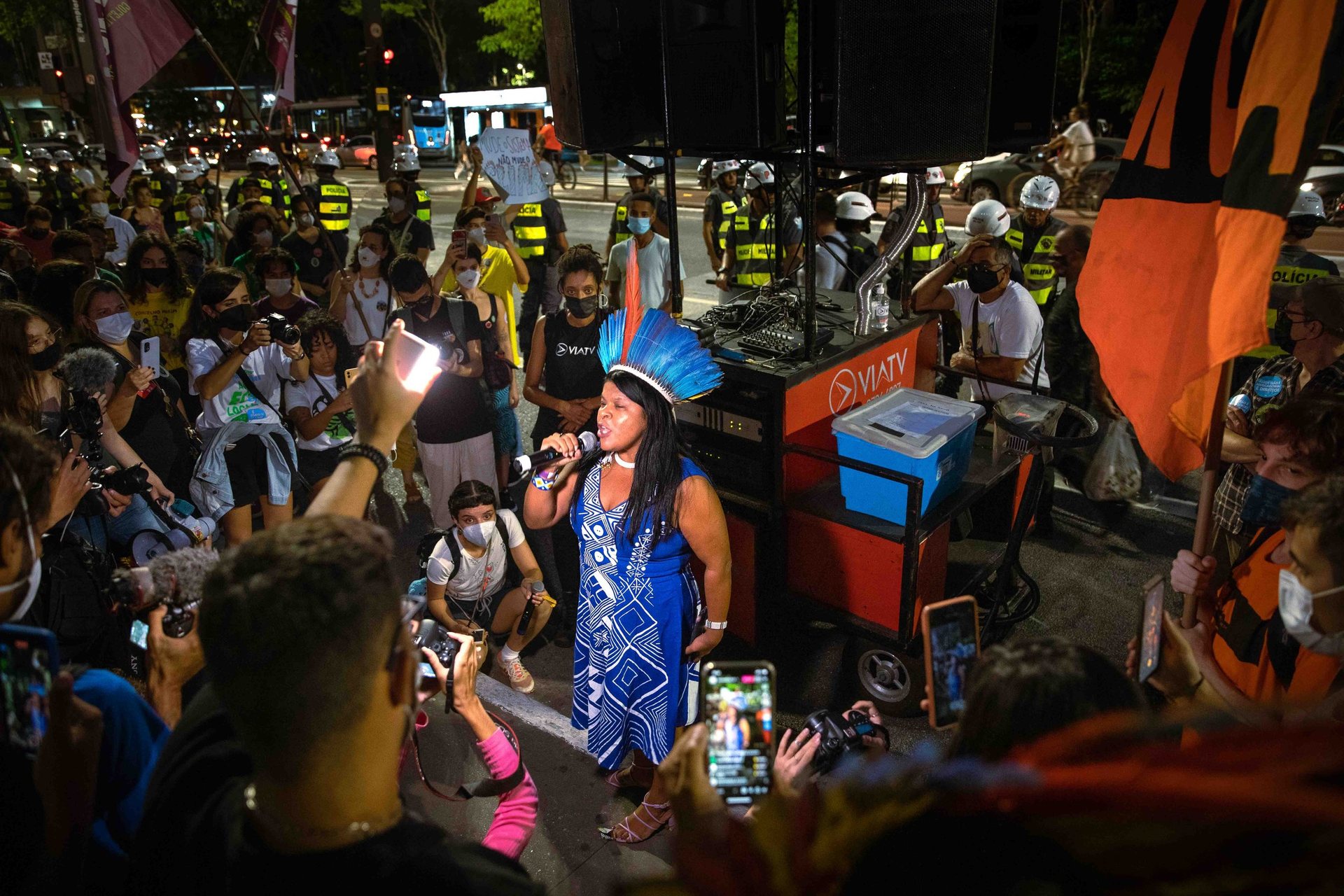
“It’s not enough to say Indigenous people are beautiful. We should elect Indigenous candidates to defeat the agribusinesses. What affects us, affects the whole world.” - Sonia Guajajara, São Paulo.

The Politics of Inequality research theme is co-hosted by LSE’s Atlantic Fellows for Social and Economic Equity and LSE International Inequalities Institute. It examines practices of resistance, contestation, solidarity, and everyday actions against social and economic inequalities. Through this research, we consider the experiences, the power, and the agency of people to adapt, challenge, and mobilise. The series of photographs for the exhibition, Resistance Doesn’t Walk Alone, by the Senior Atlantic Fellow for Social and Economic Equity, Johnny Miller,

is a project that is hosted as a part of this research theme. These photographs are a striking visual representation of both the experiences of people and communities across Brazil and an illustration of how inequalities are inscribed on and manifested in urban spaces and natural landscapes. This exhibition, which we are delighted to host at LSE, takes us on a journey through Brazil, sharing the stories and giving us a glimpse into the lives of people living in an unequal country.

Armine Ishkanian, Director of the International Inequalities Institute at the London School of Economics, 2022
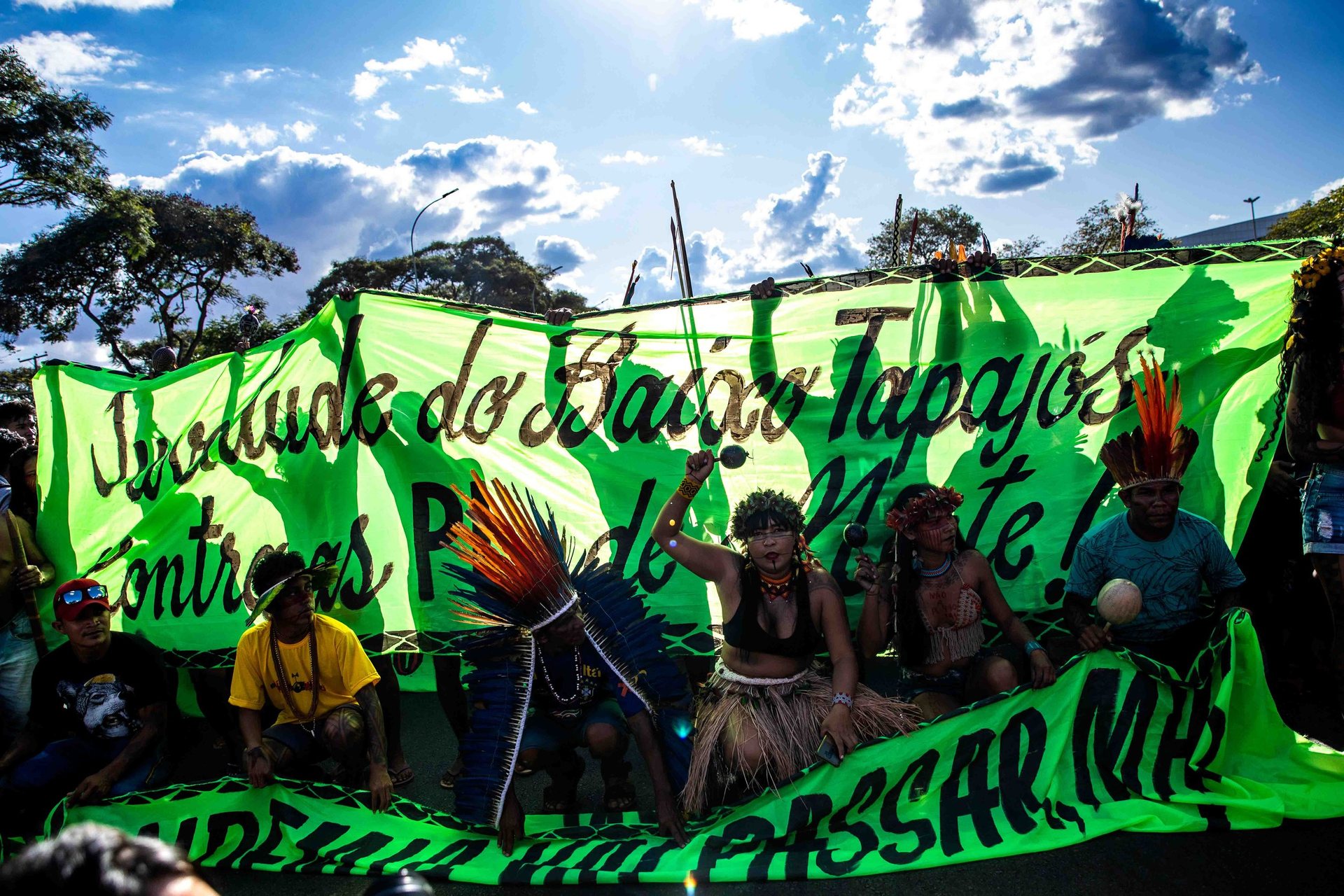
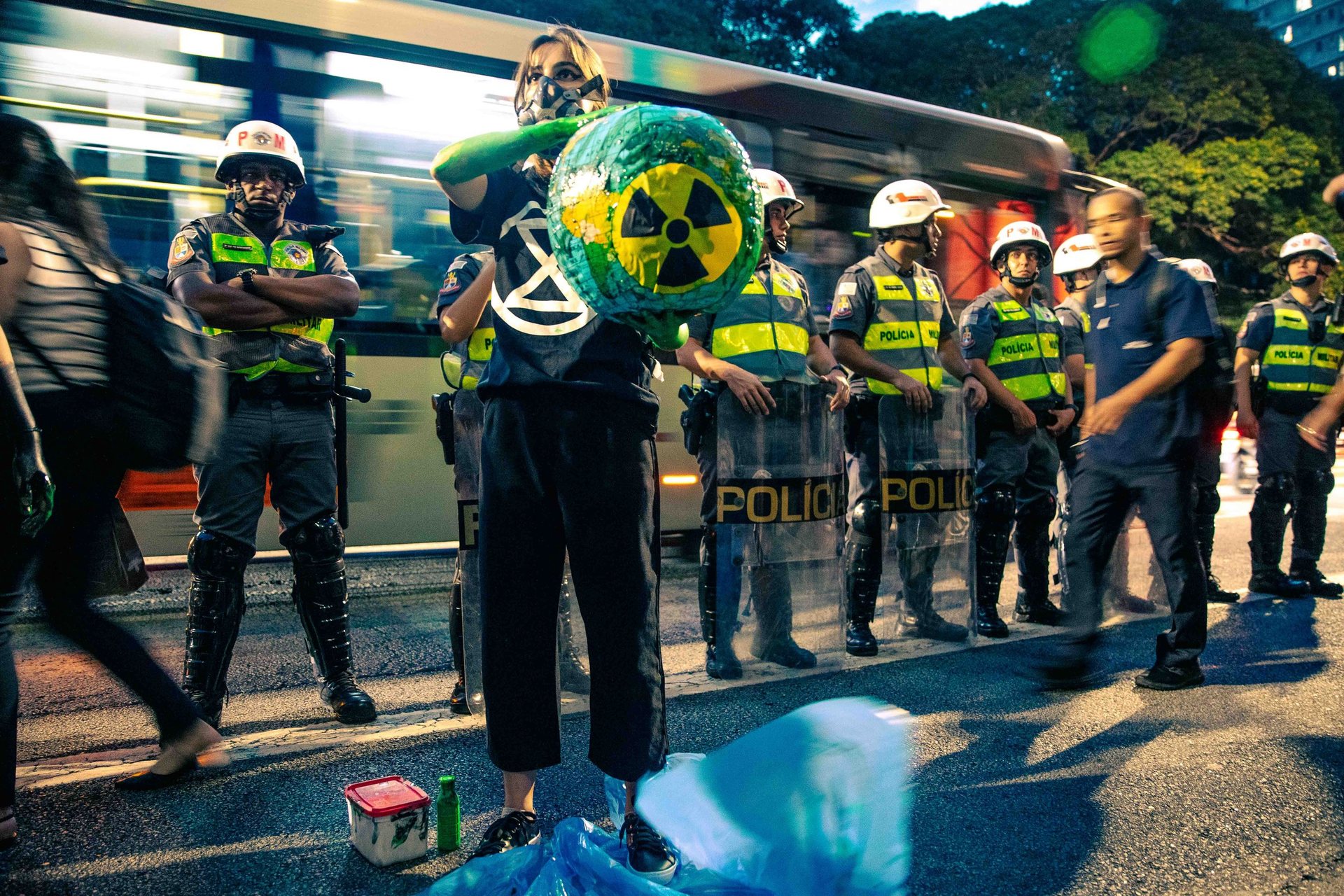
Fridays for Future protest, São Paulo.
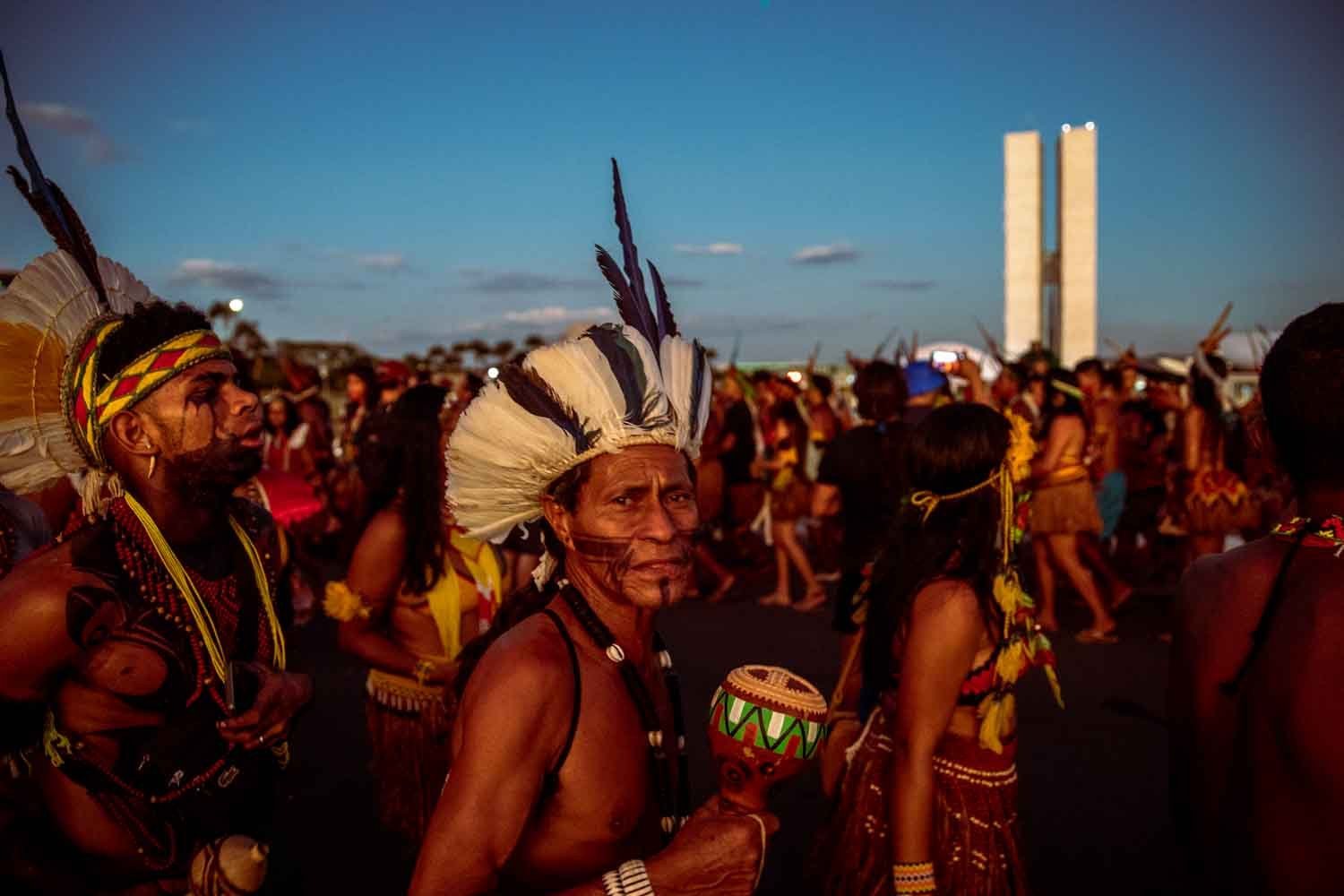
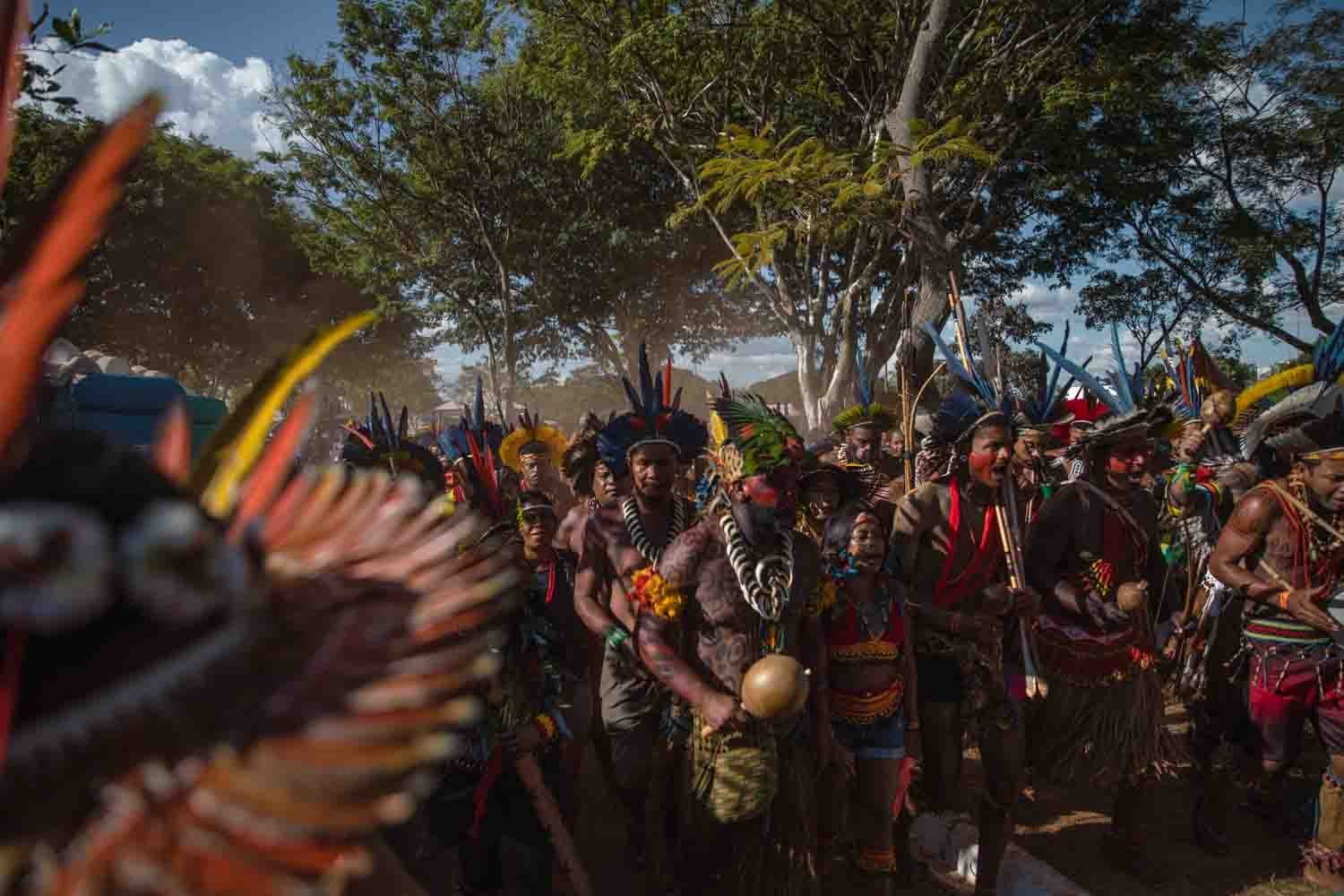
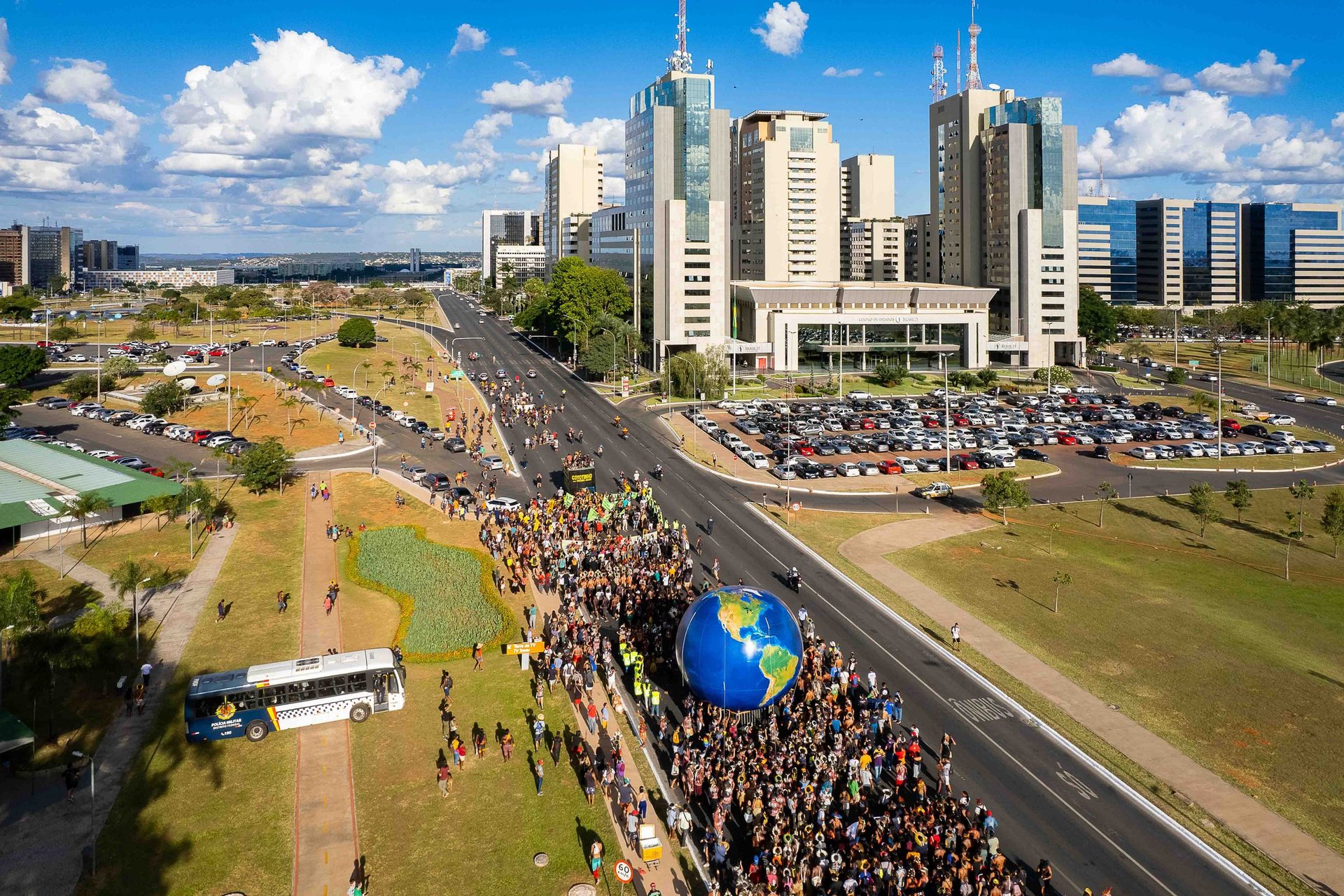
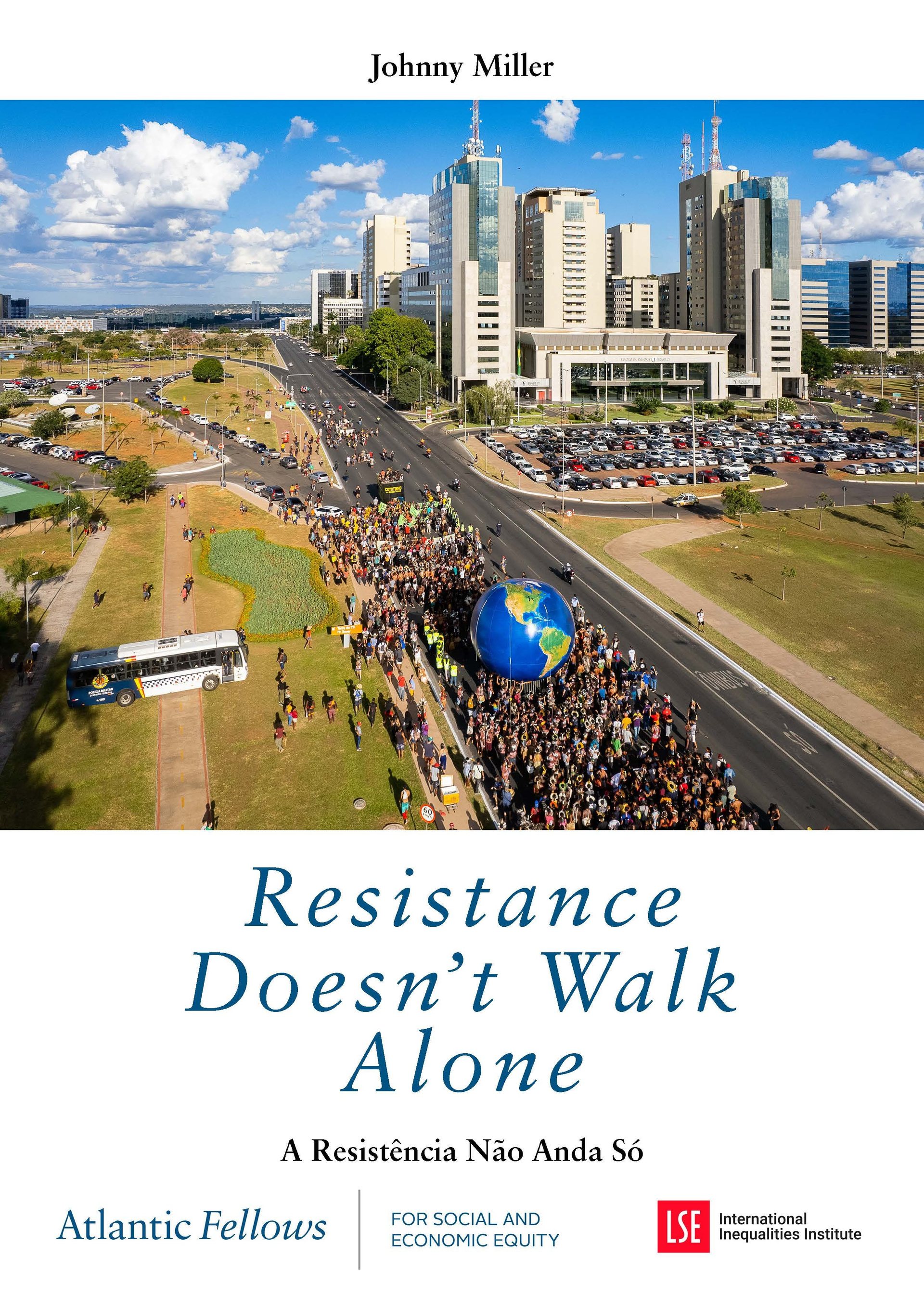
Indigenous People’s March, Brasilia.
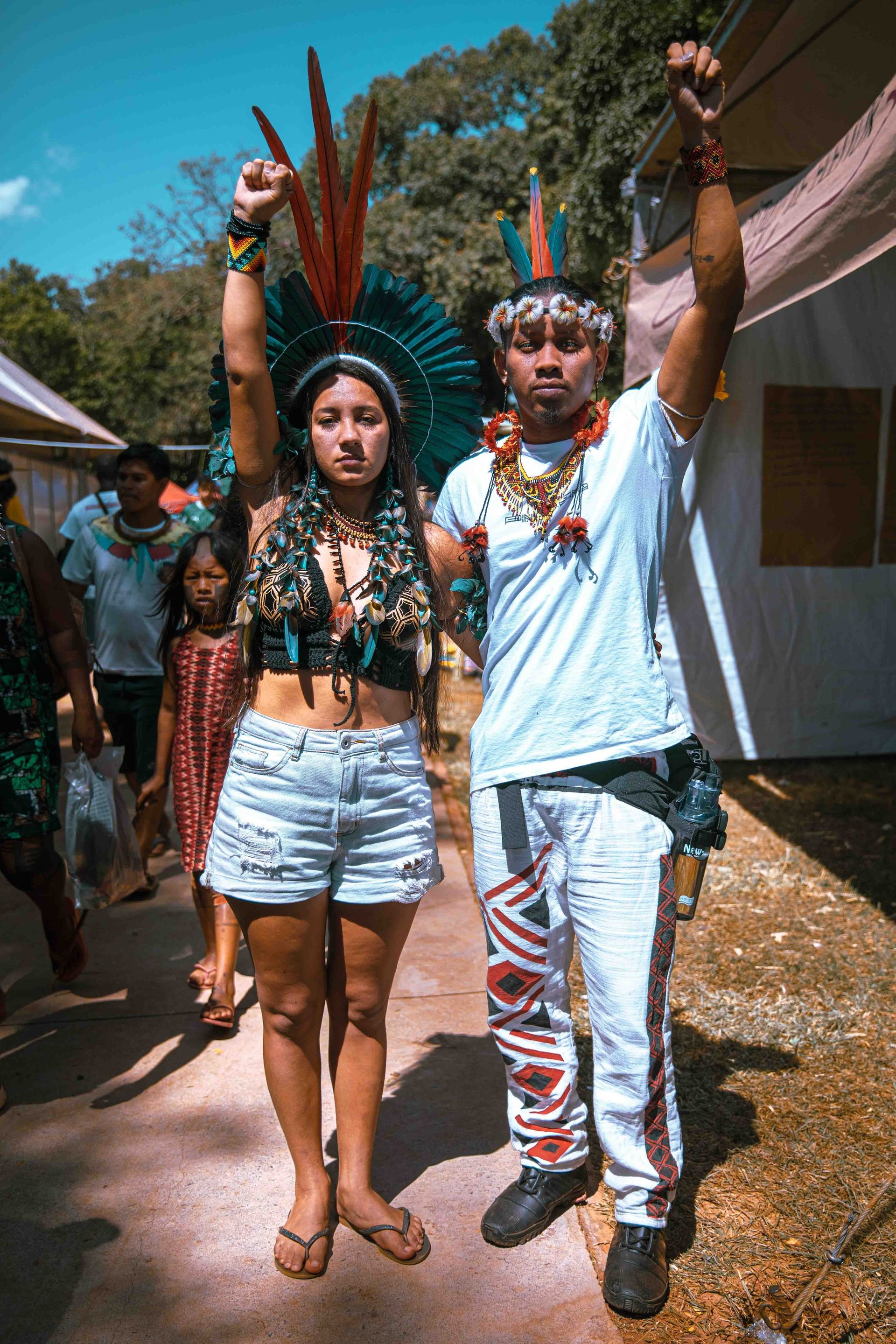
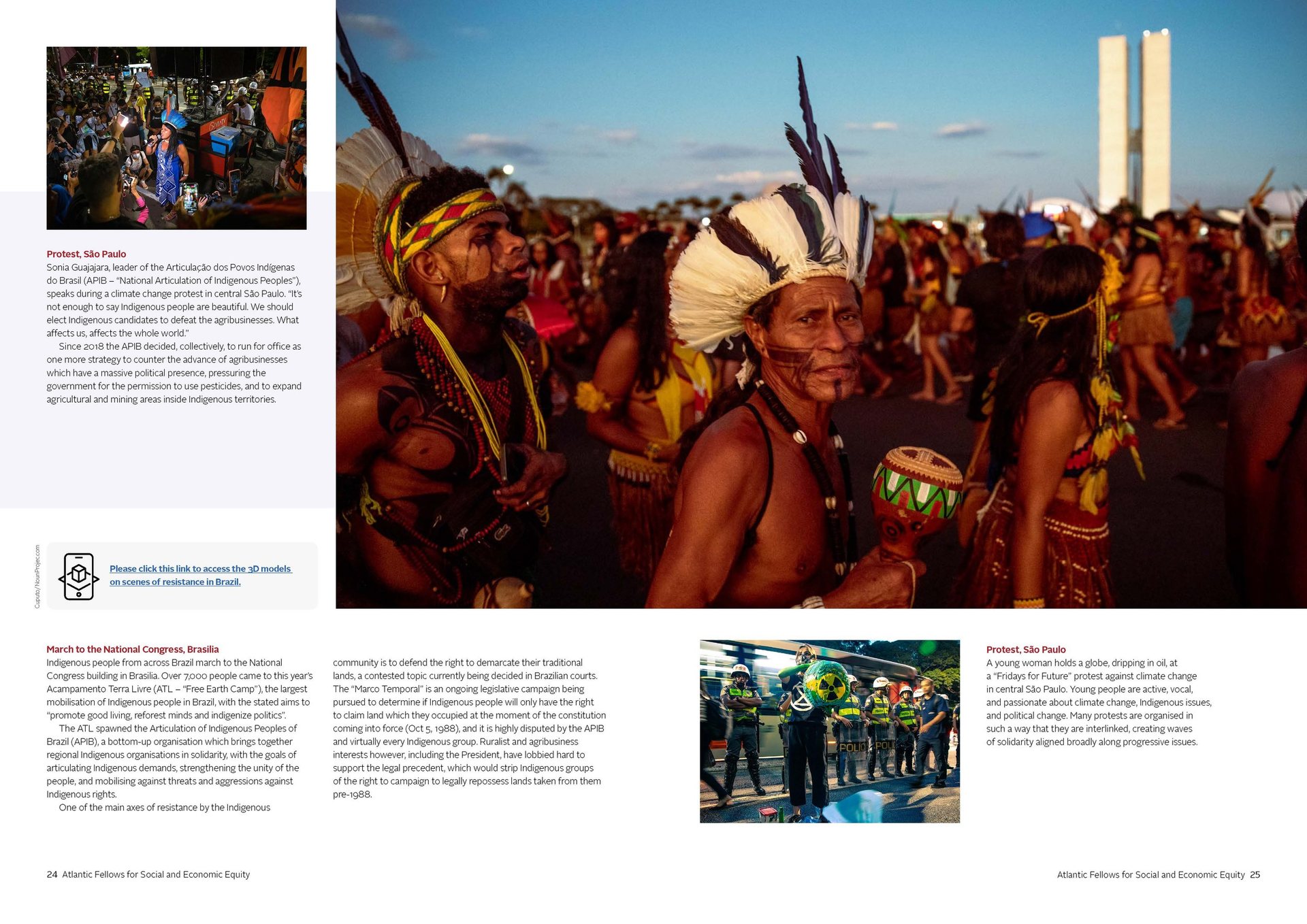
Indigenous activists and social media influencers Samela Sateré-mawe and Tukuma Pataxó raise their fists in solidarity at the Acampamento Terra Livre (ATL) gathering in Brasilia.
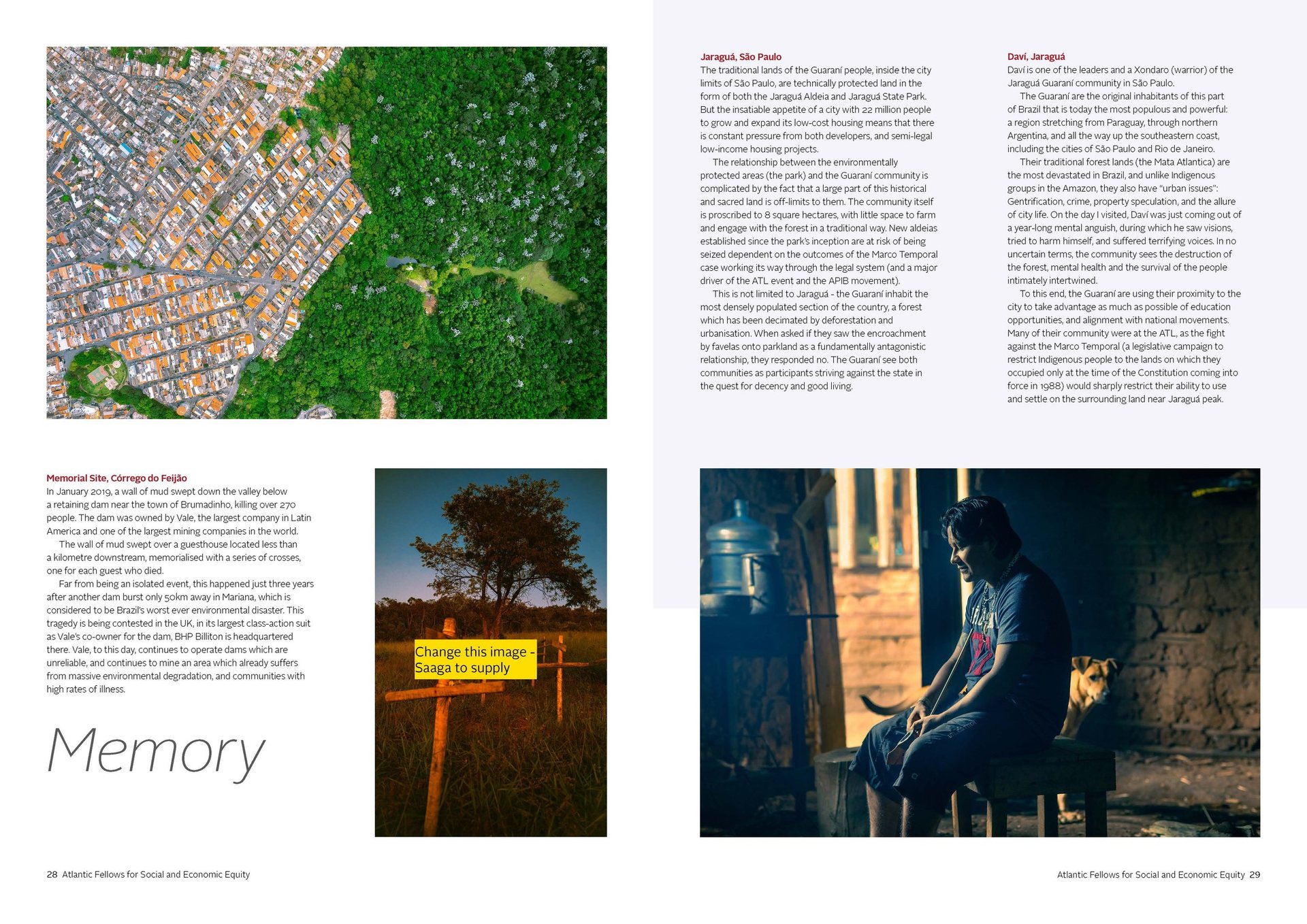
Daví, leader and Xondaro (warrior) of the Jaraguá Guaraní community in São Paulo.
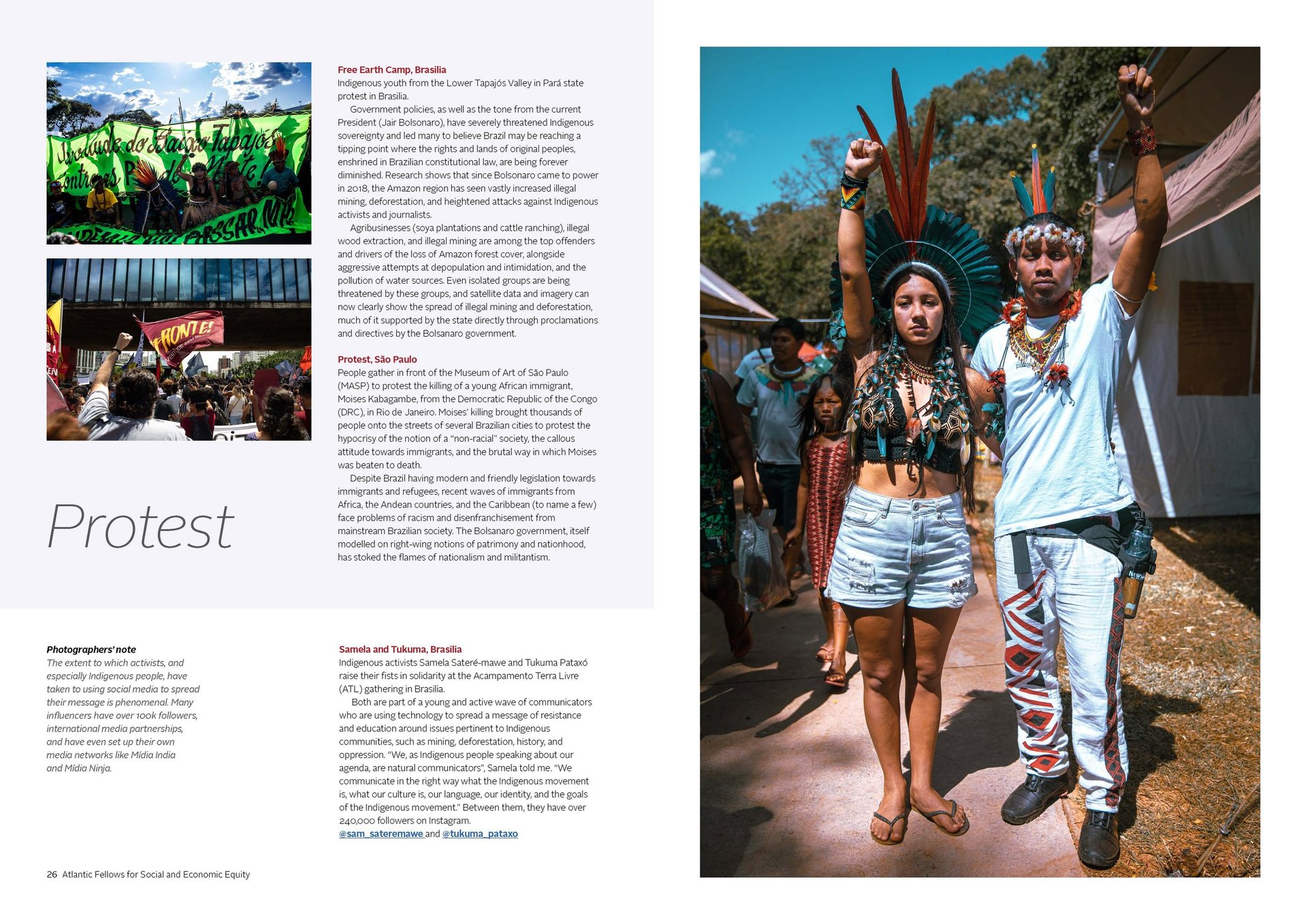
The Jaraguá lands are steadily encroached upon by illegal housing in São Paulo.
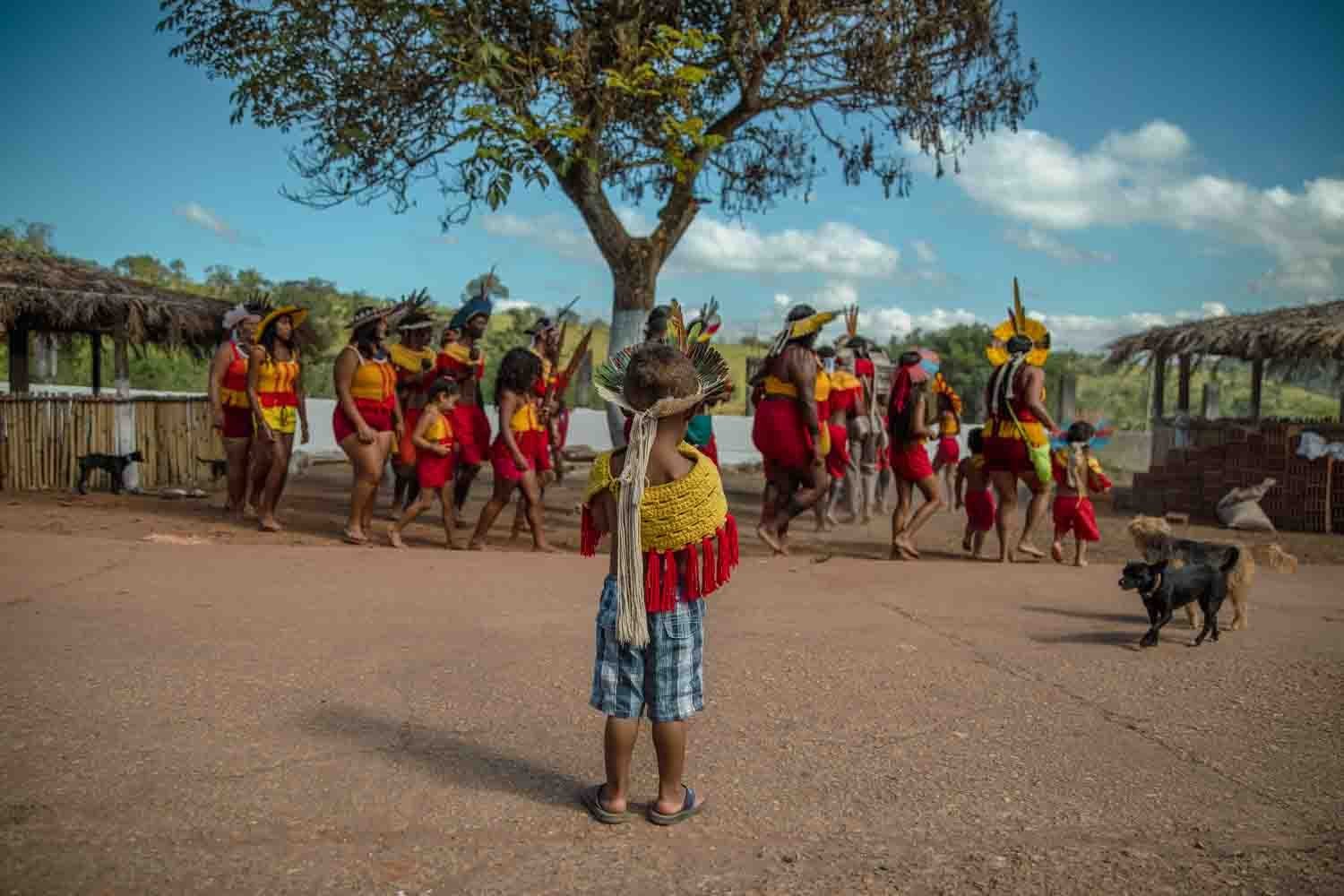
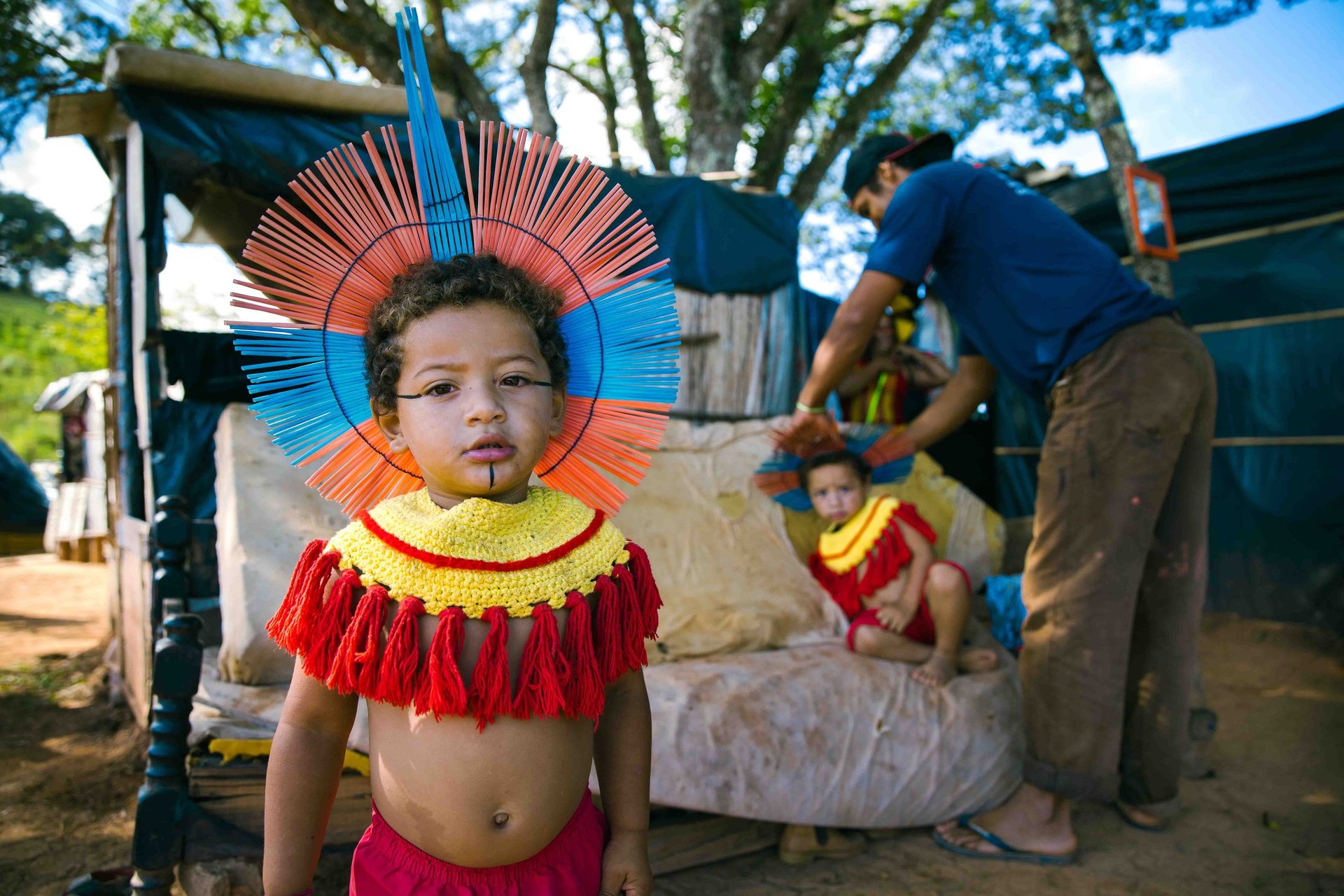
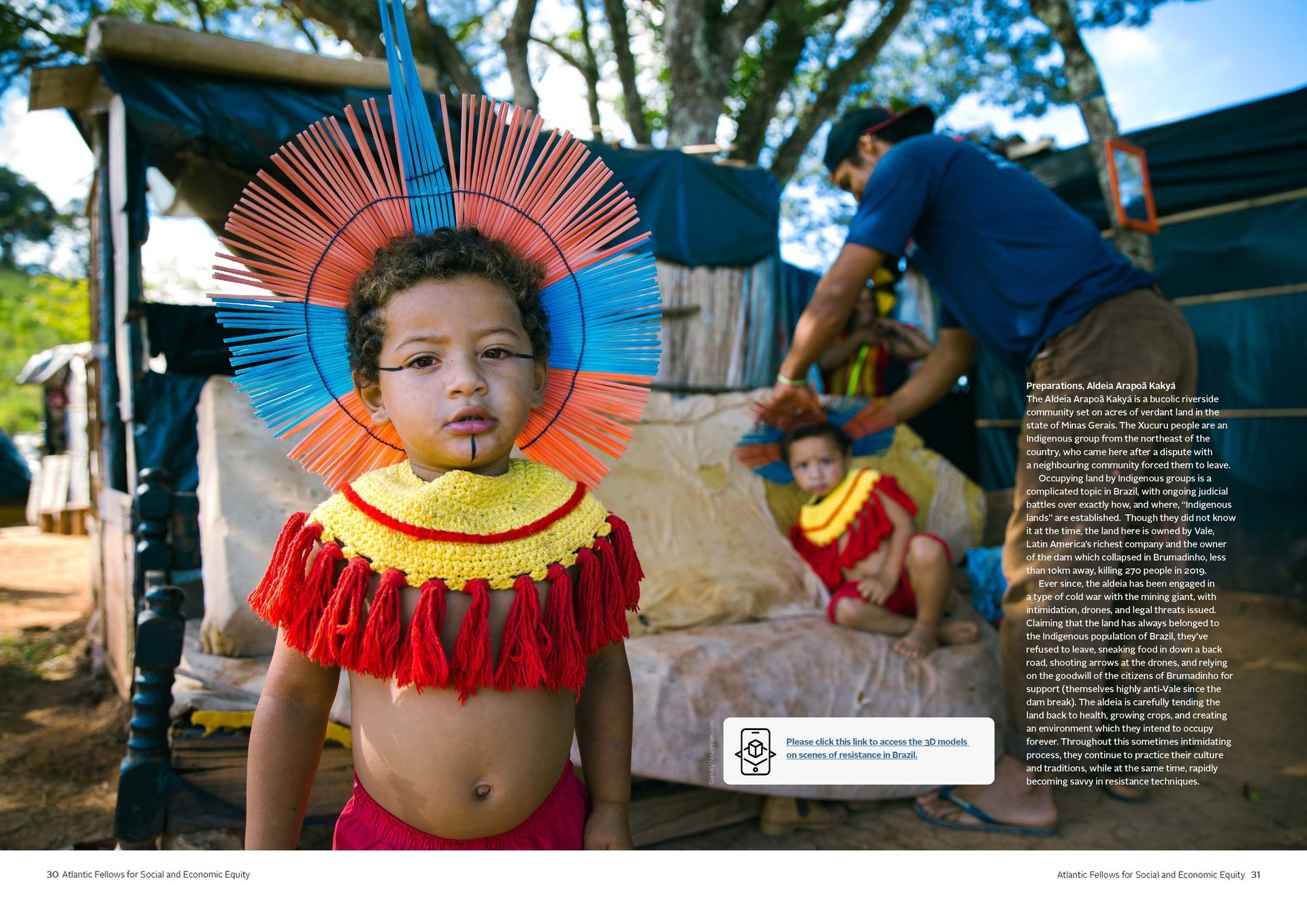
Raynan and Raylan, twins in the Aldeia Arapoã Kakyá, a bucolic riverside community set on acres of verdant land in the state of Minas Gerais.
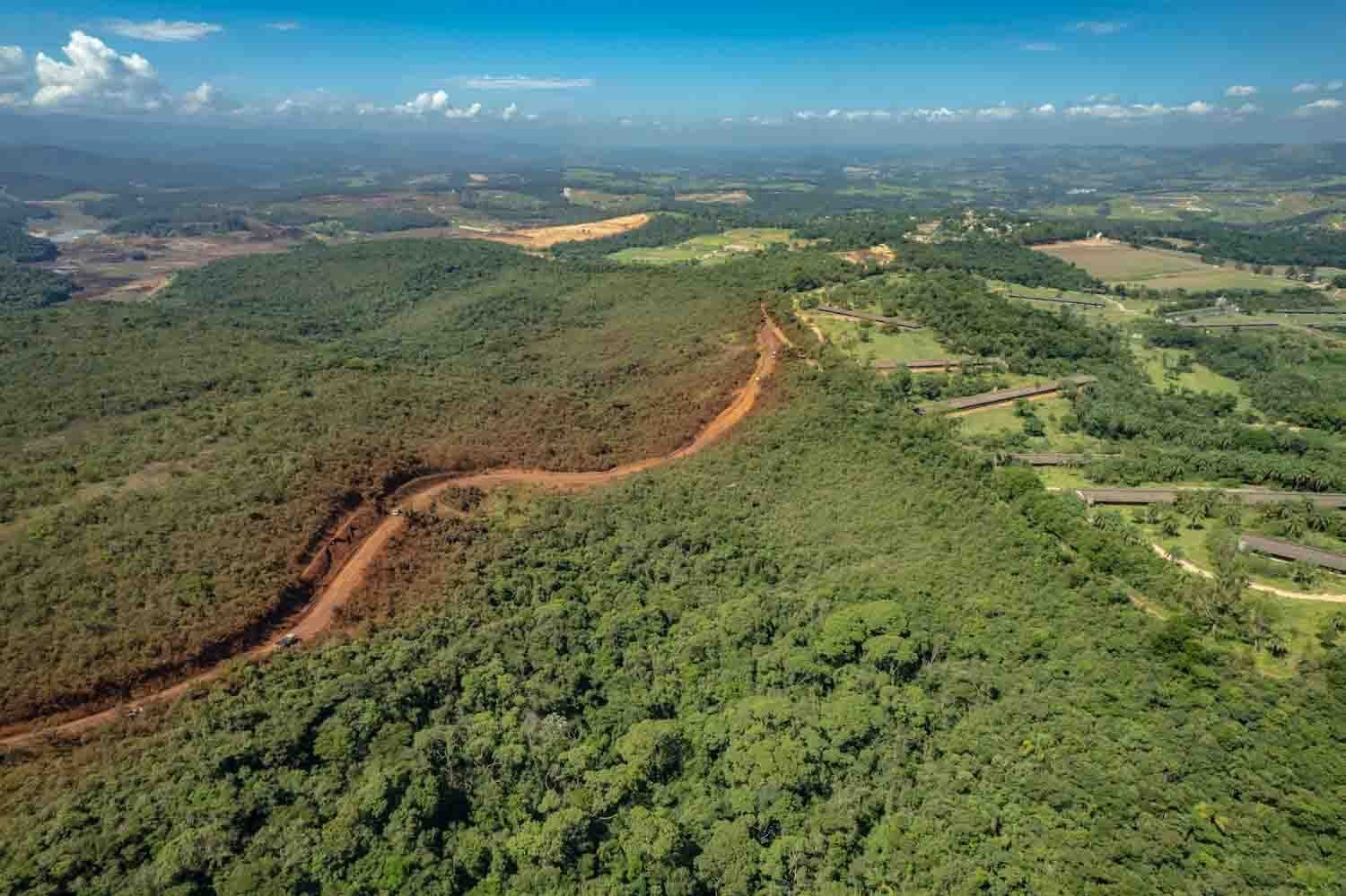
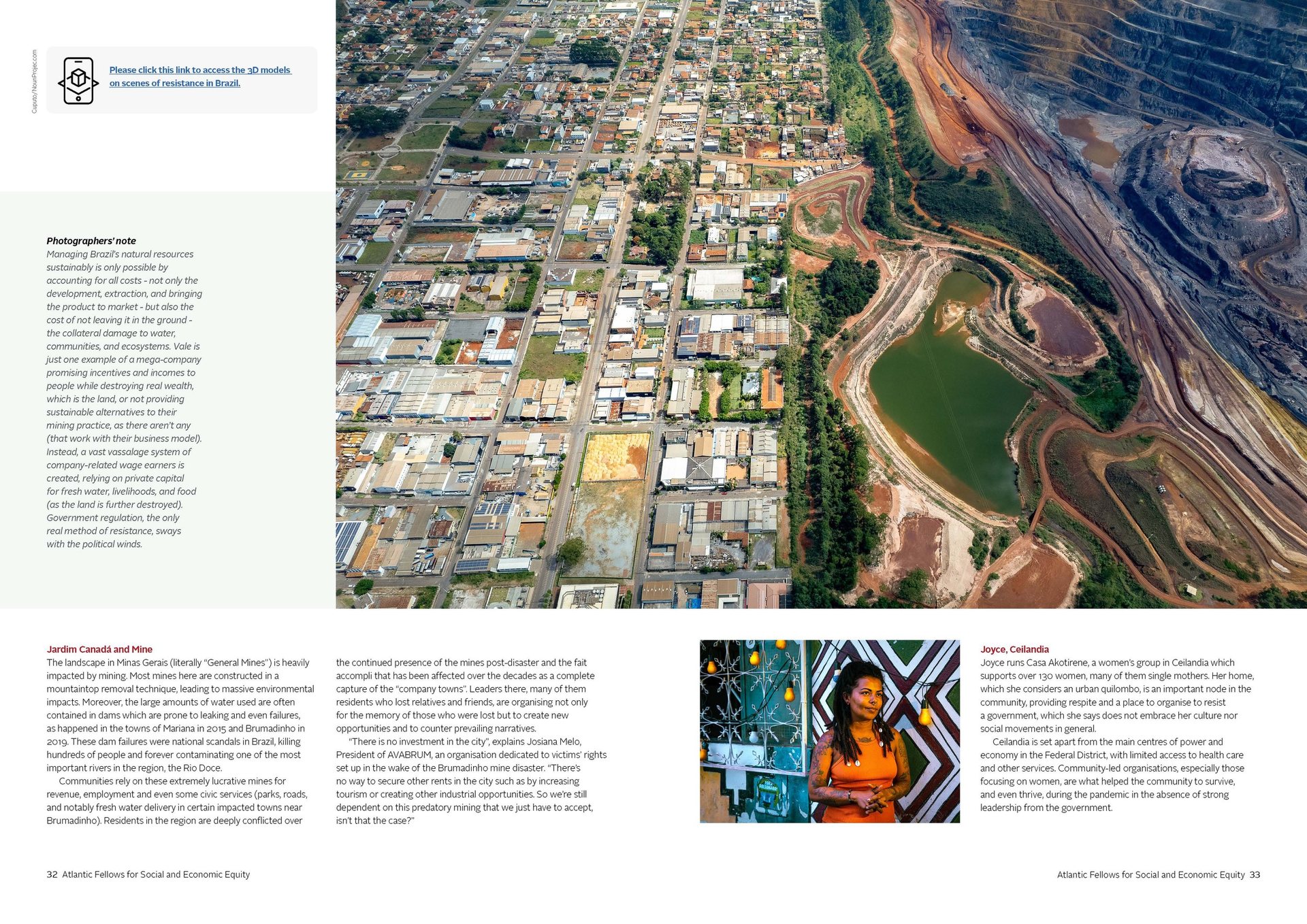
Many mines in the state of Minas Gerais are constructed in a way that leads to massive environmental impacts. Mining disasters in the state have claimed hundreds of lives.
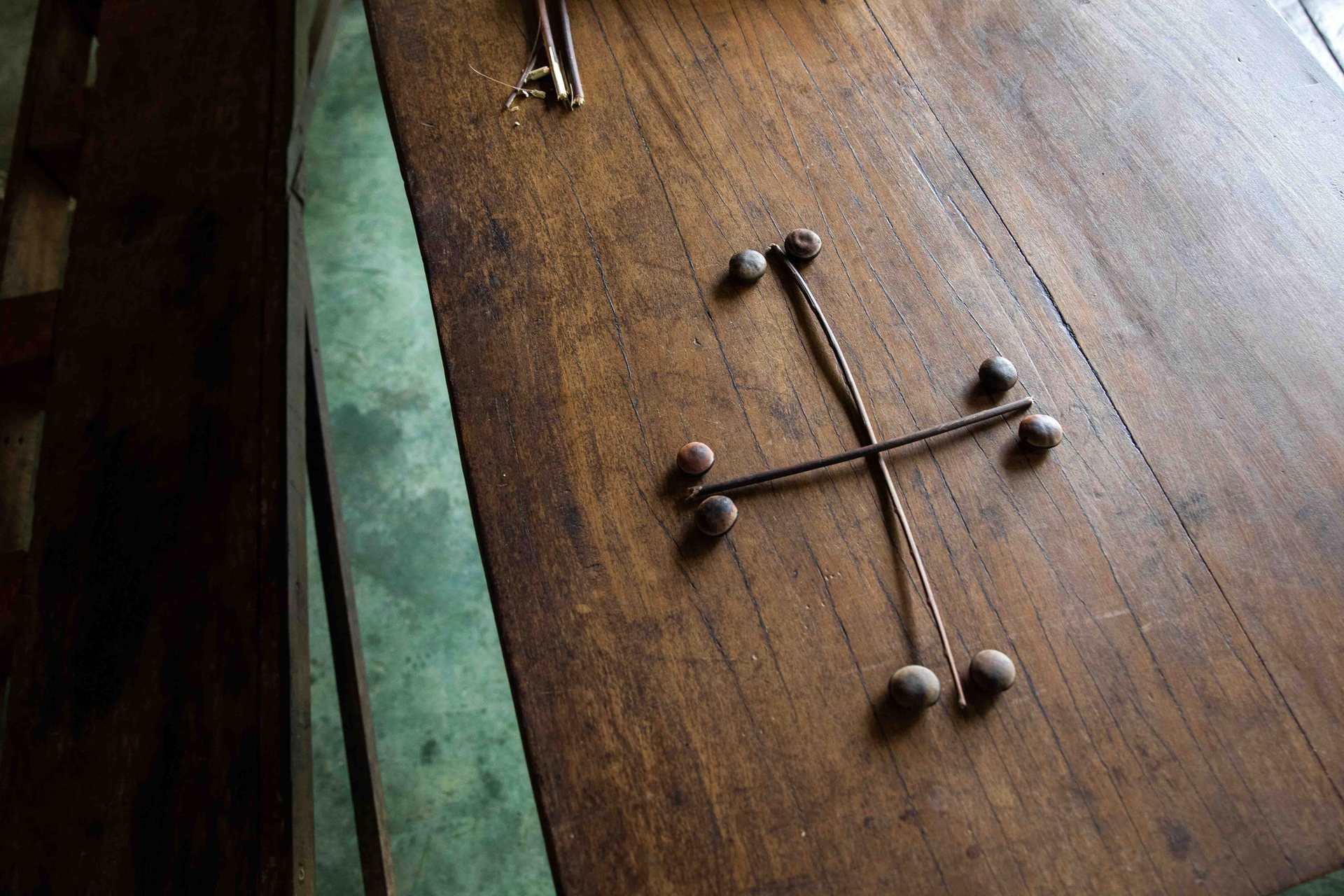
“The Oracle”, a game similar to those played on the west coast of Africa, in a quilombo near Ubatuba.
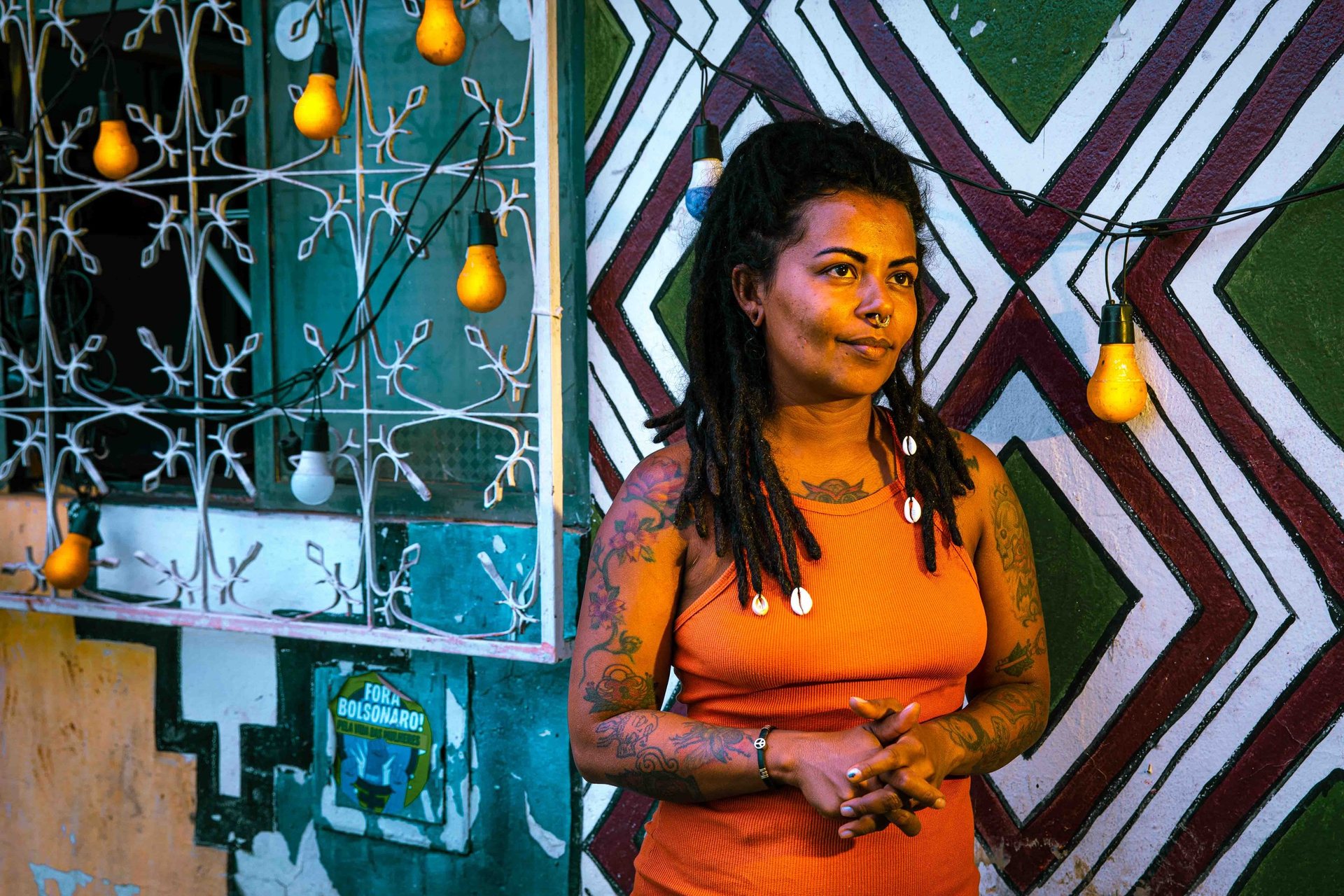
Joice Marques runs Casa Akotirene, a women’s group in Ceilândia which supports over 130 women, many of them single mothers.
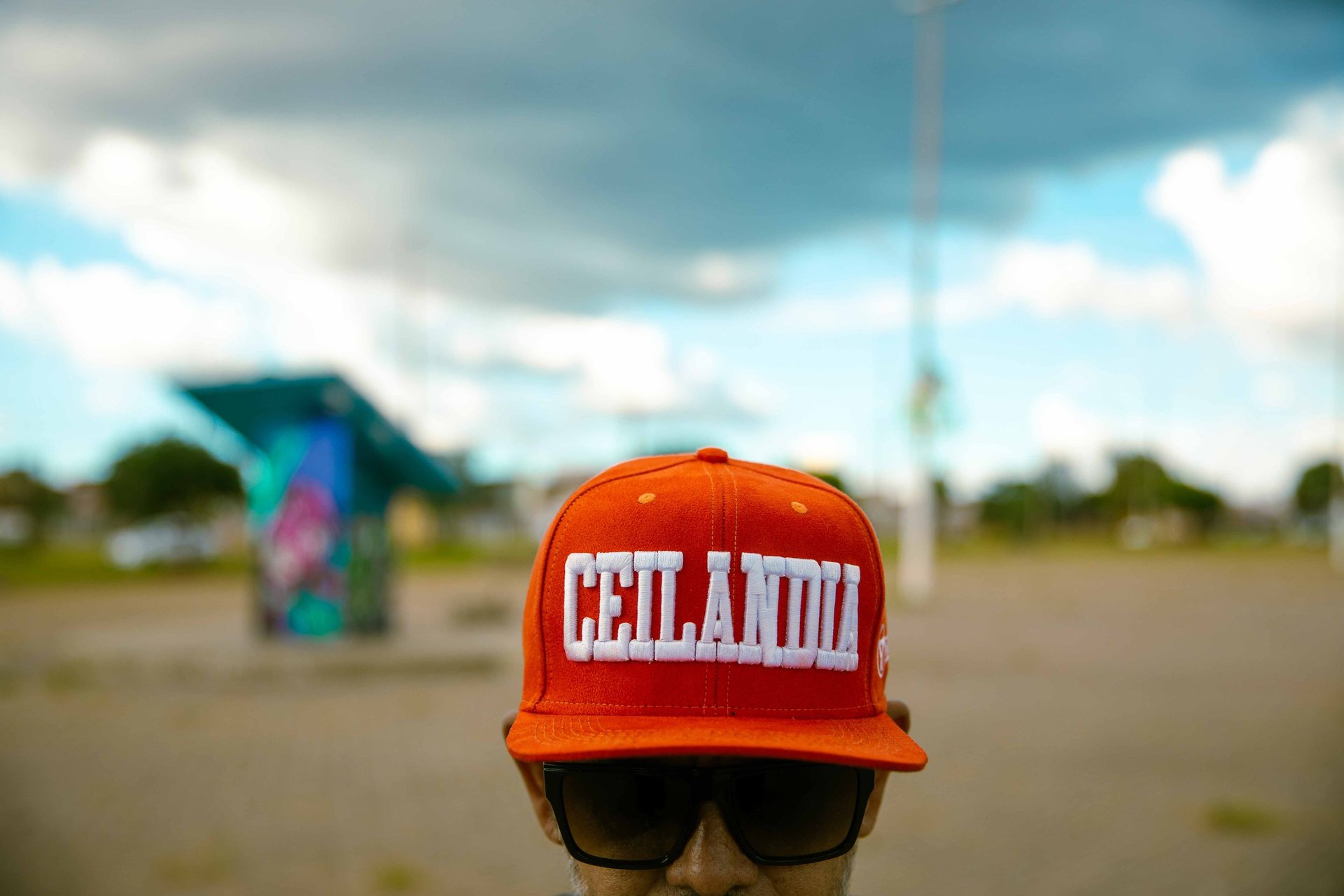
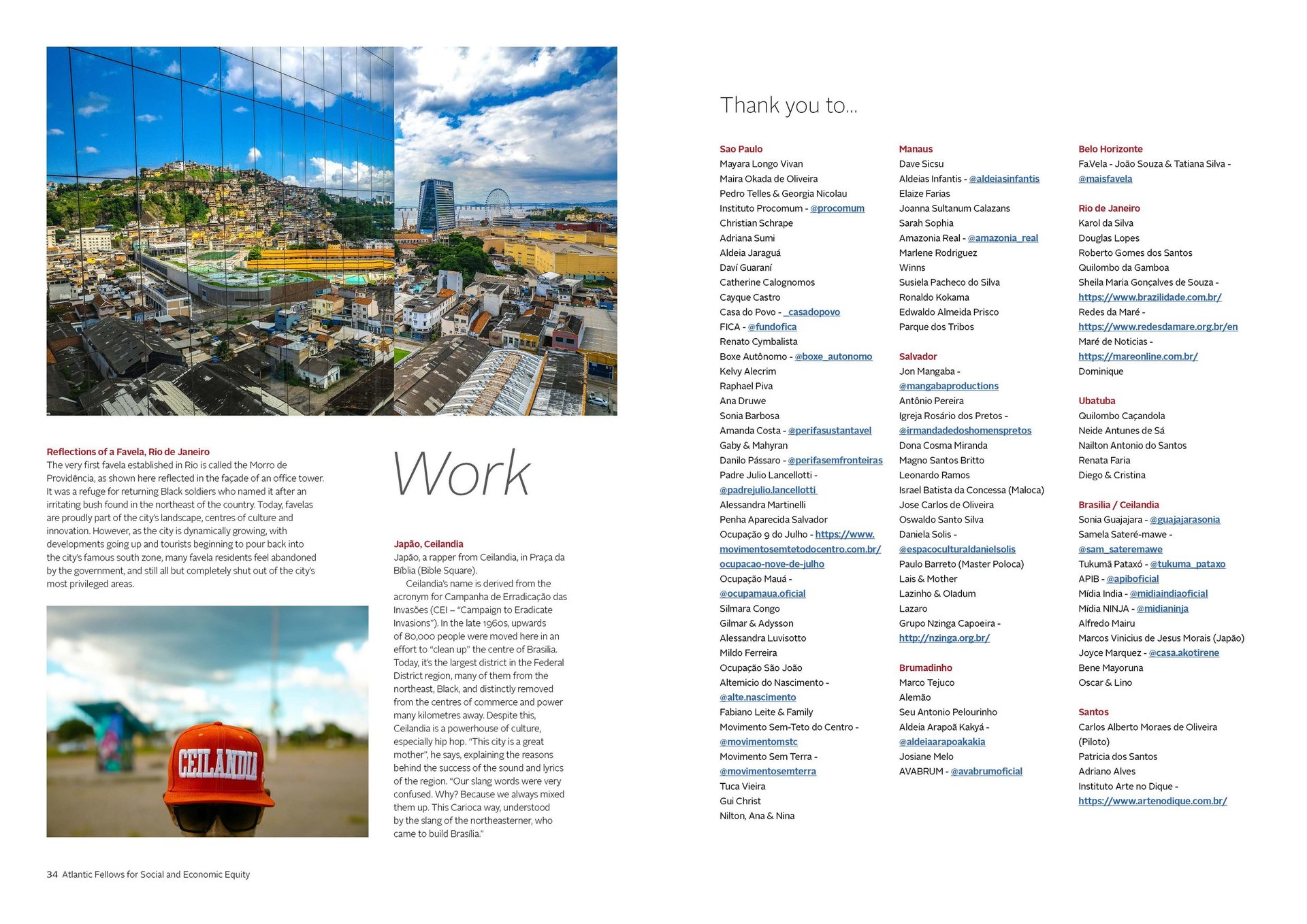
Japão, a rapper from Ceilândia, in Praça da Bíblia (Bible Square).
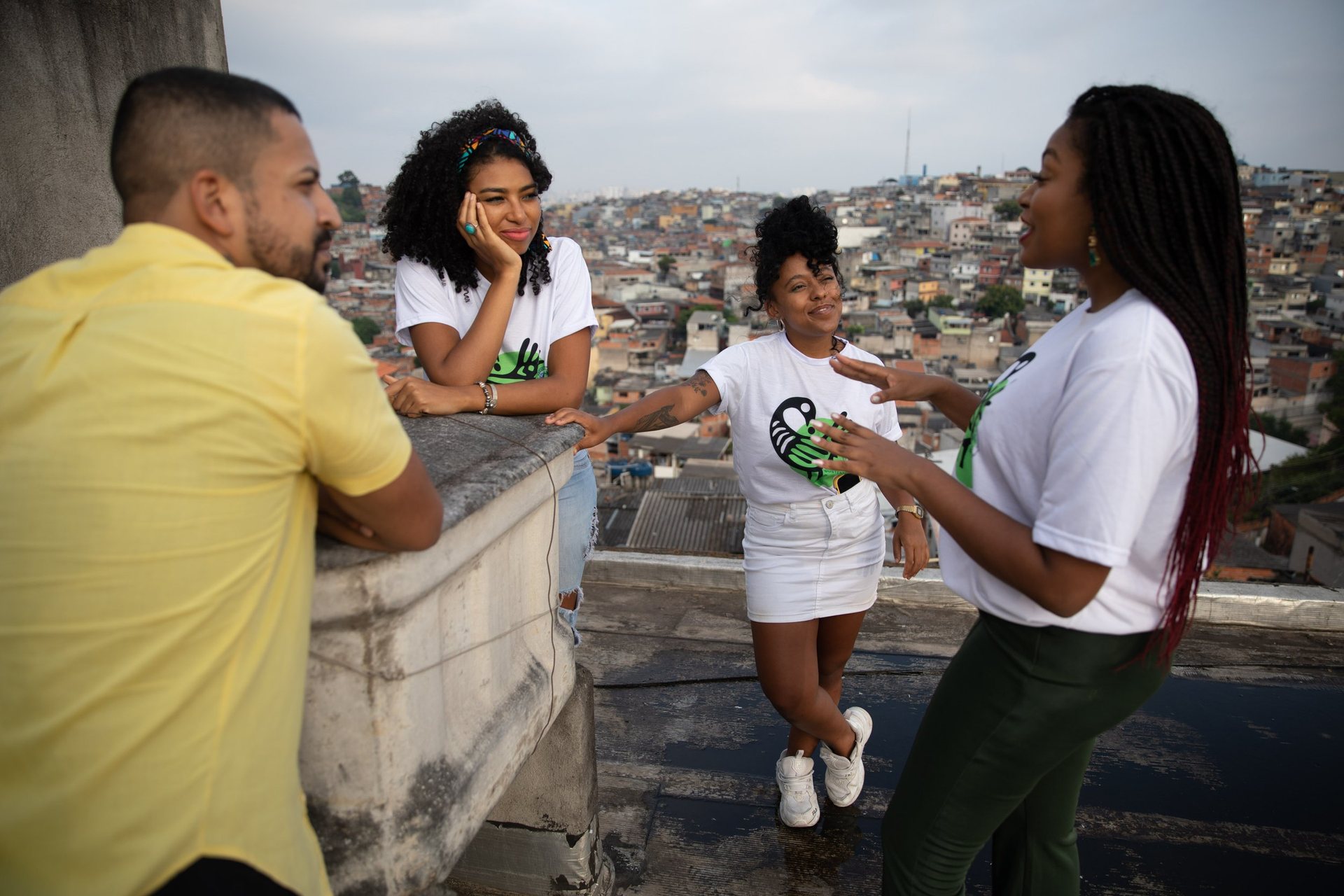
Environmental activists from Perifa Sustantavel and Periferia Sem Fronteiras in Brasilândia, São Paulo.
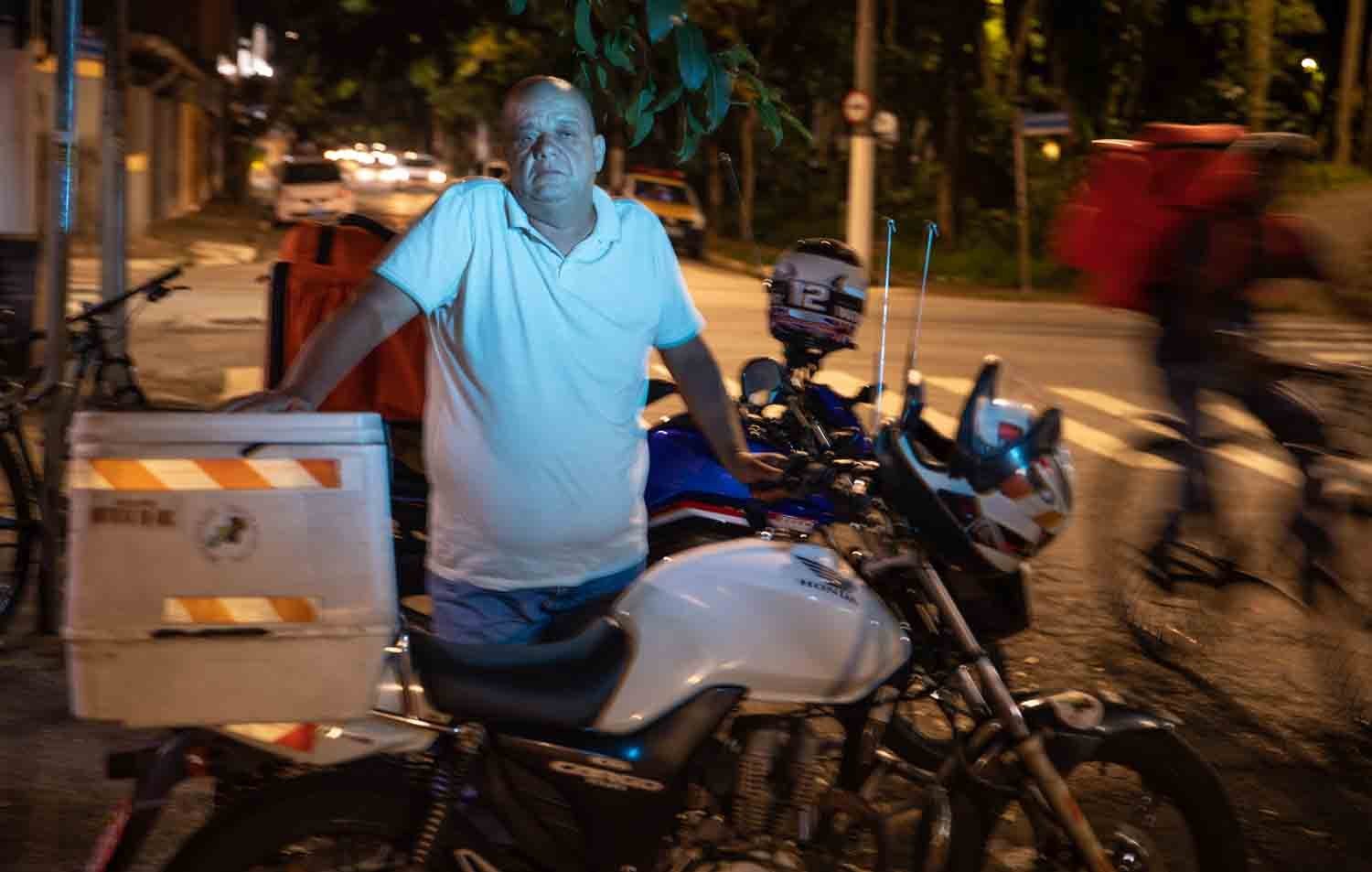
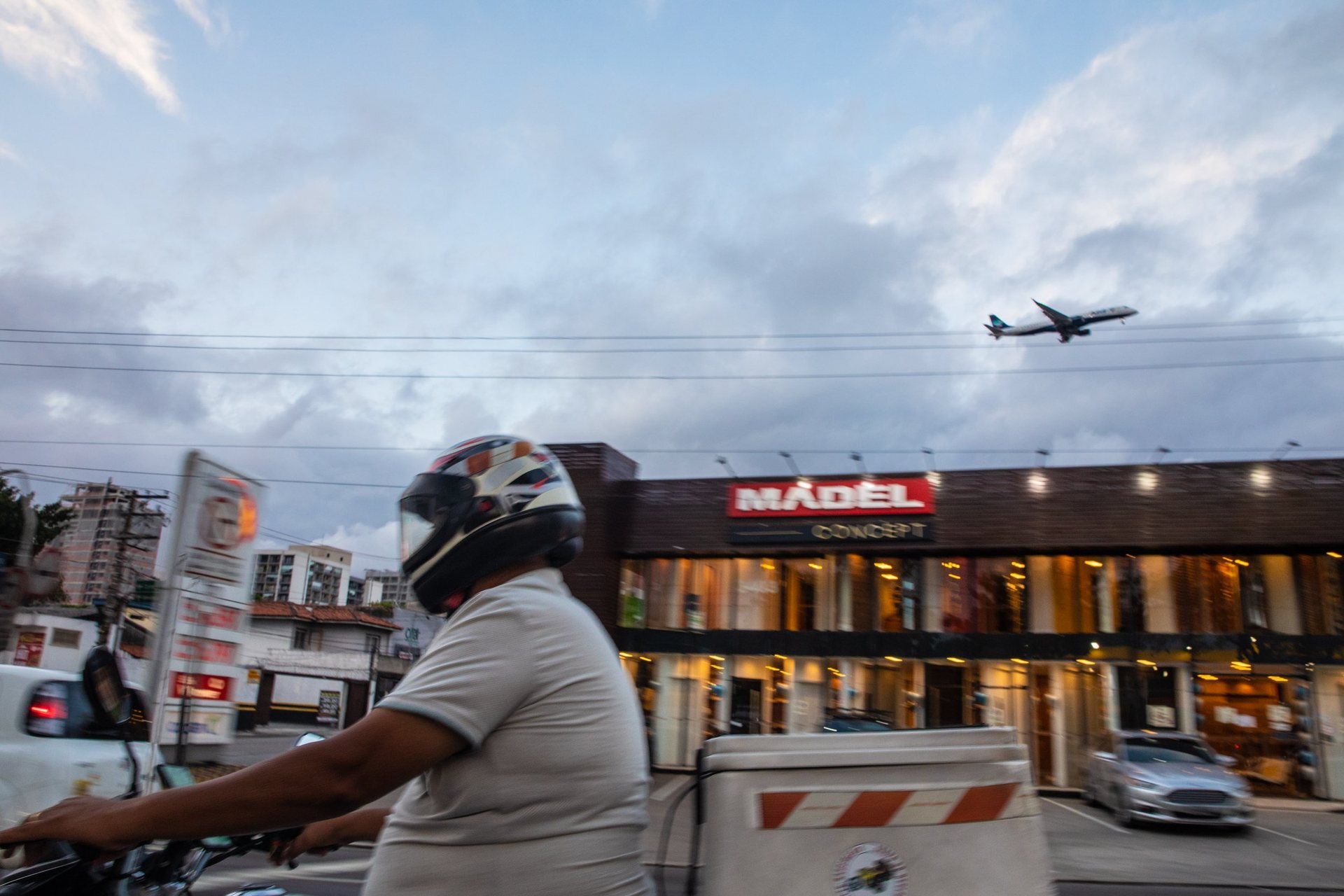
Alte Nascimento, delivery driver and activist for iFood, in São Paulo.

This work was made possible with support from the Atlantic Fellows for Social and Economic Equity programme, hosted by the International Inequalities Institute of the London School of Economics and Political Science.

Scan these QR codes for a 3D experience of places of resistance in Brazil

Resistance Doesn't Walk Alone

Exhibition Catalog
Resistance Doesn't Walk Alone

Thank you to...

Sao Paulo

Mayara Longo Vivan

Maira Okada de Oliveira

Pedro Telles & Georgia Nicolau Instituto Procomum - @procomum

Christian Schrape

Adriana Sumi

Aldeia Jaraguá

Daví Guaraní

Catherine Calognomos

Cayque Castro

Casa do Povo - _casadopovo

FICA - @fundofica

Renato Cymbalista

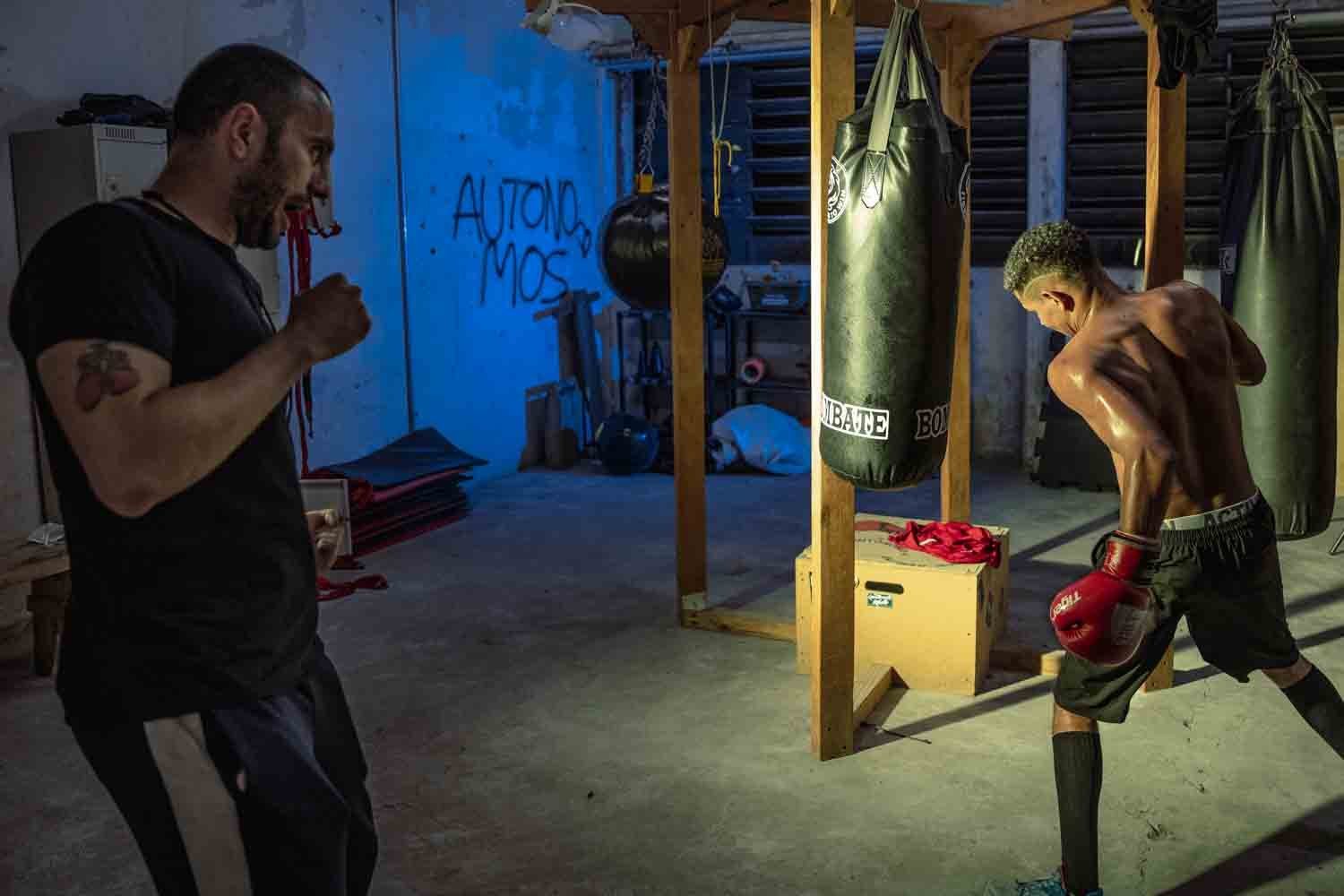
Boxe Autônomo - @boxe_autonomo Kelvy Alecrim

Raphael Piva

Ana Druwe

Sonia Barbosa

Amanda Costa - @perifasustantavel Gaby & Mahyran

Danilo Pássaro - @perifasemfronteiras Padre Julio Lancellotti -

@padrejulio.lancellotti

Alessandra Martinelli

Penha Aparecida Salvador

Ocupação 9 do Julho - https://www. movimentosemtetodocentro.com.br/ocupacao-nove-de-julho

Ocupação Mauá -

@ocupamaua.oficial

Silmara Congo

Gilmar & Adysson

Alessandra Luvisotto

Mildo Ferreira

Ocupação São João

Altemicio do Nascimento -

@alte.nascimento

Fabiano Leite & Family

Movimento Sem-Teto do Centro -

@movimentomstc

Movimento Sem Terra -

@movimentosemterra

Tuca Vieira

Gui Christ

Nilton, Ana & Nina

Manaus

Dave Sicsu

Aldeias Infantis - @aldeiasinfantis Elaize Farias

Joanna Sultanum Calazans

Sarah Sophia

Amazonia Real - @amazonia_real Marlene Rodriguez

Winns

Susiela Pacheco do Silva Ronaldo Kokama

Edwaldo Almeida Prisco

Parque dos Tribos

Salvador

Jon Mangaba -

@mangabaproductions

Antônio Pereira

Igreja Rosário dos Pretos -

@irmandadedoshomenspretos Dona Cosma Miranda

Magno Santos Britto

Leonardo Ramos

Israel Batista da Concessa (Maloca) Jose Carlos de Oliveira

Oswaldo Santo Silva

Daniela Solis -

@espacoculturaldanielsolis Paulo Barreto (Master Poloca) Lais & Mother

Lazinho & OIadum

Lazaro

Grupo Nzinga Capoeira -

http://nzinga.org.br/

Brumadinho

Marco Tejuco

Alemão

Seu Antonio Pelourinho

Aldeia Arapoã Kakyá -

@aldeiaarapoakakia

Josiane Melo

AVABRUM - @avabrumoficial

Belo Horizonte

Fa.Vela - João Souza & Tatiana Silva - @maisfavela

Rio de Janeiro

Karol da Silva

Douglas Lopes

Roberto Gomes dos Santos

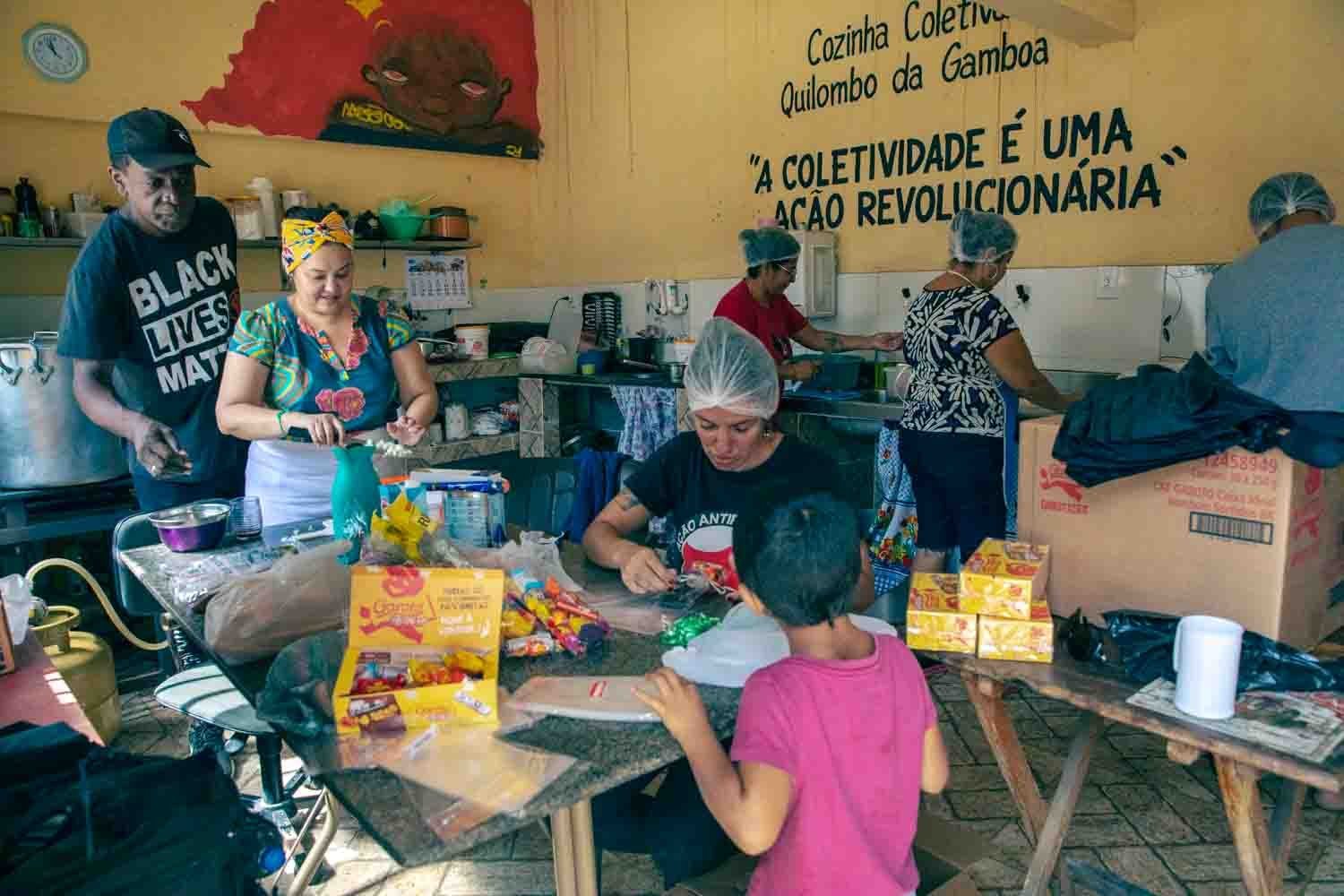
Quilombo da Gamboa

Sheila Maria Gonçalves de Souza - https://www.brazilidade.com.br/

Redes da Maré - https://www.redesdamare.org.br/en

Maré de Noticias - https://mareonline.com.br/

Dominique

Ubatuba

Quilombo Caçandola

Neide Antunes de Sá

Nailton Antonio do Santos

Renata Faria

Diego & Cristina

Brasilia / Ceilandia

Sonia Guajajara - @guajajarasonia Samela Sateré-mawe -

@sam_sateremawe

Tukumã Pataxó - @tukuma_pataxo APIB - @apiboficial

Mídia India - @midiaindiaoficial

Mídia NINJA - @midianinja

Alfredo Mairu

Marcos Vinicius de Jesus Morais (Japão) Joyce Marquez - @casa.akotirene Bene Mayoruna

Oscar & Lino

Santos

Carlos Alberto Moraes de Oliveira

(Piloto)

Patricia dos Santos

Adriano Alves

Instituto Arte no Dique -

https://www.artenodique.com.br/

↑ Back to Top